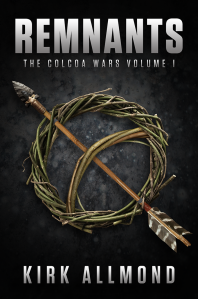
Remnants: The Colcoa Wars Volume 1 June 28, 2014

Victor Tookes's avatarKirk Allmond - Horror and Sci-fi author

Remnants by Kirk AllmondI’ve just received confirmation from my publisher, Permuted Press, that Remnants will officially launch on June 28, 2014. This book has been a long time coming, I originally started it for my 2012 NANOWRIMO project.  After Nano, it sat at 50,000 words for almost six months before I picked it up again.

In a flash of inspiration, I found the direction for it. The characters gelled, the story became clear, and the world clicked into place.  More importantly, the theme of the book came into focus. With the message clear, it only took a few quick re-writes of earlier bits and  I finished the book in a few weeks.  I sent it to several publishers, and based on the strength of this book, signed an eight book deal with Permuted Press.  It was based on the strength of Remnants that we worked out this agreement, and they bought my entire back…

View original post 124 more words

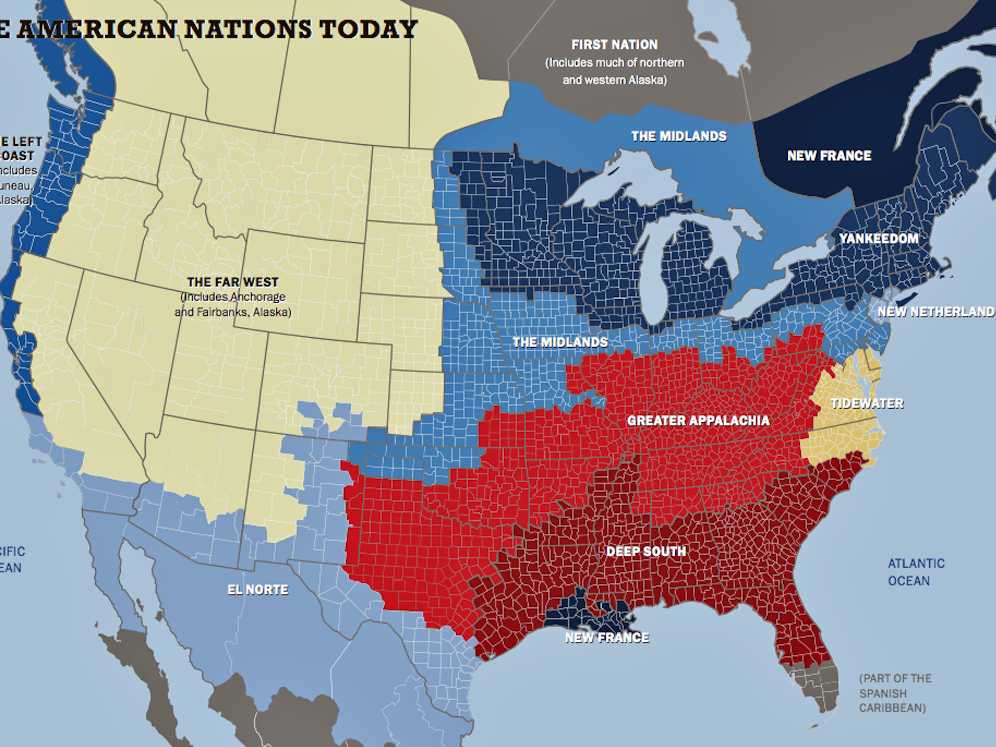
We The People

america divided 1

I love the United States of America; we are the greatest nation in the history of mankind, yet we are not the country that we were, nor the one we believe ourselves to be. America  lost its light along the way.

America stopped Hitler. America invented rock and roll, the automobile, and the internet, and put men on the moon. We are a nation of innovators, fiercely independent, and hard working. We as a people were admired for standing for freedom and democracy. That is part of our heritage.seantsmithauthor.files.wordpress.com/2014/06/what-do-i-need-to-know.jpg”>Self-Compassion

America defeated the Soviet Union without firing a shot. (Not The Big shot, thank God.)

Those are defining moments as Americans, right? We stopped Stalin, King George, and Saddam Hussein. We helped rebuild Germany and Japan after World War II.

But…America became a nation by killing off the people that were actually Americans first. Whoops.

Along the way, America built a nation upon the backs of people who were enslaved. Slavery happened. People owned people. That’s also part of our heritage.  This country would not exist as we know it without the push west at the expense of the Native Americans and the generations of slave trade and labor which built the agricultural base in the South.

I love America. I love the United States. We are not all one thing, though, either good or evil, nor have we ever been a homogenous society. In fact, our diversity is one of the things that made us great.  We have been a champion of freedom and that which is good, but we have also committed atrocities and grave mistakes.

And now, while the United States consumes itself with bitter fire and ignorance, self righteousness and self- loathing at the same time, what is the truth of it?  As a people, as Americans, can we recognize the difference between a patriot and a fool?

It’s harder than we think, and now a war within looms because we’re that idle and dumb. The patriots, who are not actually patriots but those who undermine the country with lies, ignorance, and hatred, are dangerous because many of them advocate open war, rebellion, and violence. And their numbers are growing.a

The amount of misinformation being blasted over the airways and internet is mind-blowing. The truth seems hard to discern, and many people, it seems , prefer to believe lies, whether the lies we tell ourselves or the lies of others, than to look for the cold, hard truth. The truth, like the America itself, is not just one thing.

The United States strove to be a beacon of hope for the world, a “city on a hill,” and in many respects, the country succeeded in fulfilling the hopes of our founding fathers. It seems to me though, that we the people no longer strive for this ideal.

We watch videos of cuddly cats on the internet rather than try to learn something. We past memes on social media full of ignorance and hate because it is easier to click than it is to actually read. We are convinced we are right and that the other side is wrong, seldom listening to those who disagree with us, remaining in a bubble of ignorance.

The true patriot will listen, learn, and read a history book.

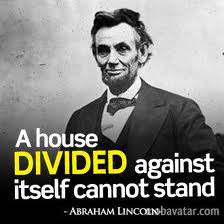
One of the building blocks of our democracy is compromise. Without it, the government cannot function, either at the national or local level.  When politicians and voters become so entrenched in their beliefs that they are unwilling to bend, the whole system breaks down.  The government now is a picture of this dysfunction. Unfortunately, the government reflects the will of the people, and we are divided.

The true patriot will strive for unity over division. The only way this great country will find its light again is if we the people become that light.


Sneak Peek, Angels of Wrath series

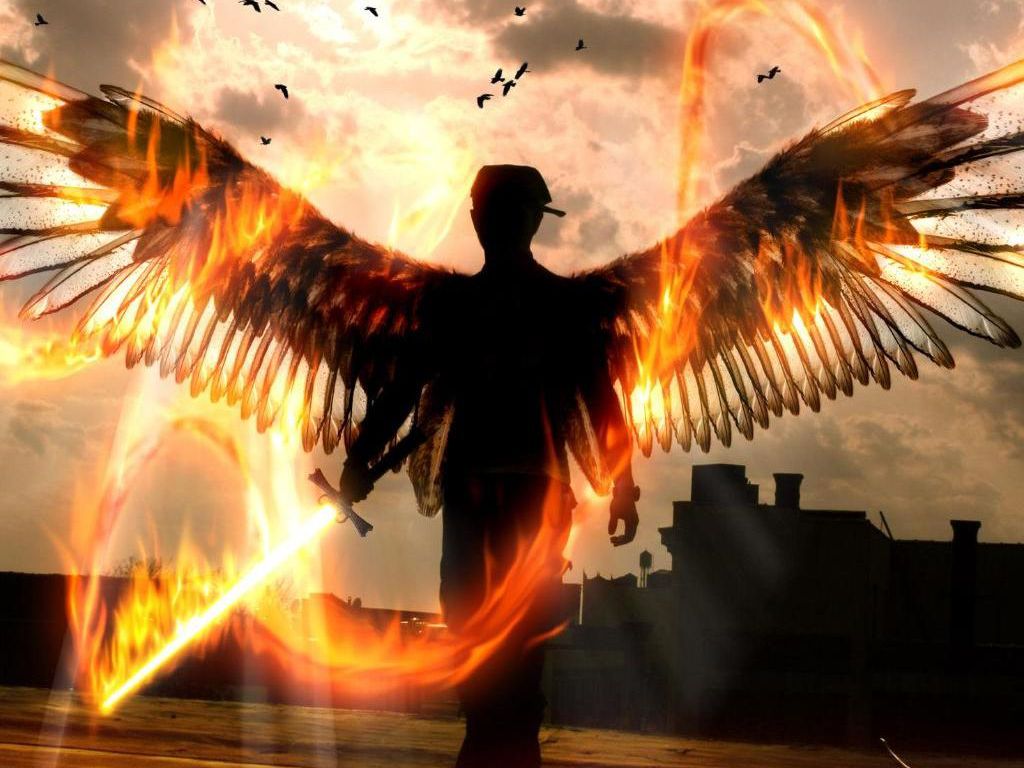
angel wings

Angel of The Fall will be released in 2015 from Permuted Press, the first novel in a spin-off trilogy from the first Wrath series. I’m going to be very busy!

The main character, Malack, is an actual angel of the Lord, a deeply flawed character who desperately wants to see mankind avoid its own inevitable destruction. In the first novel, Mal tries to stop the next world war the world will come to call The Fall, while he remembers his long path through history. He has been a warrior, a recluse, and a monk. He struggles to understand his own destiny.

Here’s a sneak peek…

Chapter One

Past

The first death hurt the most. He was only an hour old when he died, and he did not know his nature yet. His demise was preceded by the worst thing he would ever see, the worst thing anyone could see.

Malack opened his eyes for the first time on a sun scorched rocky hillside to blinding light and the sound of hammering and cheering and wailing. He wore tattered robes and a scruffy beard, with sandals on his feet. He possessed no memories, no sense of context as he trudged up that hill toward the sounds.

Where am I? Who Am I?

He knew how to walk and form thoughts, though he did not yet understand how he knew these things. It was hot, and somehow he comprehended this, the knowledge of hot and cold. He wondered how, and puzzled how he knew enough to wonder.

He picked his way in the direction of the commotion. A walled city sprawled behind him. Smoke snaked from chimneys, armored soldiers glittered in the harsh light, and the air tasted wrong and despaired. More cheering up the hill.

With each step, Mal felt purpose and awareness building in his chest. It was a terrible fury and fear, urgency mixed with anguish. He quickened his pace, ignoring smashed shins and toes, reckless with the need to act. He did not know why he felt these things, only that there was no denying the impulse.

He crested the hill. One rise away, three men hung nailed to wooden crosses. Mal was too far away to make out the details, though over the next two thousand years he would relive every one. The taste of the rock, the scent of his own sweat, and the cries of the crowd would be with him for millenia. His heart hammered and his head throbbed and the crowd roared. He felt something akin to hunger, a kind of pressure pent up in his chest demanding release.
He sprinted up the opposite slope, not knowing precisely what do do, but certain of the need to strike and defend.

And then there were Roman soldiers.

“Where do you think you’re going, Jew?”

Mal understood the words, though he did not ponder this because he had no time.

“Make them stop,” Mal gasped. His voice felt as wrong as the air and the light.

The soldier smashed Malack in the stomach with an angry fist, followed by a kick to the face. He dragged Mal up the hill by the hair.

“I hate Jews,” the soldier said. “Troublemakers.”

“Ugh,” Mal coughed at the second blow. He’d never been struck before. He did not know how to strike back, so he took it. He hurt, and this, like everything else, was new to him. The soldiers beat him with casual vigor, in no particular hurry. They chuckled while Mal crawled forward, blinded by blood, his face caked with tiny pebbles. He clawed in the direction of the next hill, fingernails torn and raw. He felt a sharp blow to the back of his skull, and his vision blurred and narrowed to a dark tunnel.

“So much for your king,” one of them said.

A soldier yanked Malack by the hair, pulling him up to his knees, and forcing to watch a spear pierce of of the men nailed to a cross. The crowd erupted in a cacophony of cries, euphoria and despair at war on the wind.

Mal raged and trembled and something tore in his soul, and he felt an electric connection to a weeping, convulsing universe. Then there was hot steel on his throat, and that was the first time Malack died.

Malack would spend centuries struggling to understand that a hero is not necessarily the hero of his own life. Throughout his many lives, he would battle his own demons of anger and guilt, along with very real demons who walked the earth. His path was long, rocky, and mean. He would be a monk and a recluse, but above all, a warrior. It would be over two thousand years before he would have the answers he craved.

Chapter Two
present

“This interview is being recorded,” said the American in a tired suit.  Sweat stains peeked from around his armpits as he  bent to pick up a manila envelope, which he dropped loudly onto the desk.

“You have no rights. You gave up your rights when you decided to become a terrorist.  You may call me John. If you cooperate with me, things will go better for you.  Now. State  your name.”

“I have had many names. You may call me Mal.”

Clad in an orange jumpsuit and shackled to a steel chair at his wrists and ankles, Mal smiled serenely.  His dark hair hung to his shoulders and his beard was unkempt; his body ached from the repeated beatings delivered by the Saudi Secret Police.  They were seated across from one another at a desk in the center of a sad concrete room illuminated by a single harsh light bulb. Mal shifted his heavily muscled frame in an awkward attempt to both convey his earnestness and also relieve the pressure on his lower back.

“I have nothing to hide,” he said. He’s a low level CIA operative, most likely. Maybe NSA.

“Let’s start at the beginning,” John said.  Malack chuckled at that.

“Does this amuse you?” John asked tersely, raising his eyebrows.

“You hate this posting don’t you?”  Mal shook his head slowly.  “Tell me.  Was it politics that landed you here or did you do something truly incompetent?  It must be one or the other.”

Mal was reasonably certain that he was still in Quatif, located in the northern part of the Eastern Saudi Arabian province.  Heat hung in the city in a way that got into your pores and then multiplied. It lingered like a stain upon the land, hovering just beyond the next breath and refused to be banished by nightfall.  It was unrelenting.  The locals here were as hostile to the westerners as the climate.

“See, you’re something of an enigma,” John said. “You are not on any watch lists. In fact, you seem to not exist. Your skills and lack of history smack of a state intelligence agency. You work for someone. Who? Are you with the Israelis? Massad?”

“You wouldn’t believe me if I told you,” Malack replied.

“Why did you attack the Prince?”

“Because he’s been funding terrorists right under your nose. Believe it or not, I’m on your side.”

“The Saudis are our allies. Your attack did nothing but destabilize the region.”

Mal laughed. “A bit late for that, don’t you think?”

“Who do you work for?”

“I work for no man, no government.”

The interrogator who said his name was John produced a plastic case with several syringes inside. “First we’ll try this, give you some time to think. Then we’ll get more creative. You know how these things go, Mal. You might as well accept the fact you’ll never see the light of day again.

“Why don’t you just execute me?” That would make things easier.

“Despite the rumors, we don’t work that way.” John stuck a needle into Mal’s bicep, cocking his head, an almost friendly look on his face. “Sweet dreams,” he said.
How I Came to Kill Your Brother

Damian Shiels PhD's avatarIrish in the American Civil War

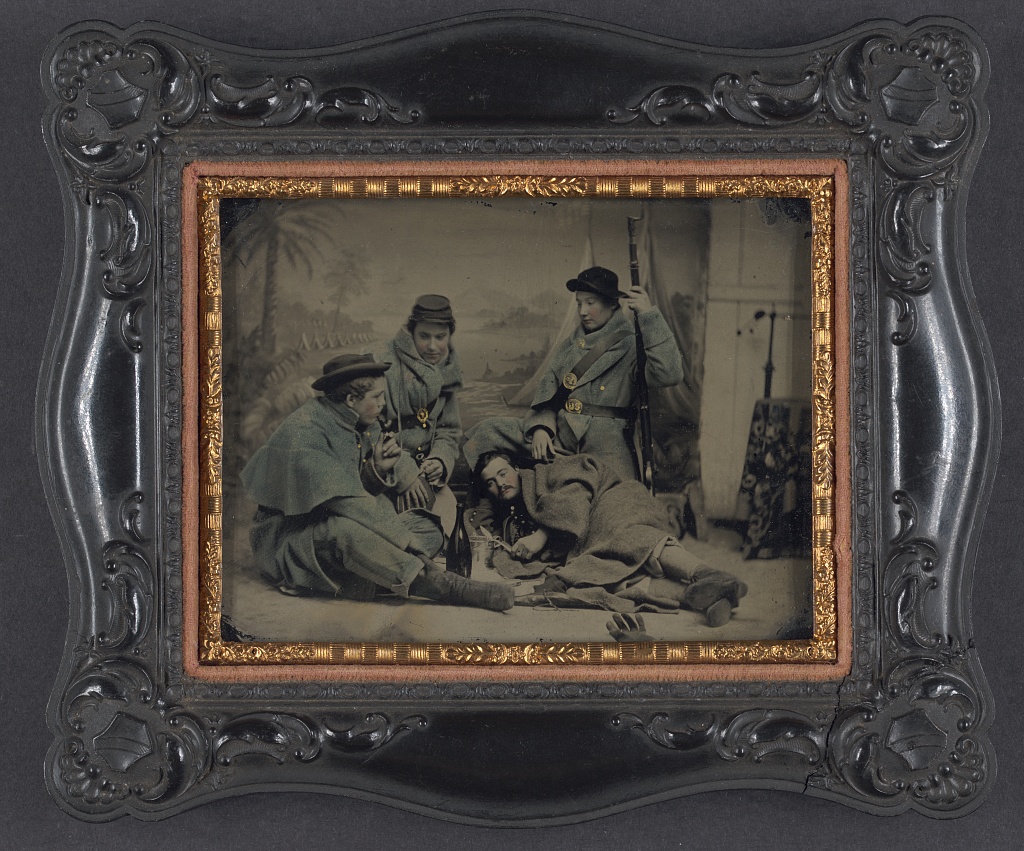
I have come across many extraordinary stories during my time researching the Irish in the American Civil War. None surpass that of Sergeant Peter Donnelly of Company C, 1st Vermont Heavy Artillery. Almost uniquely, the historical record has combined to provide us with details of this ordinary Irish-American’s death from the perspectives of both friend and foe. I am extremely grateful to Peter Patten for initially alerting me to this remarkable account.* 

A soldier of the 11th Vermont (1st Vermont Heavy Artillery) poses with soldiers from three other regiments (Library of Congress) A soldier of the 11th Vermont (1st Vermont Heavy Artillery) poses with soldiers from three other regiments (Library of Congress)

John Donnelly and his wife Rose emigrated to the United States from the parish of Drumlane, Co. Cavan sometime before the mid-1840s. By the time of the 1850 Census they were living in Castleton, Rutland County, Vermont. John was then a 43-years-old and working as a laborer, his wife Rose was 36. 80-year-old Molly Hoy Donnelly (probably John’s…

View original post 1,922 more words

Self-Compassion

Deep Souldiver's avatarDeep Souldiving

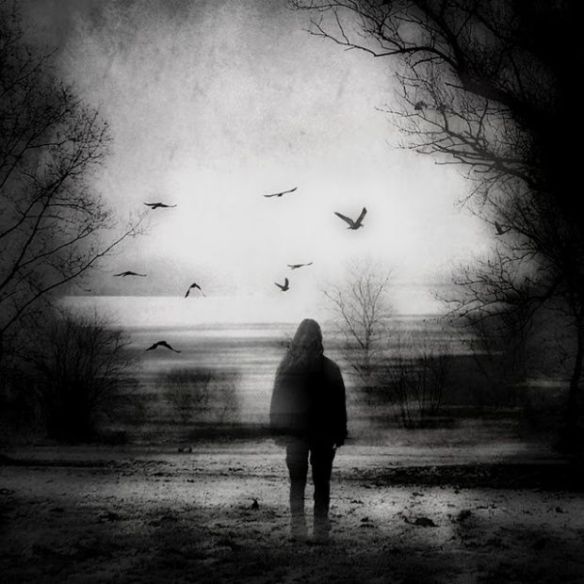
Self-CompassionSometimes the pain isn’t enough. Sometimes you have to open yourself to a greater darkness. The darkness of truth.

Sometimes we need to ask ourselves a question in that darkness. When something doesn’t go away and it keeps coming back…repeating itself over and over…we need to gently ask ourself:

“What do I need to know?”

Open our heart to the answer. Be with it for a while. And then let it go its own way.

Another day will dawn. Light will make everything new.

*photo from  http://www.inspirefirst.com/2012/07/26/expressionism-photography-collection/

View original post

Seems like yesterday… Thoughts on graduation

Image

We stat in a crowded arena in downtown Jacksonville waiting for the students to march to rows of chairs on the floor. The air was mixed with jubilation and boredom, and then the graduating seniors marched in two at a time. There was my daughter, almost a woman now, waving and grinning. There were songs and speeches from educators who exhorted these seventeen and eighteen year old kids to follow their dreams and lead worthy lives.

Then came the speeches from the graduates. The class president gave a plucky speech and took a selfie at the end and everyone clapped. There were words from the valedictorian, the class president, the class historian, and athletes. The speeches were heartfelt, and I  could tell the youngsters put a good deal of time and effort preparing them. They were earnest, hopeful, and full of the hubris of youth.

Each speech began in similar fashion, and the young grads all used a common phrase: “It seems like just yesterday…”  They followed this expression up in varying ways. “…we were scared freshmen,” or “we were lost on our first day of school.”

I’m a somewhat jaded middle-aged man, and the first time one of the kids said “it seems like just yesterday,” I said to my wife, “because it was.” She gave me a look that said shut up.

I chuckled. The decades since I graduated from high school seem short to me now. I still recall the smell of the gym where I spent so much of my time in high school playing basketball, and I can hear the squeak of sneakers on the floor, feel the leather of the rock as I sank a free throw to win a game. It seems like yesterday, and it’s been almost thirty years.

I sat in the stands and listened to the speeches and watched the kids throw their caps into the air after turning the tassels. My mother, sitting next to me, smiling and clapping along with my in-laws, the three of them senior citizens on the near side of seventy. I’m sure that to them, it seemed like just yesterday they were my age, watching their own kids graduate.

“You have no idea how fast it goes,” my father in law said at dinner afterwards. “Cause tomorrow is going to be here before you know it.”

This week I got on the floor and played trains with my five year old for hours. I ran around the house playing army with my nine-year old, blasting away at invading forces with plastic machine guns and helmets.

I enjoyed every second of it, because I know only too soon, I’ll be saying, “it seems like only yesterday.”

Review: Luckbane by Tony Breeden

21971664


<a href=”https://www.goodreads.com/book/show/21971664-luckbane&#8221; style=”float: left; padding-right: 20px”><img alt=”Luckbane (Otherworld #1)” border=”0″ src=”https://d.gr-assets.com/books/1398170596m/21971664.jpg&#8221; /></a><a href=”https://www.goodreads.com/book/show/21971664-luckbane”>Luckbane</a&gt; by <a href=”https://www.goodreads.com/author/show/6551660.Tony_Breeden”>Tony Breeden</a><br/>
My rating: <a href=”https://www.goodreads.com/review/show/954281760″>5 of 5 stars</a><br /><br />
Luckbane is one of those rare books that made me smile every few pages as I lost myself in it.<br><br>In a future where countries are corporations, a janitor has the opportunity to embark on the adventure of a life time on a distant planet where the stakes are higher than he imagined. The game is very real, and death is permanent.<br><br>Luckbane combines Science Fiction and fantasy seamlessly, and the author takes great care in creating vastly different worlds, nuanced and fresh. He utilizes tropes and stereotypes to surprise the reader rather than make us feel we’re reading another rehash of Lord of the Rings.<br><br>The pacing is brisk, and the battle scenes are visceral and well drawn; we care about the characters and their fate.The supporting cast is interesting and diverse.<br><br>There is an airiness about this book I really liked, a kind of light in it which is rare in any kind of book. I highly recommend it to fans of fantasy and sci-fi.<br>
<br/><br/>
<a href=”https://www.goodreads.com/review/list/17763349-sean-t-smith”>View all my reviews</a>

On coping with writer’s block (or the lies we tell ourselves along the way)

sunnyrap's avatarBlack coffee and cigarettes

writing 2

I haven’t written for a very long time.

I joined a creative writing class a while ago to help me through my ‘writer’s block’ – can you call yourself a writer if you don’t write? – and I managed to produce a total of 500 words over the entire four-week course. A paltry amount by any standards, though the course itself was brilliant.

One of the suggestions from my fellow writers was to write about why I don’t write. I’ve been thinking a lot about the reasons I don’t write lately so this seemed as good a place to kick off my writing again as any. And also address why I call myself a writer in the first place – a hard sell in the writing void of the last few months.

In my professional life, I have been a public relations consultant, a journalist and now, an editor. Words…

View original post 1,499 more words