Southern Pride and Rebel Flags: Guest Blog with Kelli Freeman Smith

rednecks

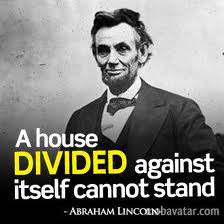
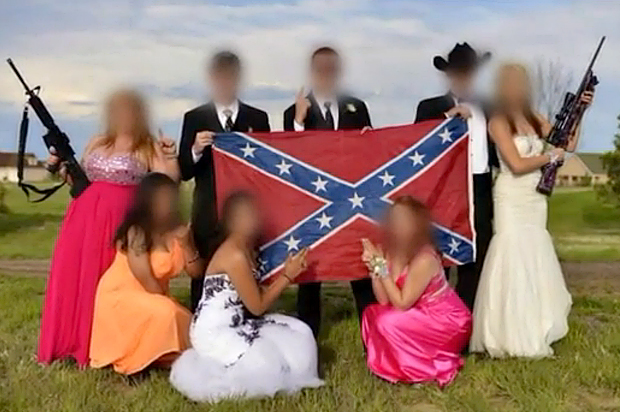
The controversy raging around the display of the Confederate flag breaks my heart. This symbol of southern pride, adopted from a war which pitted brother against brother and  usurped by the KKK, should not be a symbol at all. We southerners have many things to be proud of, and that flag isn’t one. Our heritage is richer than that, runs deeper and truer, and we should not allow ourselves to be defined by the stars and bars.

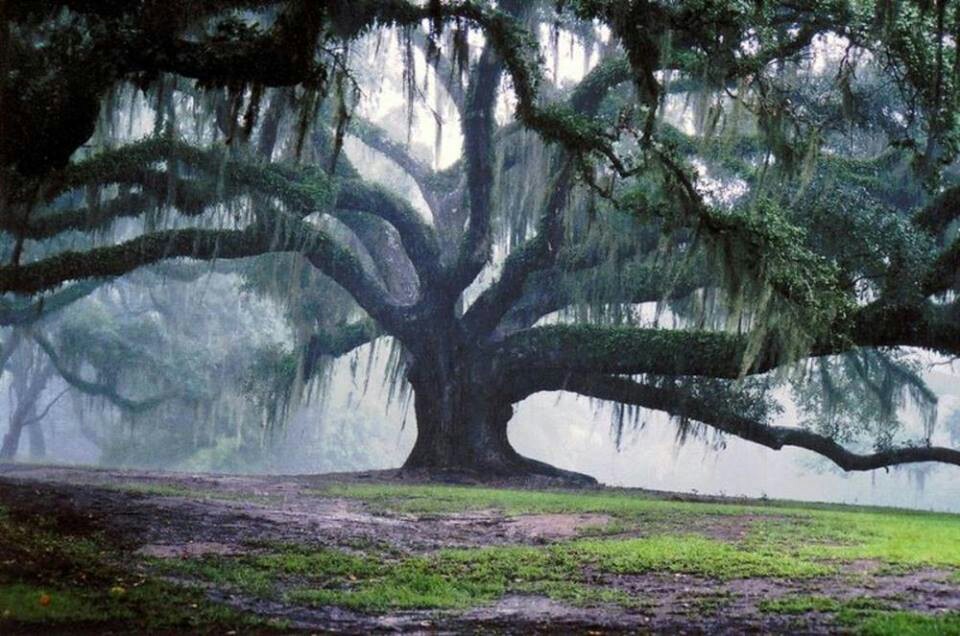
I was born and raised in the deep south, and I’ve lived there all my life. I grew up in a sleepy town on the Florida-Georgia line, where football players were rock stars and Friday nights in the fall were the highlight of the year. A town of Magnolia trees and live oaks draped in Spanish Moss, where pickup-trucks with mud on the tires lined the Baptist Church parking lots every Sunday morning. My southern drawl is sweet as honey-dew or ice-tea on a lazy afternoon in July. I say “ya’ll, bless your heart, and amen.” I love the poetry of Faulkner and Merle Haggard and the opening notes to Sweet Home Alabama.

The land I played on as a child and the woods I scraped my knees in with my cousins were farmed by my Grand Daddy. My mother worked the fields with her 8 brothers and sisters, and in tobacco season her hands were raw and her face was burned by the sun. Most of my family still lives on that land, and our family reunions are feasts of friendship and fresh vegetables and laughter. There is pride in that. In family, a thing which we southerners take very seriously. We take care of our own.
35d72460ac5de2352963a91b6665a9f1

Driving through town, you’ll see American flags flying,whether it’s July 4, Memorial Day, or just a random morning, because patriotism runs deep here in the south. Throughout Americas wars, the South gave many of its sons to the United States. God, Family, and Country. This is much of what it means to be southern. There is also a sense of rugged individualism. My Daddy taught us, like his taught him, to work hard and to think for myself.

And then there’s the icky part. Slavery, the Civil War, Jim Crow, and lingering racism. Unfortunately the Rebel Flag symbolizes those things, particularly to those who are not from the south, and in a more subtle way, those who are, as well. I wish it was not so.
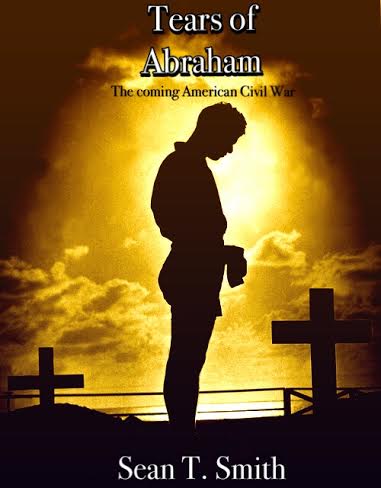
Abraham sample cover

There is a great dichotomy between patriotism and embracing a symbol of sedition. A contradiction in reading the King James version of the Gospel, and then uttering the N word with the same mouth. A lack of gentility and hospitality in flying a flag which is inherently offensive to others. A celebration of the War of Northern Aggression which was actually a war to preserve slavery, a codified, immoral, abomination couched in terms of states rights. The right the states wanted, though, was the right to own people. That’s not something to be proud of.

My social media news feed is rife with posts with rebel flags, and people, some of them dear family members, who defend the idea of displaying the flag because it is a part of southern pride and heritage. Maybe they’ve forgotten or overlooked what it actually means. The more angry the rest of the country gets, the more entrenched these folks become, rather than questioning what they believe to be true.
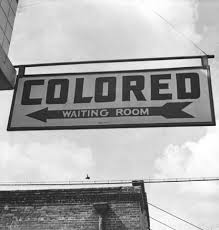
colored

Once again, brother is pitted against brother, and this flag is hurting the south again, tearing at families, destructive as Sherman’s march. Only now, we are burning ourselves to the ground. The war is over, the south lost, and it was a foolish war in the first place. Get over it and embrace what it truly means to be southern, not some romantic, idealized notion of a past that was never was. We have much to be proud of. Let’s celebrate that.
Where Was God?

1017214_4396616973294_596035942_n

A twisted gunman burst into a church and murdered Christians in an act of hate and cowardice. My heart aches for the fallen, and weeps for my country which seems broken. Where was God when the bullets tore through believers in His house? How is it that darkness appears to be defeating light?

The struggle that I’ve been through the last few years, the problems that I’ve faced, pale in comparison to those of others. I’m not looking at imminent death. Still, it’s been a brutal road for me and my family, with poverty looming, the loss of a job, and emotional battles raging. I have found myself asking, more than I’d care to admit, where was God?

In my novels, this is a central theme, the ongoing erosion of faith in the face of evil and despair. For the Fox family, there are epic battles and catastrophic losses, and still William and Crystal are never truly destroyed. Their faith is stronger than my own has been, the sort of belief I long for and which I see in some of the strong Christians I know. I’m praying, learning, trying to guild myself with the Armor of God.

Often, the hardships we face make us question the beliefs we hold most dear. I believe that God uses times of tragedy, loss, and inexplicable pain to draw us closer to Him, to bring us to a better understanding of His nature. Jesus says in John 16:33, “I have told you these things, so that in me you may have peace. In this world you will have trouble. But take heart! I have overcome the world.”

It’s easy to blame God when terrible things happen. I know, because I’m guilty of this arrogant, human act. The truth is, evil in this world is committed by man. God did not cause that crazed, racist nutcase to enter a church and kill people. That was a decision that kid came to all on his own, one of free will. Our actions have consequences, for good or for bad.

God is alive and at work, and I’ve seen miracles with my own eyes. I’ve witnessed it in my life, and the lives of those that I love. Too often, I forget, for my faith is not as strong as it should be. In a world of seven billion people, there are tragedies every day, and the news will focus on the ten worst things and beat it into our brains, giving the impression that the world itself is bleeding and slipping into madness, that evil and peril lurk around every corner. We hear the bad but not the good, and this creates a pervasive, ongoing illusion, a destructive one, a lens through which we view the world shaded by darkness, one that filters out truth and light.

For the ten stories of accidents, shootings, disasters, and fires (the media is obsessed with fire of all sorts, from bombs to brush fires) there are a hundred stories we never get to hear. Lives saved, random acts of kindness, hope restored, faith found, and illness cured.

Where was God? He never left. He didn’t move, I did. Sometimes I forget.

“For you were once in darkness, but now you are light in the Lord. Live as children of light.” Ephesians: 5:8

Altering the cycle… Love and Hate in America

mk

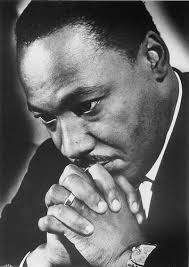
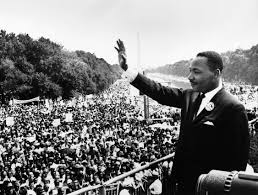
“Darkness cannot drive out darkness; only light can do that. Hate cannot drive out hate; only love can do that.”

   Martin  Luther King, Jr

Baltimore burns and the nation cringes. We see the non-stop coverage on CNN, the same inflammatory images repeating on an endless loop. Hate is like that, too. It doesn’t stop until we turn it off; unfortunately many people are turning it up, until rhetoric is a scream which drowns out any sort of hope to solve the underlying problems. The racial problems in this country, from economic disparities and police violence, to political disenfranchisement must be addressed. The nation is hurting and the rage seethes just beneath the surface, spilling out into the streets with increasing ferocity.

I’ve seen a staggering number of internet posts claiming that our current racial tensions are President Obama’s fault. The people who believe that are deluded. When Obama was elected the racists kicked into high gear, really putting their backs into it, finding ways to sow fear and cruelty and divisiveness. Hate-mongers with microphones and laptops have done their best to frame issues in the meanest, most lopsided ways possible, worsening a greater problem.

So the cycle continues something like this: poverty, lack of opportunity, and a toxic environment lead to a feeling of powerless, gut-wrenching anger. When racial profiling and police brutality are not only systemic, but systematically denied by governments, those same people get even angrier. They protest. Most of them are peaceful, but violence erupts, gasoline on the fire. While the news spends 90% of its time playing the inflammatory images of police getting hit by bricks or of stores burning, the media misses the greater story. The country misses the truth, and the truth is not black and white. The greater story, the real one, is more complicated… it’s more than one story. The one where blacks and whites are working together for positive change. The story of children handing out water bottles to police officers, cops risking their lives to save teenagers, grandmothers and fathers marching for justice that has thus far been elusive. The story that black teenagers know all too well, of the conversation their parents had with them when they first got their driver’s license. “If you get pulled over, keep your hands in sight at all time. Say ‘yes, sir,’ and don’t make any sudden moves.”  White kids don’t get that talk.

White people and black people alike are appalled by this violence in Baltimore. It’s counter-productive. It only serves to confirm racist suspicions coiled around the back of many people’s minds, triggering otherwise sane and seemingly decent people to spout bile like Linda Blair in The Exorcist. Rather than stepping back for a moment and asking why these people are so angry, it’s easier to say “what kind of people burn their own city?”

And there it is, couched in what passes for discourse and news coverage. Words like us and them…Those people. There is an “otherness” about the dialogue, rather than a togetherness. Hate, rather than love.

Racism and bigotry are a choice. If this nation is to heal, each of us must do some collective soul-searching. We’ve got to choose love over hate. We must place a priority on our nation’s future, and that means creating more jobs and educational opportunities, putting an end to the bloodbath taking place every day in our inner cities. It means voting for leaders who recognize the severity of the problem and who offer realistic ways to address it, regardless of what party they happen to be affiliated with.

Rather than be outraged at the violence we’re seeing on the news, we should be shocked for the reasons it is happening. We must come together as one people in the spirit of unity and love, for that is the only way to end this cycle of hate.

Racism in America

mlk

We can deny a thing, but this does not make it any less true. Racism exists  and continues to shape America, and while some still dispute this, it remains a fact.  Can we, as a people, overcome this legacy, or is the nation doomed to repeat the same mistakes repeatedly, inventing new tragedies along the way?

Racism is more than one thing.

There are different kinds of racism, but at it’s core is a generalization, a stereotype, which is used to define an entire group of people based upon ethnicity. It is limiting, reducing the content of a person’s character to the color of their skin.

Institutional Racism

When racism is codified, when the promise of equal protection under the law is broken, the country itself is undermined.Police officers shoot and kill unarmed kids without consequence. Racial profiling. Gerrymandering in minority areas to split up districts so that the vote is diluted. The inequities in our Criminal Justice system in which black offenders are far more likely than Anglos to receive harsh sentences. The disparity in funding for schools and education between affluent areas and inner cities. Institutional racism dates back to the origins of our country, when slaves were deemed to be less than human. The Emancipation Proclamation began to address this, and the Jim Crow laws were finally repealed, and the Voting Rights Act was a great step toward dismantling institutional racism. It lingers, still, though, and all you have to do is flip through cable news to see it.

colored

This is directly linked to economics. Poverty perpetuates racism. Lack of jobs, education, and opportunity creates an endless cycle. A war on poverty is also a war on racism; this is the battle we need to be fighting, not a war against eachother.

Cultural Racism

Racism is part of the American psyche, woven into our collective history. It thrives in the South, but is by no means limited by geography. Stereotypes, played out again and again on television and movies, in music and the stories that the news decides to focus on, reinforce this kind of racism. This works both ways, too. In many black communities, there is a distrust of white people, of the police, and the feeling that not only is their voice not heard, but that it does not matter. This distrust, distaste, this sense of unfairness spills into the streets, simmering in the shadows until it explodes with violence.

Individual Racism

Each person must make the choice to be color-blind. It starts with us. If collectively we choose to see a person for who they are, not by the color of their skin or the clothes they wear or the car they  drive, then racism will cease to plague the nation.

Closet racists are the worst. They fill a pew on Sunday morning and spew hatred on Sunday night. They choose sides, rather than choosing a person. They don’t consider themselves to be racist, yet their actions prove otherwise, their veiled condescension, the hypocrisy they wear like a coat. When the media seizes upon cases like Trayvon Martin or the killing in Ferguson, these are the people who assume that a kid deserved to die, rather than question their own beliefs or the facts of the case. They call in to talk shows like Rush Limbaugh, hide behind anonymity on social media, and broadcast hatred and division with snarky memes and mean headlines.

If this continues…

a

The country is becoming increasingly diverse. America has always been a melting pot, but it’s been the rich white folks who have made policy decisions since our founding fathers signed the Declaration of Independence. As time goes on, the balance of power will shift. It’s already happening, and there is much screaming and gnashing of teeth over this fact. It’s inevitable, though. Within two generations, white folks are going to be in the minority.

There have been calls for civil war, revolt, secession, assassination and violence from extremists who are terrified of the changes coming to America. Rather than work within the system, they seem to want to break it entirely. This kind of thinking is seditious, dangerous, and gaining traction. As we move into the next election cycle, it’s going to get even worse.

We need to vote for responsible leaders, and do it in every single election.

But people are decent and good, for the most part...

The next generation will be better than mine. My kids don’t really see race. I think each subsequent generation will improve upon the one before, and that with time, the lingering vestiges of racism can be stamped out. It takes time, effort, and teaching our children. It takes honest dialogue and love for one another.

“Darkness cannot drive out darkness; only light can do that. Hate cannot drive out hate; only love can do that.”

Martin Luther King, Jr.

Check out my books on Amazon! Next year, The Tears of Abraham will be published, a novel about the coming American Civil War.

Children cover