THE ROAD TO ASHES 4: Going Off-Grid

Jamie Mason's avatarJamie Mason

I began writing THE BOOK OF ASHES in May 2013. This coincided with a personal decision to withdraw from society as much as was practically possible for a period of time. Initially, I believed the withdrawal would be temporary . For while I have always admired the monastic life, I have never been able to conform to either its religious or aesthetic strictures. My mind delights in spontaneity, and I am too spiritually omnivorous for holy orders. And yet three years and two books later, a discipline of its own has emerged from this existence and I remain committed to it. If anything, my isolation will deepen.

I better explain.

I have a book coming out next week – an important one for me. Although I don’t begrudge it of others, I never did the whole “professional-workshop-rub-elbows-with-authors-and-editors-of-note” thing. I have noticed how the publication of a workshop grad’s novel is treated as…

View original post 384 more words

America Divided: “We, the sheeple…”

a


I mourn for my country as it tears itself apart. We are better than this, and seem to have forgotten. Not since the Civil War has the United States been so torn, and it’s along similar geographic lines. In the wake of the California, Paris, and Planned Parenthood shootings, the vitriolic rhetoric is nastier than ever.

We are under attack

America is under attack from enemies foreign and domestic. ISIS is no joke, no J.V. team, and they are not contained, despite what President Obama has said.  The war on terror, and ISIS in particular needs to be swift and brutal and waged without mercy. Before it’s over, there will be thousands of troops on the ground again because airstrikes will not stop ISIS. Unfortunately, this is only a temporary solution to a problem with roots more than a thousand years old.

The only way to truly stop ISIS and other violent, nasty terror groups long-term is for the Arab nations, and the Imams that dictate religious policy decisions in particular, to put an end to the cries for Jihad and reign in the fundamentalist interpretations of the Koran. Because while there are violent verses, there is also a message of peace in the mix. It’s a question of what people choose to focus on and believe.

Violent fundamentalism is a cancer, and it is spreading. Unfortunately, the U.S. plays into ISIS’s hands by turning a war on terror into a war on Islam. It’s what they want, both by making recruitment easier, and by undermining our collective values as a nation.  That’s how terrorists win.

The threat within

Our own citizens are far more likely to kill us than someone who sneaks into this country. Worse, they are more likely to destroy us as a nation.

Social media makes this worse. Reporting so slanted that it cannot rightfully be called news pours gasoline on the fire. Misinformation and lies abound, with memes designed to incite hatred and violence. People are inspired by fear, and fear sometimes leads to action. The fact that the leading GOP candidates are completely insane illustrates this.

Donald Trump Speaks To GOP Women's Groups

LAS VEGAS, NV – APRIL 28: Chairman and President of the Trump Organization Donald Trump yells ‘you’re fired’ after speaking to several GOP women’s group at the Treasure Island Hotel & Casino April 28, 2011 in Las Vegas, Nevada. Trump has been testing the waters with stops across the nation in recent weeks and has created media waves by questioning whether President Barack Obama was born in the United States. (Photo by David Becker/Getty Images)

Trump is woefully incompetent to lead the nation, his main attraction that he is willing to say anything, whether it is true or not, in order to get media attention. He seems bulletproof, in that he can get away with spouting absurdities and insults; people like this about him. “He says what we’re thinking, but afraid to say.” He is a dick, and people actually respect that about him.

It’s not just Trump, obviously, but his astonishing popularity is indicative of the greater problem: we’ve turned into a hateful people. There is virtually no reasoned discourse, no ability to look at issues from both sides. Whether it’s the Second Amendment, women’s rights, the war on terror, immigration, or health care, each issue is framed in black and white by the media. And people eat it up.

Gun control

I’m a strong supporter of the 2nd Amendment. That said, the word “regulated” is right there. I fail to see how supporting thorough back ground checks or better enforcement of existing laws is an infringement of this right. No one is coming to get our guns. That’s fear-based paranoia, and it works out well for the multi-billion dollar industry that manufactures firearms and ammunition. Every time there is a mass-shooting, stocks and profits see a huge spike.

This is an American issue, not one of left or right. Yet it’s framed in such a way that the very idea of restrictions on firearms becomes jackboots and Nazis confiscating our guns. Gun restrictions have not led to dramatic drops in gun violence, that’s true. But, the areas with the most guns have the most gun violence. Something needs to be done beyond more people walking around armed.

The looming Civil War

I routinely see people calling for a revolution or secession on social media. My next book, Tears of Abraham, which releases from Post Hill Press in March, is about this very thing. People call themselves patriots with one breath, and demand a revolution with the next. It’s despicable, unpatriotic, and in the end, evil.

The first page of Tears of Abraham:

Often, that which is done cannot be undone. Sometimes a pebble unleashes a landslide; a small object becomes unstoppable, smashing and sliding and gathering momentum until chaos pulverizes everything. When the dust settles, there is a new landscape, crushed and snapped and desolate, which surely the pebble did not intend. The illusion of control can be more destructive than nature itself, when hubris convinces men to believe the lies they tell themselves.

It began with a few powerful men, tinkering and arrogant, manipulating and prodding. Wealth and power, unfettered by wisdom and conscience, smashed the United States of America. History now remembers the conflict as the second American Civil War, although there were many citizens who then fervently believed they were fighting a Revolution.

The first Civil War cost the lives of more than 600,000 people, and was the bloodiest conflict in our country’s history. The second war was worse.

We, the people, are too easily led by fear and hate. We need to talk to each other, not at one another. Listen, and work together to fix what has become broken.  I shudder at the world my children will inherit, and can only pray that we find a way beyond the consuming darkness

.http://www.amazon.com/Tears-Abraham-Sean-T-Smith/dp/1618688197

cropped-banner11.jpg


Author update: upcoming projects

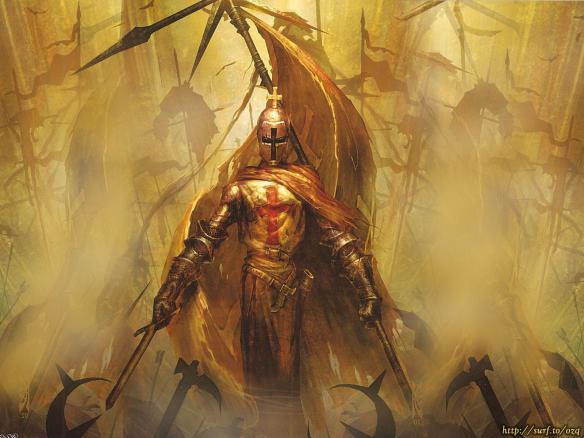
medieval-knight2016 should be a very interesting year for me! I’ll have my first book in bookstores on March 22 with the release of Tears of Abraham, a novel about the next American Civil War. I hope to generate some press and buzz with this book, as the nation continues to rip itself apart with political vitriol. I hope people read the book and come away with the feeling that we as a nation are better than what we’ve turned into.
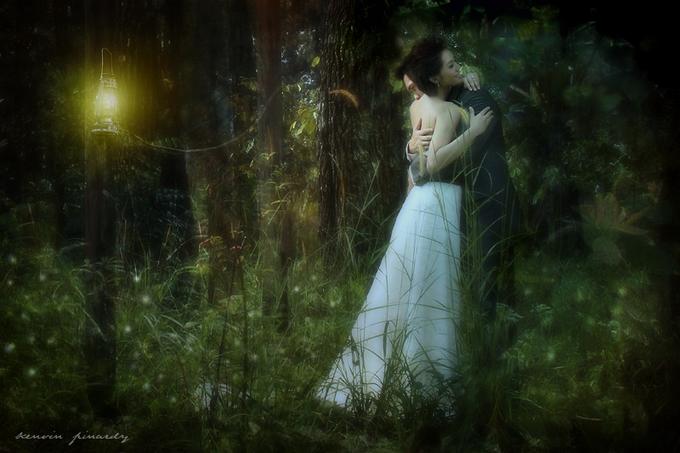
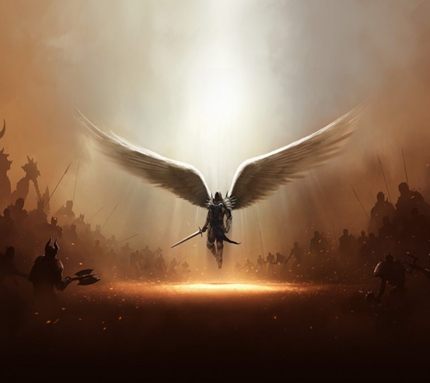
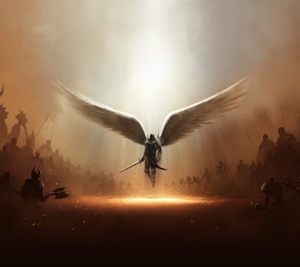
I’ve been working hard on Fate of the Fallen, and hope to self-publish this as a series. This novel has been extremely challenging to write because of the scale and the amount of research involved. The main character is an angel with limited abilities, and the novel follows his life, alternating between the past and present. He has been a monk, a gladiator, a crusader, a scholar, and a warrior. In the present, he is trying to prevent the next apocalypse. I’m planning on releasing this book next spring or early summer, and then following it with a series of novellas.

I’m outlining for my next full length novel, and this will be a big departure for me in terms of genre. I’ve been writing “thrillers with heart.” This next book is not a thriller, but straight forward literary fiction. I can’t wait to write it. It’s called Restoration. When  Arthur Glass’s wife asks for a divorce, he purchases a hundred-year-old house in historic Riverside, Florida. He forms a deep friendship with an old lady across the street, who tells him about the history of the house, and importantly, the stories that have unfolded within the walls.

The house has been an orphanage, brothel, speakeasy, and apartment during our nation’s great wars. Love, loss, hope, tragedy and miracles have lived here, and the stories Arthur hears mirror his own character arc, filling a need in him, reminding him of things he has forgotten and also teaching things he has never known.

Chapter One
Endings and Beginnings

Arthur Glass found the old house on Oak Street on the same afternoon his wife informed him that she was pregnant and wanted a divorce. He wasn’t ready for any of it.

He pulled his pick-up truck into the cracked concrete driveway and sat behind the wheel for a moment, gazing at the two story brick home before him, his thoughts a tangle of questions and despair. He needed a place to live, and he’d always liked old houses. He could do something with the place, as long as it had good bones.

How do people do this? How do you move on with your life when your life is destroyed, when everything you love is gone and your soul is peeled away? What is there to move on to? Why?

He picked his way around the overgrown yard, contemplating the exterior of the place. He guessed it was about a hundred years old, as many of the buildings in this part of Jacksonville were. “Historic Riverside,” was its moniker, an eclectic neighborhood where artists, professionals and vagabonds blended together. The streets were lined with majestic live oak trees, Spanish moss hanging down lush and lazy, a certain energy here he’d always liked.

The house sat on a dead end, and behind it was sprawling, shady Boone Park, the yard and park coming seamlessly together. The second floor boasted two columned porches overlooking the street and the park. Oaks, cedars, rose bushes and sago palms giving the grounds a wild, lush feel. Mocking birds twittered among the leaves, and on the steps a surly orange cat bestowed him with a baleful glare.

How did I not see this coming? Who is the father?

He used a credit card to pop the lock on the back door and stepped inside. The smell of mildew and age hit him and he took this in stride. Original hardwood floors, faded and worn creaked under his feet while he wandered from room to room. Plaster walls, some with ragged holes and all in dire need of paint. An old fireplace with a carved wooden mantle in the living room, two small bedrooms, a dining room, and a kitchen that looked like it popped out of Norman Rockwell’s imagination back in the fifties.

He wondered what stories had unfolded here over the years, what whispers these walls overheard.

He walked up a narrow staircase to the second floor, realizing that this was actually an apartment; each floor had a separate entrance. If he’d come here at any different time of day, perhaps things would have been different.
The late afternoon sun streamed through tall windows and filled the living room with golden October light, piercing the veil of decay and obsolescence with a kind of hope and warmth, inviting and serene. He could see this room filled with her canvasses and brushes and colors, alive with her laughter while she painted, dancing to Van Morrison, long dark hair cascading down her shoulders and blue eyes bright with creative mischief and something deeper, a peaceful sort of longing and truth. The way she used to look at him, but hadn’t in years.

She would love this room. Would have, he corrected himself. He had to think that way, and he knew it, but it was too soon and raw. He got it, though. Saw the truth even though it burned and always would and there was no way not to face it, here in that room with perfect light where the things he wished for were translucent dreams transposed onto empty spaces, emotional holograms bereft touch and feel. Delusions of simple grandeur that life boldly stated could never be.

Ghosts of tomorrow, that’s what they looked like to Arthur, and he could see them and it hurt to see.

Love is a contradiction, for it is beauty, promise and light until it turns, and when it turns, it’s quick and mean and dark and deadly and sucks everything in. A black hole birthed like an abomination from what was once a brilliant star, now hungry, relentless and devouring even the light which tries to escape it. Love is destruction. A force of nature implacable and cruel which obliterates what it does not tolerate: objects at rest, and things which have outlived their usefulness.

She says she loves me but isn’t ‘in love’ with me. What does that even mean? God, what happened to us?

Stepping into the room with the gold light spreading on empty spaces sealed his fate, for he knew at that moment that he was going to buy the place.

Love is restoration.


Other good news

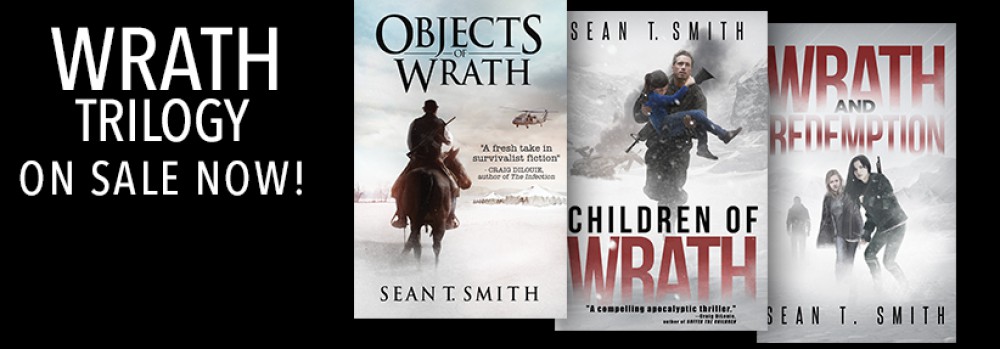
Children of Wrath and Wrath and Redemption have both been picked up by audible, so they will be available soon in audio format. That’s great news, because Objects of Wrath did pretty well as an audio book.

Also, the entire Wrath trilogy will be distributed by Simon & Schuster next year, meaning that I’ll have the ability to have that in bookstores around the country.http://www.amazon.com/Objects-Wrath-Volume-Sean-Smith/dp/1618682245


TREK

Great story from my friend Jamie Mason; he is an author to watch. (And read, of course!)

Jamie Mason's avatarJamie Mason

By popular demand, the story of that time I almost got to write for STAR TREK: THE NEXT GENERATION.

On 28 September 1987 I, along with everybody else, was parked in front of a television watching the pilot episode. I was a third year student at the University of Arizona whose enjoyment of the original series in re-run had instilled my ideal of sci-fi television grounded in the work of Harlan Ellison, Charles Beaumont and Norman Spinrad – science fiction greats who had turned their hands to writing STAR TREK scripts which justly became some of the most influential episodes in television history. What excited me about the original TREK was its willingness to discuss Big Ideas on the small screen. And, having been bitten by the writing bug, what excited me about THE NEXT GENERATION was the possibility of contributing to that cultural conversation. I was twenty-one.

Three…

View original post 1,056 more words

Beautiful Love

fairy taleSome things are only true for a time, doomed to become lies. Beautiful love cuts  away pieces of your soul, making it easy to surrender to the wisdom of the foolish and broken and jaded and the allure of open spaces and green grass.

It is easier to believe a smiling lie than a hurting truth.

Belief in a lie gives it hope and fuel until it burns with a truth all its own, a firestorm which sucks the oxygen from everything, consuming, destroying, burning, with self-fulfilling ferocity.

A lie becomes reality, not because it should, but because it’s easier clinging to a falsehood, wrapping it close and warm, rather than taking a naked look in the mirror. Anger, bitterness and pain whisper fragments of a story which has truth in it, but was never the whole. It’s only later we realize the deception, the undermine and erosion, and the consequences which ripple across lifetimes and generations.

Love is hard. It’s patient and kind and mean as hell and destroyes and creates. It’s late nights with babies, singing songs and diapers at three in the morning and believing when faith doesn’t make sense. It’s hope and failure and anguish and joy and dreams and nightmares shared. It’s tenderness and tenacity, touch and joy, forgiveness and work. Love is laughter and agony and hope. Love doesn’t give up, even when it looks like it should. Love is life and death and rebirth.

Love is a feather caress in the dark of the night  when the walls are closing in and a grateful cup of coffee when the light breaks soft and warm, steaming with a hope almost forgotten. Love remembers.

It’s falling in and out and finding each other again because being “in love” all the time is rainbows and uniciorns. It’s the grit and the grin and the tenacity that make love worth more than a fleeting sigh or a country song, the history and future which make a beautiful love. 

It’s the trenches and the peaks, the blood and crud and overcoming after all of it, where you look back and know. Where you reclaim a truth that seemed absent because darkness is hungry and mean and devours love whenever it can.

Beautiful love grows together and makes new, creates, sustains, and builds.

A beautiful love is the rareist thing on this earth.

Faith and Fiction

This is a story of triumph, so please bear with me because it might not sound that way at first. Happy endings aren’t worth a damn if there weren’t tears along the way.

  
I love writing and God. The love of those two intersect, in spite of my passion for other things. I love my wife and my children. I love to play music and dream melodies and yearn to create something beautiful and true.

I love the way the sun breaks when it’s rising over the Gulf of Mexico when I’m so far from land that the sea and sky are the world, and there is that perfect orange light born, glittering on the waves, and the hope of a good fish and that day sings in my chest. The best part, knowing that the next day will be just as good, infused with the same hope. For me, those moments have been few,  and I’m blessed to remember them.

It is easy and dangerous to make the things we love God.

A mentor and friend, a brilliant songwriter far beyond me, convinced me that the only way to succeed was to be willing to sacrifice everything at the altar of writing. I listened to him and to my own demons and learned the wrong lessons. My friend would smack me in the back of my head now if we were sitting next to each other at a bar in Nashville. I have tears in my eyes remembering him and the way he made me a better writer, and I wish I could hear him say something sarcastic and kind. 

Writing is not God, though we make it so.

Writers are not destined for pain unless they choose anguish. Joy is the lyric and the page and the melody and truth beneath. God is God.

Sneek Peek… FATE OF THE FALLEN

scale.php

Chapter Twenty-Two

When faith is the bedrock upon which a life is built, the loss of it, when belief crumbles to dust, reduces a man to bitter, abject desolation. Malak died in the sand, and in the sand he was reborn.

Waves crashing, the sun blinding, and the ocean a pale welcome blue, he plucked a crab from his chest and pulled yellow seaweed from matted hair, pushing himself into a seated position. Coconut palms stretched toward the sea along a pristine white beach. At his back a steep mountain lush with green jungle rose toward the cloudless sky. He’d never been anyplace like this before.

“Is this heaven? My reward? It looks a little lonely,” he muttered.

A seagull landed a few feet away and twittered at him. The crab scuttled along the surf line with one oversized claw, and one tiny, ridiculous one. The big claw raised like a shield.

“What do you want from me?”

The breeze,balmy and sweet, ruffled his long hair.

“Remember our last talk? I quit. I’m not doing this anymore.”

The palms rustled and the waves broke upon the reef line and lapped the shore, a steady rhythm of foam and clear water, more than a whisper, less than a conversation. Peaceful, serene.

Malak was not in the mood. He thought about the family he’d lost, the screams of children still echoing in his heart. The demon he’d faced, a thing which he never known walked the earth until he’d felt its unholy power. To him it was days ago, though he had no idea how much time had elapsed between Baghdad and wherever this was. Whenever he was.
His existence was unfair, he decided. Every life he’d lived felt futile, as did life itself. The friends he’d seen die, the blood he’d spilled with a blade… there seemed to be no sense to any of it, within the context of a loving, living God. Especially given that reality.

While he had experienced great peace, the times of turmoil and war overshadowed this, and he saw that both he and mankind were no closer to figuring things out than they were centuries ago.

The crab skittered toward a hole in the sand, and the bird hopped over to the crab and skewered it.
The crab does not pity itself, even as it dies, any more than the bird gloats over the killing and the meal. Men are different. Perhaps emotions only make living harder. For the crab does not expect to live any more than the bird believes it will eat, and the fact that these desires conflict keeps neither awake at night. If the crab assumed he’d be protected, living the crab-life, surrounded by hungry birds, yet confident in his continued prosperity, he would get angry when that beak pierced his shell.

“What’s the point? Clearly, there isn’t one. When I believe, you destroy. You are God. I can’t deny that you exist. Not after the things I’ve seen. But you are not what you should be. You’re a cheat in the marketplace, full of sunshine promises and whitewashed smiles, who then vanishes when it turns out you sold a lie, a cracked jar. You have no integrity. That you exist does not make me love you.”

He knew that these words were the worst sort of blasphemy, and it his lips burned a bit with the speaking of them and his guts tightened up, his body rebelling against his mind.

He walked along the beach, letting the water slide over bare feet, feeling the sand between his toes and the warm sun on his neck. He walked for perhaps an hour or two, and wound up where he started, circling back to his first footprints. The bird cocked its head at him and laughed in the way that birds sometimes do.

He was on an island.

Malak plopped down in the sand and watched the sun slide below the ocean, streaks of pink and yellow and purple painted upon the vast sky, and the face of the waters shimmering orange against the dancing white of the breakers and the deepening blue of the sea. The day dying, the night born.

He did not move, watching the first stars appear, punching through both light and darkness, becoming a wondrous myriad of diamonds strung melting into the sea. All the while, the waves hushed and frothed, luminescent and soothing.
He decided he would explore the interior in the morning, and that if he wanted to quit living and dying for both God and man, this would be the perfect place to do it.

That is exactly what he did.

He would come to call the island “The Rock,” and although he couldn’t know it then, it would become a place of solitude and wonder and joy. It would be a refuge, the only place he was born again more than once; often as he was dying, he prayed he would wake up there. It didn’t happen often enough for his liking, but when it did, he’d feel the sun on his face and the thirst in his soul and hear the music of the ocean and he would smile.

It took time to figure this out. Malak was hard-headed, and immortality proved no solution to being stubborn.
Water was a problem, and it was only through dumb luck that he figured out that coconuts held life-giving water within their hard shells. During a storm, a green one fell next to him, and he heard the liquid inside. After wasting the precious liquid on the first few attempts, he learned how to remove the outer husk and pierce the shell within, drinking heartily. He also learned to drink from plants after a hard rain, and started collecting his coconut shells to gather water during the rainy season. Despite being stubborn, Malak was smart and tough and adaptable

He ate fish every day, because the flesh contained water. At first he speared them, and as time went on, he learned to dig alcoves reinforced by coral and lava rock, letting the tide bring the fish in, where they would be stranded after it receded. He added nets formed with vines from the jungle to make this more effective. There were abundant fruit trees on the island, as well, and when it did not rain enough, these saved his life more than once. The island provided.

He was gifted and cursed with what would later be known as a didactic memory. He forgot nothing. He could recall the taste of food he’d eaten in the Ludus or Lisdenfrane on any given day at a specific meal, along with the ribald or Godly conversations which ensued. The more alone Malak was, the more he retreated into the past, finding comfort and solace with friends long dead. Hearing their cries, at the end. That was the thing.

As good as his memory was, these conversations were all one-sided, more akin to eavesdropping. He could not speak to his comrades any more than they could talk to him on this deserted island. The moments were what they were, unaltered and done, and even though Malak wished to speak into the past, he could not. What was done was done.
He exhausted these memories, and that soul-shrinking loneliness came back. It was a poverty of the soul.

He needed to get off the island because he was going insane. Also, he was bored. He’d been there for more rainy seasons than he could count. At least twenty years. He had every cause to believe that the easiest way off the island was to die.
At dawn, after a long night of dead conversation, he set out into the ocean.

He swam beyond the breakers, the waves smashing into the coral below, his blood blooming in the clear water, warm in the way that Lisdenfrane was not, wild and teeming with life and death.

The first time, he made it beyond the reef. He swam until he was exhausted, swept by the current out into the open ocean. He choked on salt water and sputtered and stroked. Things stung and nibbled at his extremities. The moon rose high and bright and he was far from land and man. He rolled onto his back while a thunderstorm crashed a few miles away, lightning arcing from horizon to horizon, white and ragged, waves building, his body carried up and down, as alone as any man can ever be.

“Here I am! Kill me! You don’t care, so let’s get it over with!” He gulped a cresting wave, the water stinging his eyes.
The first shark took his right leg above the knee with one bite. It felt like a hard shove, followed by tingling and pain and ironic, gulping laughter. The next shark chomped him in the torso and took him down for a while, a plunge into the dark, where his ears hurt and his lungs burned and his guts were on fire below the sea, and Malak decided that there were better ways to die.

He felt the same sun, heard familiar lazy waves, and saw the same damn bird making angry tracks in the sand when he opened his eyes again.

“Really?”

He experimented with ways to kill himself for a season. Drowning, starvation, fire, and the ever faithful sharks. None of it worked. He wound up back on the beach.

And so began the conversation that mattered. The one he was meant to have.