What if the Power Grid Goes Down in America

If you live long enough, you start to understand that the things we take for granted—light at the flip of a switch, water flowing from the tap, the hum of the refrigerator—are not guarantees. They’re conveniences balanced on a fragile lattice of infrastructure, politics, aging equipment, and wishful thinking. And every now and then, usually at three in the morning when the house is quiet and the world feels thin, I find myself asking the question most Americans avoid because it’s too uncomfortable, too real: What happens if the power grid goes down?

Not for an hour or for a day. But for weeks. Months.

The truth is, we’re not ready. We’ve built a civilization that runs on electrons, and we behave as if those electrons are eternal, ordained, and immune to failure. They aren’t.

Imagine the moment it happens. You’re sitting at home in Jacksonville, maybe watching the news or scrolling through your phone, when everything snaps off. The ceiling fan slows to a stop. The refrigerator clicks silent. The Wi-Fi dies. You wait for the power to return—because it always does. Except this time, it doesn’t. We’ve been through outages in hurricanes that last days, maybe a week but the power always comes back on. We trust that it will come on soon this time, but…

Within hours, the world begins to tilt. Because this time, it’s not just where you are, it’s everywhere.

Traffic lights go dark, and intersections turn into games of chicken. Gas stations can’t pump fuel. ATMs don’t work. Your phone becomes a useless brick once the battery drains. Grocery stores stay open only as long as the daylight allows, and the shelves empty fast—faster than you think—because Americans panic with astonishing speed. And it’s cash only because credit card machines are down. Some stores accept checks for future payments, and the employees price gouge and line their pockets.

Within a day, the quiet becomes unnerving. We’re used to the background hum of civilization: HVAC units, cars, televisions, the constant buzz of electricity. When it’s gone, you hear things you forgot existed—wind through the trees, distant sirens, your own heartbeat.

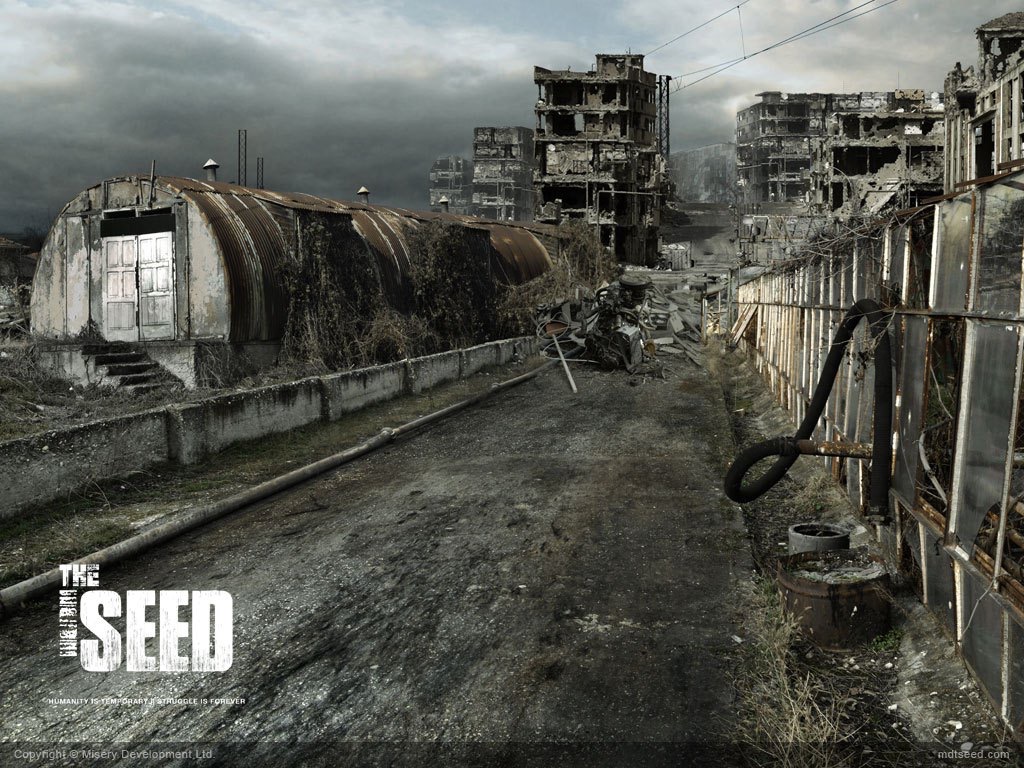
By day three, the heat becomes a problem. Florida without air conditioning is a different world. People get desperate. Tempers shorten. The vulnerable suffer first: the elderly, the sick, the poor. Hospitals switch to generators, but fuel runs out. Medications spoil. Life-support machines fail. Food rots in fridges and the smell is death itself.

By day five, you start to understand how thin the veneer of order really is.

We like to imagine ourselves as rugged individualists, but most Americans don’t know how to purify water, cook without electricity, or navigate a world without Google. We’ve outsourced resilience. We’ve traded self-reliance for convenience. And when the grid goes down, that trade becomes painfully clear.

Communities fracture. Some band together. Others turn inward. Neighborhoods with strong social ties fare better—people share food, tools, information. Neighborhoods without them become dangerous fast. Darkness breeds fear, and fear breeds violence.

Law enforcement does what it can, but without radios, without fuel, without coordination, they’re fighting blind. The federal government tries to respond, but the grid is massive, interconnected, and aging. Repairing it isn’t like flipping a breaker. It’s like trying to rebuild a spiderweb while the spider is still crawling across it.

And then there’s the psychological shift.

When the lights don’t come back on, people stop waiting and start adapting. Some rediscover old skills—gardening, fishing, repairing, bartering. Others spiral. Civilization is a story we tell ourselves, and when the lights go out, that story changes.

But here’s the part most people don’t consider: America is resilient. Not because of our infrastructure, but because of our people. We’re loud, stubborn, inventive, and impossible to keep down. We rebuild. We improvise. We survive.

If the grid went down, it wouldn’t be the end of America. It would be the end of America as we know it.

The question isn’t “What if the power grid goes down?” The question is “What kind of person will you be when it does?”

Will you be the neighbor who hoards or the neighbor who helps? Will you be the one who panics or the one who plans? Will you be the one who clings to the old world or the one who builds the new one?

I write about collapse because it reveals character. Strip away the noise, the politics, the distractions, and you find out who people really are. And maybe that’s the point of asking this question at all—not to scare ourselves, but to remind ourselves that comfort is temporary, and resilience is a choice.

If the grid goes down, America won’t vanish. But it will change. And so will we.

The lights are on today. They might be on tomorrow. But nothing is guaranteed.

So ask yourself—quietly, honestly— Are you ready?
Inside the Idea: A Glimpse Into A Crusty Writer’s Mind

A Fascination With History

When I was a kid I was blessed to have parents who encouraged my interest in history. My folks took me to countless forts, battlefields and museums. There is something special about seeing things in person rather than just hearing about them in school. I remember standing on the battlefield at Antietam when I was twelve and trying to imagine what those boys who had died there might have felt as they faced a charge. I recall closing my eyes and seeing the flash of bayonets and there was the smell of gunpowder and the screams of the wounded and dying. Inside the farmhouse there were pictures of dead soldiers sprawled over the very ground where I stood.

I visited many revolutionary war battlefields and was privileged to explore the Smithsonian. History came alive for me. I recall being blown away by the fact that I was looking at George Washington’s sword, the one he had worn into battle. And then seeing the sword that he accepted in surrender from General Cornwallis at Yorktown. The connection between where we had come from as a nation and where we’d ended up seemed to be a tangible thing that mostly made sense to me. It gave me a deep sense of appreciation for those who’d sacrificed everything for America.

During those same years, I was devouring science fiction like a starving man at a Golden Corral, eagerly immersing myself in futuristic worlds and complex narratives. The imaginative universes created by authors like Asimov, Heinlein, and Herbert made a huge impact on me, each story weaving intricate themes of humanity, technology, and moral dilemmas that challenged my perspectives. I found myself pondering the ethical implications of artificial intelligence in Asimov’s tales, the gritty social commentary within Heinlein’s works, and the rich, intricate political landscapes of Herbert’s Dune series. Each book opened a new door to possibilities, fueling my curiosity about the universe and igniting a passion for storytelling that has stayed with me ever since.

I think my books reflect my love of history expressed through the “what if?” lens of science fiction.

A Fresh Twist on Old Themes

With the Wrath series, I explored what the aftermath of World War Three might look like. In Tears of Abraham I delved into the horrific destruction that a second Civil War would bring to the country. The Fortress America will ultimately combine those two Themes.

I am hard at work on the next novel in the series, Anvil of War. This one is centered around the defense of Taiwan against the Chinese invasion, and it picks up right after the events of Forge of Freedom. The third novel is as yet untitled but will take place probably twenty-five years in the future and will revolve a second American Revolution in the wake of the Bates authoritarian presidency.

Some Tidbits

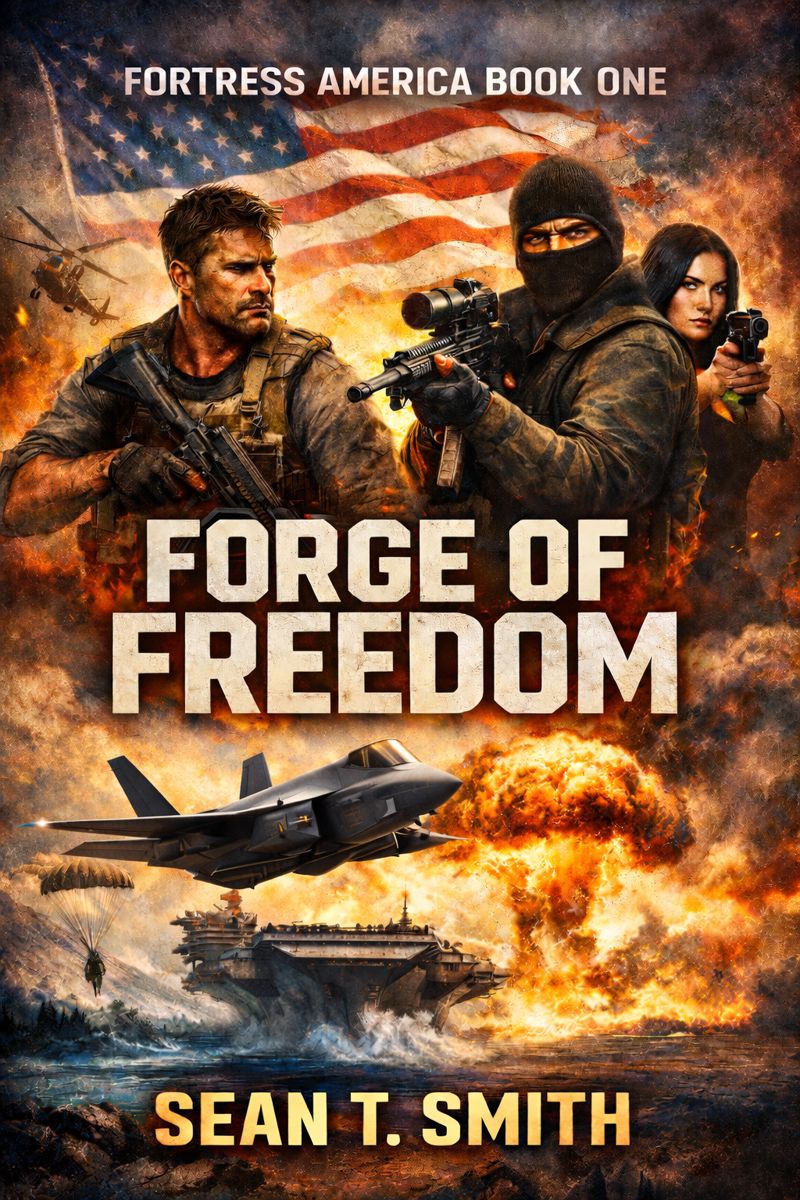
The title Forge of Freedom was my publishers’ idea. The brothers John and Dean must endure tremendous pressure from their father. The title is meant to evoke that heat and pressure and that hardened resolve.

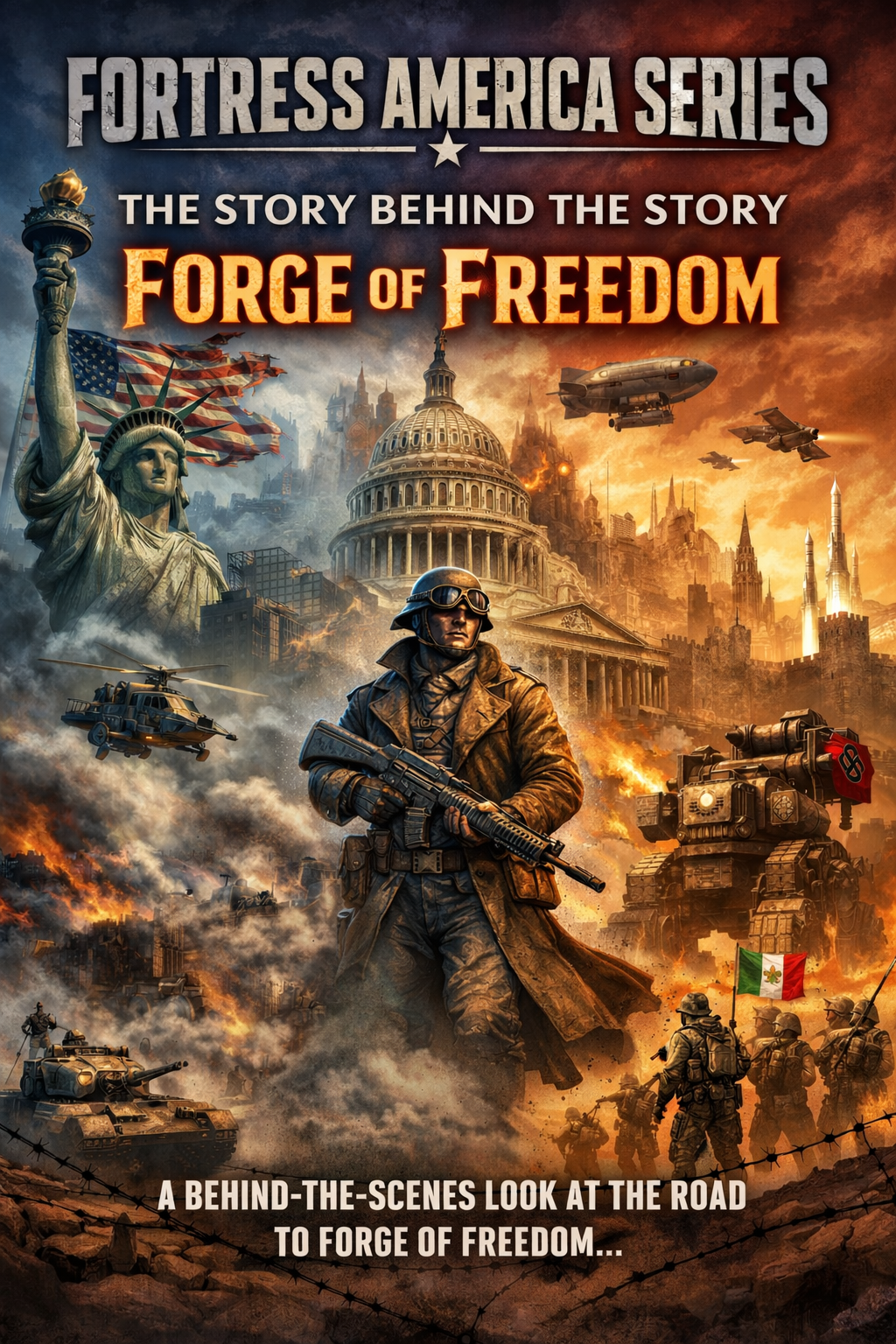
Fortress America is the name of a military board game I used to play with my old buddy Arthur back in high school. The premise of the game is that the United States has become extremely isolationist and is invaded. As of this writing, the global opinion of the United States has plummeted. 74% of people in Germany and 65% in the UK and Canada have unfavorable opinions of the United States. This, following the Greenland embarrassment, when Germany and France sent troops to Greenland to defend against America. If something does not change, NATO will fall apart.

I had planned and written the assassination plot line a year before Trump ran for office again. After the attempt happened, I was so discouraged by how close it felt to my novel that I quit writing.

Please leave an honest review!

I hope you enjoy my work, and will leave me an honest review on Amazon. Your thoughts and feedback are incredibly valuable not just to me but also to potential readers who are deciding whether or not to explore my writing. Reviews are really hard to come by, and they make a huge difference in helping my work reach a wider audience. A few kind words can inspire others to pick up my books and delve into the stories I’ve crafted. It would mean the world to me if you could take a moment to share your experience!

Coming soon!

I’ve been working on this series for a few years now, and just recently signed a contract with a new publisher for a trilogy. This book should come out in February 2026.

One viral act of battlefield defiance ignites a chain of events that will reshape a family—and a nation. Burt Freeman became an American legend the day footage surfaced of him fighting off a Taliban assault wearing nothing but his boxers and raw fury. Years later, back in rural north Florida, Burt is convinced a far greater storm is coming. He raises his two sons to be relentless, disciplined, and unbreakable—never imagining how brutally those lessons will be tested when the world begins to fracture.

As global tensions explode into open conflict, the Freeman brothers are hurled into the front lines of history. Dean becomes a naval aviator aboard America’s newest carrier. John earns his Green Beret. Across the ocean, a feared Russian sniper known as the Red Death and a beautiful, lethal sleeper agent are unleashed inside the United States, tasked with manipulating an American presidential election.

Great powers do not care who is crushed beneath them in their quest for power. Brothers are separated, loyalties are tested, and the world Burt tried to prepare them for is every bit as dangerous as he feared. Blistering with action, grounded in chilling plausibility, and driven by unforgettable characters, Fortress America: Book One – Forge of Freedom is a pulse-pounding political and military thriller about how heroes are made—and what happens when the war finally comes home

New Release!

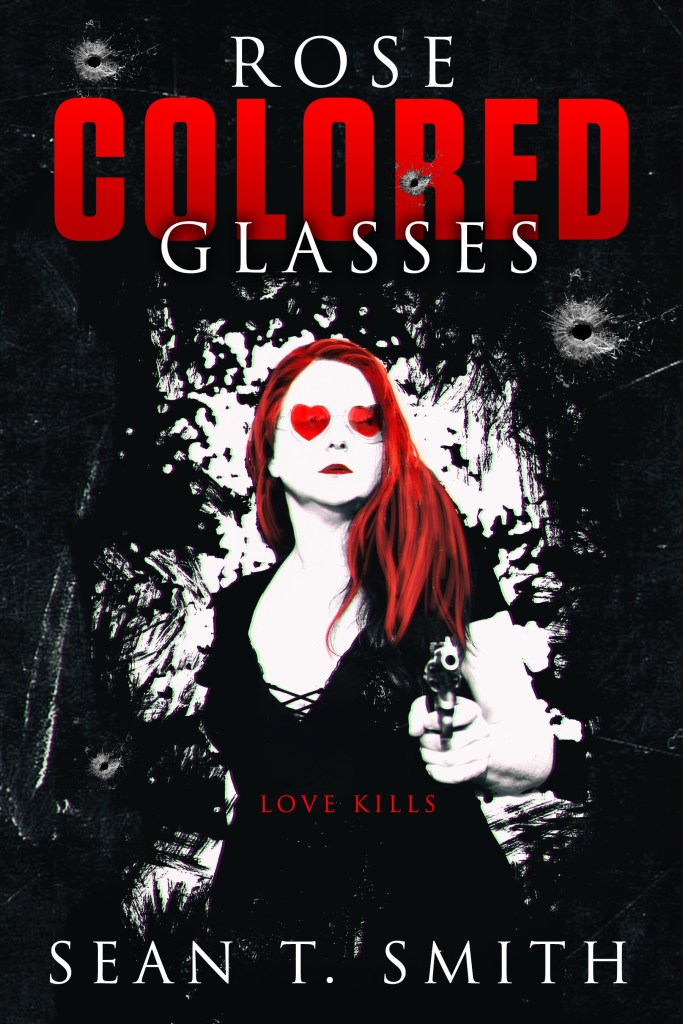
Rose Colored Glasses is now available in ebook and paperback.

https://www.amazon.com/gp/product/B0888T4RWP/ref=dbs_a_def_rwt_bibl_vppi_i0

For my fans, I’m sorry this took so long. I know some of you have sent me messages asking why I haven’t released any books in a few years.

There were two big factors. First, this was a very difficult book to write. It’s ultimately a love story as much as it is a thriller, and it centers around a failed marriage… something I’ve had intimate experience with. I struggled with how the book needed to end, writing many different versions of the last third of the book. I’m satisfied that it ended the way it needed to.

Second, I’ve been very busy with my day job as a solar consultant and my family. It’s been difficult for me to find the right balance of work, writing, and family. It’s a personality flaw— I tend to focus on only one of those things at a time, and when I do, other things suffer.

About the book—

My previous novels have been in some measure military thrillers, while this one revolves around only a few characters. This one also has some pretty graphic sex scenes and profanity, whereas the Wrath trilogy was squeaky clean.

I poured myself into this one, and there are certain things that cut close to the bone. I wrote large chunks of it while my wife and I were separated, so while the details of the book are vastly different from reality, there is a brutal honesty in the emotion.

What’s next?

I’m currently about 1/3 of the way through my next novel, the first in a planned trilogy. This one is more akin to the Wrath series. It will follow a family through three generations dealing with global wars sparked by climate change and pandemic, and in the final book, an American Revolution against what has become an autocratic, new-fascist government.

Thank you for reading!

I hope you’ll buy my book, leave me a review, and let me know what you think. I truly enjoy interacting with readers and discussing my books.

Great Expectations

My favorite opening line in literature is from David Copperfield: Whether I shall turn out to be the hero of my own life, or whether that station shall be held by anybody else, these pages must show.”

I love Dickens.

My reach has always exceeded my grasp. For artists, I think this is norm. It’s next to impossible to make a good living with words and rhyme, melody or canvas. Somehow, we keep striving, because we must. And part of that is the belief that somehow, some way, we will succeed, and hit something out of the park. I’ve clung to that belief all my adult life, perhaps foolishly. I’ve worked towards that goal, too, sacrificed time and memories and relationships at the altar of words. Sometimes I am plagued by doubt, brought to my knees by my innate selfishness and the thought of the tens of thousands of hours I’ve spent over a notebook, a guitar, a computer.

I remember the times I came so damn close, only to have things evaporate. The songs “on hold” by huge artists. The books that seemed poised to take off, only to wind up at the discount bin. I get my hopes up, and crash and burn, and it’s painful. At this point, I’m jaded. I still believe, though. I really do, deep down.

Yesterday, I got news that would have made my younger, less jaded self, dance naked in the streets. A major television network is very interested in my books. They want a meeting. Twenty years ago, I’d have lost my mind. Hell, twenty years ago, I’d never have believed I’d have books published, in stores. I was a songwriter, not an author. Life is funny.

I still have great expectations. This may fall through, and if so, it’s on to the next network, the next book, the next script, the next article. I can’t stop writing.

And if I never hit it out of the park, at least I can look myself in the mirror at the end, gray and worn out and full of regrets, but not that one.

So to my fellow creatives, keep writing, keep singing, painting and smiling. Keep believing.

Let’s be heroes.

Poetry

Words

I’m but a writer

A poor troubadour

Building castles in clouds

Dreams and nothing more
My love is fierce 

We’ll laugh and cry

The lows may be low

But the highs will be the highest
We’ll dance among the stars

I’ll make you believe

Till we break each other’s hearts

When we both see
I’m just a writer

For as long as I live

Words are the only thing

I’ll ever have to give

The Rush to World War III


The hammer sees only the nail, the sword craves blood, and the bullet yearns for a target. The world is now at the greatest risk for nuclear war at any time since the Cuban Missile Crisis. Certainly North Korea (DPRK) is a threat to stability in the region, but is it worth going to war over? Why is this happening now, and what are some solutions?

Why Now

The US goes to war when powerful interests align. Our country has a rich history of shedding blood for money, going all the way back to the American Revolution. It’s what nations do, placing the economic interests of the country ahead of human lives. It’s not pretty, but it’s a fact. From the Trail of Tears to the false flag “Remember the Maine” and on to the Gulf of Tonkin, the US has manipulated public opinion to justify wars for economic and political gains.

Remember the war in Iraq? After 9-11, the US craved (understandably) justice. When the bombs started falling in Baghdad, I’m ashamed to admit that I cheered. Intelligence supported the fact that Iraq possessed weapons of mass destruction. Colin Powell, whom I trusted, came on television to state this. The US went to war, and after years and as many as a million deaths, Iraq remains a quagmire. The truth of that war may never come fully to light, but we know that Cheney and Rummy believed that democracy was the answer to Middle East instability, and that by smashing Saddam’s dictatorship, the US could prop up a new government favorable to our interests. Oh, and oil. In that instance both the military industrial complex and oil companies stood to profit enormously.


Fast forward to Korea, now.

Saber rattling on both sides is nothing new. DPRK loves to issue fiery threats against the US. Little Kim is a little unhinged, that is true. But is he truly a suicidal one? If North Korea attacks the US, that regime is finished. Dictators want to remain in power, so it’s unlikely that this particular despot would go out of his way to attack the US, bringing about his certain demise.

Trump needs a war to distract the country from the investigation into his finances and possible collusion with Russia. Furthermore, the military industrial complex wants to see more spending by the federal government so they can build tanks, bombs, planes, ships, and submarines. There are trillions of dollars at stake. Wars have begun for far less.

The suspicious timeline

How is it that suddenly DPRK has miniaturized warheads? This assessment, in a story from the Post a few days ago, is based on the Defense Intellegence Agency. It’s not a consensus from all of the agencies who review intelligence. The NSA and CIA have yet to weigh in. So that abrupt assessment is suspect. Furthermore, even if DPRK has managed to miniaturize the warheads, they likely have not developed a re-entry vehicle capable of delivering the warhead to its target without burning up. Upon re-entry, the temperatures soar. As of only a few weeks ago, it was believed that North Korea was five years away from achieving these milestones.


Fear is the mind killer

The mainstream media thrives upon bad news and fear. By playing to our fears of a nuclear holocost, the march to war becomes something which the American public is more likely to accept. After all, North Korea is an “evil empire” bent on killing innocent Americans, right? The fact that Lil Kim uses bombastic rhetoric only serves to bolster the case against him.

Solutions

China remains the key. China can apply enough economic pressure to convince Lil Kim to abandon his weapons programs, at least or a time. Long term, the best solution, as insane as it sounds, is another case of mutually assured destruction. DPRK is a protectorate of China, and war with them means war with China. War with South Korea means war with the US. This would ultimately de-escalate tensions because both sides would understand the rules. Eventually, China should initiate a regime change in North Korea, propping up a government easier to manage.

Perhaps a fully staffed State Department is in order? A president who understands geopolitics?

The US faces a similar dilemma with Iran and Russia. If diplomacy fails, the alternative is unthinkable. Because World War Three is a war with no winners.

Shameless self-promotion

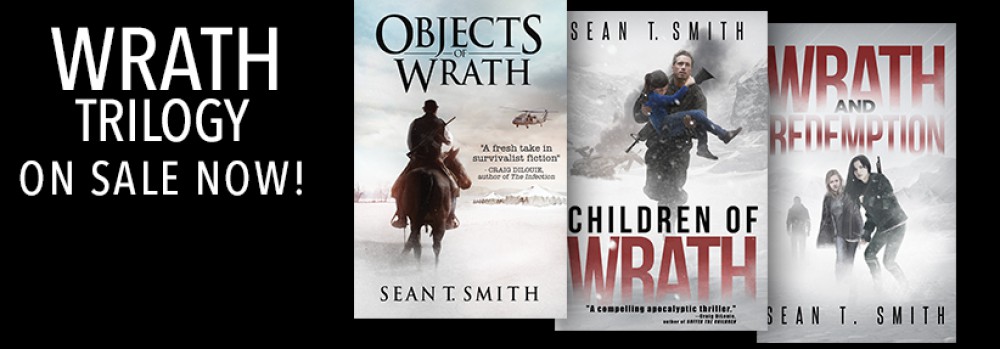
Finally, if you’re interested in reading about the aftermath of the next world war, please check out the WRATH series!

WRATH goes to Hollywood 


I recall those early heady days when Permuted Press offered me a contract for Objects of Wrath . They signed me to a trilogy, and paid me for two books I hadn’t even written yet. I got the advance within three weeks of signing, just days before Christmas. And, let me tell you,  it saved Christmas for my family. I had visions of family vacations in Jackson Hole and delusions of movies made. That was before reality set in, and I realized that a) the books weren’t going to sell themselves and b) Hollywood sure as hell wasn’t going to be kicking down my door.

Since then, I’ve finished four novels. Tears of Abraham, a stand-alone novel about the next Civil War, went into bookstores all over the country last year. Once again, I thought, “okay this is it.” Alas, the book died on the vine, after zero promotion and being miscategorized as science fiction (despite my vehement objections). So, after getting my hopes crushed many times, I’m jaded.
Still…

I signed an agreement last week with Council Tree Productions, a Hollywood based film and television production company helmed by veteran producer Joel Eisenberg. It’s a new company, but Joel has some juice in Hollywood, and he’s also a writer. I really look forward to working with him. The other partner in the company (also a writer) is the founder of a successful private equity firm. They invested $180 million in Telemundo, and have conducted billions in transactions. These are serious people.
What now?

After my initial dance in the street, I’m looking at more waiting, hoping, and work. Just signing with a producer is a big deal, a tremendous opportunity, but it’s far from the end of the journey.  The producer will come up with marketing materials and shop the idea to various studios. We’re hoping for a televison series with one of the streaming services like Netflix, or with cable. I’m busy writing scripts for episodes, which may or may not ever see the light of day. Once the series has the attention of a studio, things start to get interesting. The producer will attach a director, and secure financing for the project. I’m hoping for a “direct to series” deal, which is the best possible scenario. That means the first season (13 episodes) gets picked up by the studio. What’s more likely, though still statistically improbable, is that we get signed to shoot a pilot. If the show gets green-lit, that’s when the real celebration begins.

I’m anticipating something of a roller-coaster ride. Highs and lows, some near misses and dashed expectations. Hopefully, by the end of the year the project will be in development, somewhere. Even then, I won’t know until the studio green lights the series.

I’m quietly optimistic, and very grateful for this chance. My work will be in front of people who can change the trajectory of my life with a phone call, and that’s exciting. The thing is to enjoy the journey, to embrace it. Even if things don’t play out the way I hope they will, it’ll be quite the ride. And other doors may open that I can’t foresee now. I’m learning how to write for film, and that’s a fun process, a very different beast from novels.

Expectations

They shape us, sometimes sculpting with care, but often chipping away at who we could be. For expectations are born both from within and from without. Left unfettered, expectations will crush a soul, reduce an artist to rubble, and smash the joy we should feel every day.

Our parents start the process… “You go to a good school, get a good job, marry well, have children, and work hard. Go to church on Sundays. We absorb these ideas until they seem to be our own.

Then our peer group kicks in, and they can either help or hinder the process of personal growth. In my case, my friends from school and early adulthood tended to be unconventional. I tried to have it all, marrying a lawyer and writing songs in Nashville and never quite fitting in. Like many writers and artists, I strived for conformity, yearning for acceptance. But as an unknown writer, I was always just on the other side of an invisible door.  I could see the people, smell the food, and hear the music, but I was more spectator than participant. So close,  yet infinitely far.

Artists and creatives who surrender early on my find happiness if they can kill that part of themselves which longs for artistic success. It’s tough to achieve a balance.

We believe, deep in the secret places of our heart, that we are living a certain kind of lie, that there is something else out there in the universe whispering, then shouting, exhorting us to yearn for more. We chaffe against the bonds of the past and the expectations which threaten to confine us. Some of us are lucky enough to shed those shackles, and that is a glorious thing, an awakening of the spirit.

Yet, when we look beyond the borders we have been confined to and set our eyes upon the distant mountaintop, we begin another journey in which our own great expectations do us harm. It’s inevitable.

We dream great dreams and imagine a future of rainbows and unicorns where our art is heard, seen, read, and important. We visualize how things could be and convince ourselves that they not only should be, but that they will be thus because it is our destiny. Ahh, the arrogance of an artist. We must possess some of it, for we dare to believe that someday, somewhere, we will make a difference and that our work will matter. This drive can propel us to great heights, but it can just as easily destroy us.

I write because I must.  My pen touches the page and I and mix color and emotion because I need to pull the swirling tempest of light and darkness out of me and share it with the world.

When I remember this truth, I enjoy the journey toward that lofty peak, savouring the scents and vistas along the way. I am free of expectations and can live, love and laugh in the moment, and the moment is what matters.

I strive to remember, because the moments will only keep slipping away.