The party of Lincoln: Tears of Abraham

  
Lincoln is easily my favorite president, for without him the United States of America would not exist, and the world would be a vastly different place. We’d probably be speaking Russian and waiting in bread lines. Lincoln’s essential goodness propelled the nation to great heights. He was willing to shed blood to truly take America back. He freed the slaves with the Emancipation Proclimation and believed that our greatness lay in our unity.
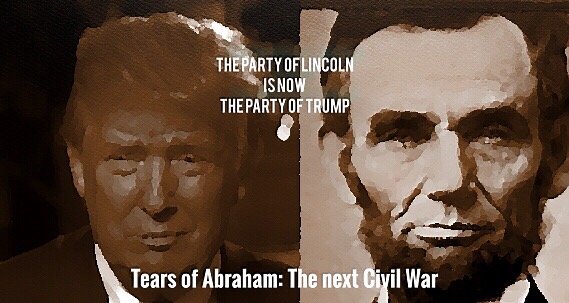
Lincoln weeps among the stars as he watches Trump pander to the worst in us. Fear. Rage. Suspicion. 

Trump is unwilling to condemn David Duke, former Grand Wizzard of the KKK, and The Donald wants to outlaw an entire religion. The more offensive his is, the higher his ratings go. He is putting the Republican Party out of business. And conservatives know this.

Trump is surfing a wave of outrage, a tsunami of destruction and paranioa crashing into the country and smashing the nation. He won’t win the election. But he isn’t nearly as dangerous as the incoming wall of poision he’s riding. Because those waters won’t recede any time soon.

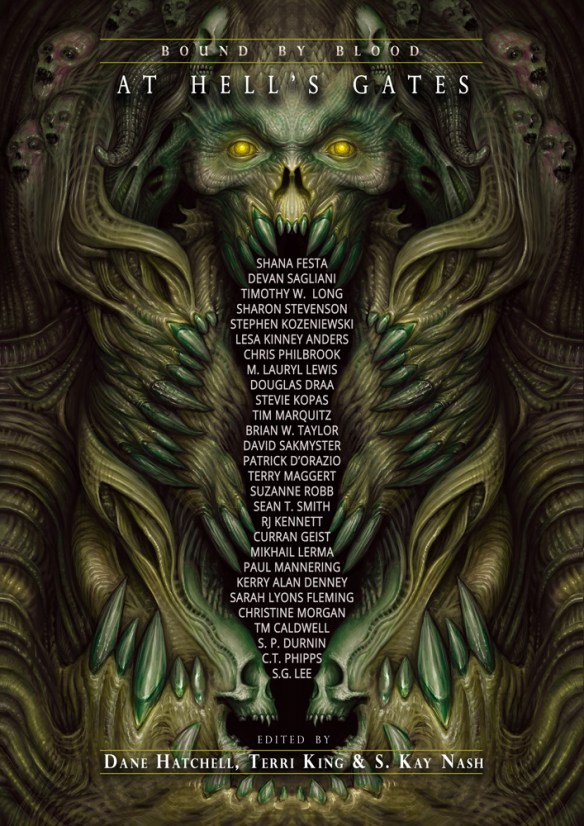
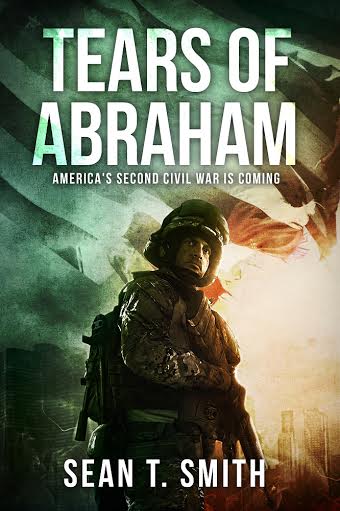
What happens after Trump looses the general election? Well, I wrote a book about that. Tears of Abraham releases March 22 2016. The first Civil War was bloody. The next one will be worse.

America Divided: Trump and The Next Civil War

abraham cover final

I hoped the GOP would field a candidate that represented the best in the United States. I would have voted for that person, but it looks like we won’t have that option. Trump will win the nomination and leave the majority of the country and the world shaking their collective heads. How did this happen, and what will the consequences be?

Trump appeals to angry Americans who feel threatened, unheard, and disenfranchised, and to these folks The Donald is a beltway outsider willing to say and do whatever it takes to take America back. He is the candidate of insult and outrage, capitalizing on the mistrust of anyone “not quite American.” He wants to build a wall along the southern border and insists that Mexico pay for it and prevent Muslims from entering the country with some magical Muslim detector he will no doubt install at airports around the world. He is quick to attack the poor, pointing a finger at entitlements and insinuating that our economic problems would be solved by eliminating food stamps and medicaid.

The billionaire is a brilliant politician, somehow resonating with families who live paycheck to paycheck, convincing them that he is on their side. It appears that no matter how outrageous, inflammatory, and false his statements are, his double-digit lead will only continue to widen. He is Frankenstein’s monster, birthed by the FOX News propaganda machine, empowered by the Tea Party, which ostensibly believes in less government. Trump beyond the control of the GOP establishment now, and is bashing his way through the countryside.

The Election

Trump will win the GOP nomination. Either Hillary or Sanders will win the Democratic nomination.

In a general election, poll after poll shows either Hillary or Sanders beating trump soundly. Sanders will be able to steal many swing voters and independents, while Hillary will galvanize her base. This outcome is what scares the hell out of me, along with the GOP establishment.

After a long campaign rife with mud-slinging, veiled hatred, and ever increasing vitriol, what happens when the Democrats win? Where does all the outrage go?

Rumors of War

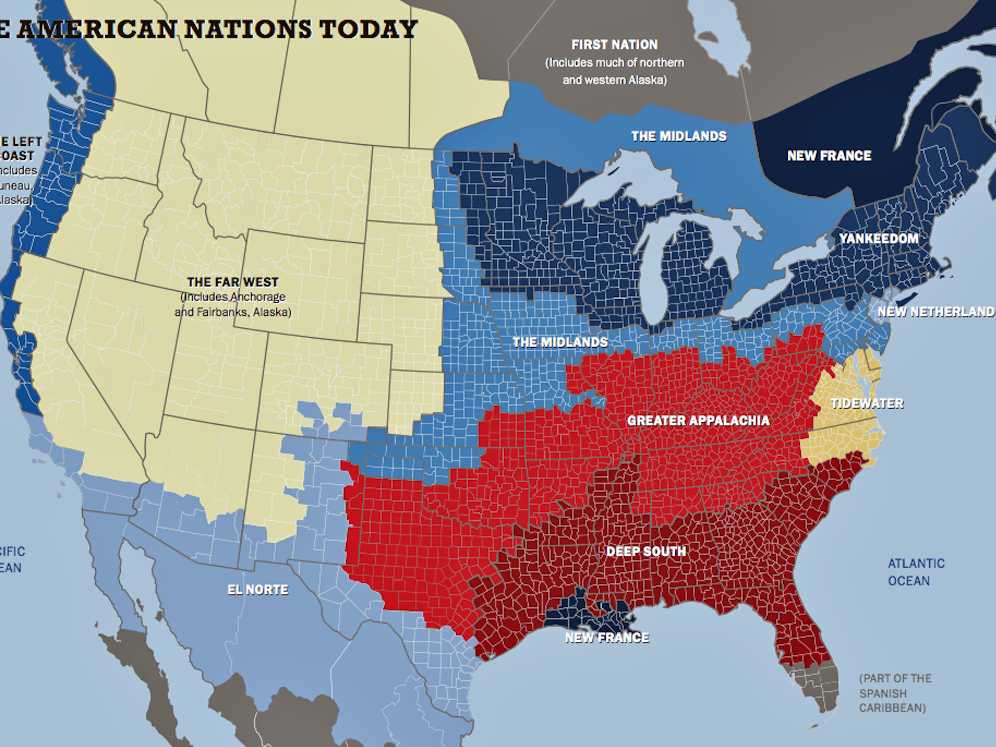
Texas will not go quietly. Petitions have circulated in the Lone Star state to secede from the Union. Remember Jade Helm? The distrust of the federal government runs deep in the south. When the election is over and the Republicans lose again, many citizens will feel that the outcome is unfair, that they have not been heard. More hate groups will spring up, more militias. At some point, Hillary just might get aggressive about gun control. The next President will not be able to heal a nation that fractured years ago.

Texas could sustain itself as a separate country, with its industrial, economic, and agricultural base. Texas has ports for international trade, and of course, oil. If Texas goes, much of the south will go with it.

The next President will have a hard decision to make. Abraham Lincoln chose to go to war to preserve the Union; what will Hillary Clinton or Bernie Sanders do?

a

War

The first Civil War took more than 600,000 American lives. The next war will be worse. We didn’t have nuclear weapons, tanks, fighter jets, or drones in 1862.

Take America Back

We are the nation that invented Rock and Roll, the light bulb, and the internet. America stopped Hitler and put men on the moon. We are innovative, hard working, and decent. The American Dream is more real to the rest of the world than it here within our borders. We are admired for our goodness yet we doubt ourselves and fight one another. The ideals of our founding fathers have been usurped, eroded, and manipulated.

Our great republic is now an oligarchy where elections are bought and sold to the highest bidder. We have been played. We must not succumb to the hate and steady stream of misinformation, but instead fight back with our votes, with acts of kindness, and open conversation with people we disagree with. Rather than howling, we should converse. There is no reason for us to be this polarized.

My next novel, Tears of Abraham is about the coming war, seen through the eyes of heroes, innocents, and villains. I believe in the essential goodness of the American people, and I hope that we can drown out the sound of evil.


Author update: upcoming projects

medieval-knight2016 should be a very interesting year for me! I’ll have my first book in bookstores on March 22 with the release of Tears of Abraham, a novel about the next American Civil War. I hope to generate some press and buzz with this book, as the nation continues to rip itself apart with political vitriol. I hope people read the book and come away with the feeling that we as a nation are better than what we’ve turned into.
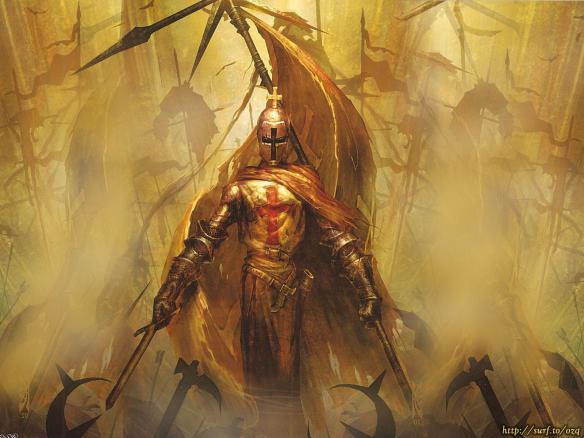
I’ve been working hard on Fate of the Fallen, and hope to self-publish this as a series. This novel has been extremely challenging to write because of the scale and the amount of research involved. The main character is an angel with limited abilities, and the novel follows his life, alternating between the past and present. He has been a monk, a gladiator, a crusader, a scholar, and a warrior. In the present, he is trying to prevent the next apocalypse. I’m planning on releasing this book next spring or early summer, and then following it with a series of novellas.

I’m outlining for my next full length novel, and this will be a big departure for me in terms of genre. I’ve been writing “thrillers with heart.” This next book is not a thriller, but straight forward literary fiction. I can’t wait to write it. It’s called Restoration. When  Arthur Glass’s wife asks for a divorce, he purchases a hundred-year-old house in historic Riverside, Florida. He forms a deep friendship with an old lady across the street, who tells him about the history of the house, and importantly, the stories that have unfolded within the walls.

The house has been an orphanage, brothel, speakeasy, and apartment during our nation’s great wars. Love, loss, hope, tragedy and miracles have lived here, and the stories Arthur hears mirror his own character arc, filling a need in him, reminding him of things he has forgotten and also teaching things he has never known.

Chapter One
Endings and Beginnings

Arthur Glass found the old house on Oak Street on the same afternoon his wife informed him that she was pregnant and wanted a divorce. He wasn’t ready for any of it.

He pulled his pick-up truck into the cracked concrete driveway and sat behind the wheel for a moment, gazing at the two story brick home before him, his thoughts a tangle of questions and despair. He needed a place to live, and he’d always liked old houses. He could do something with the place, as long as it had good bones.

How do people do this? How do you move on with your life when your life is destroyed, when everything you love is gone and your soul is peeled away? What is there to move on to? Why?

He picked his way around the overgrown yard, contemplating the exterior of the place. He guessed it was about a hundred years old, as many of the buildings in this part of Jacksonville were. “Historic Riverside,” was its moniker, an eclectic neighborhood where artists, professionals and vagabonds blended together. The streets were lined with majestic live oak trees, Spanish moss hanging down lush and lazy, a certain energy here he’d always liked.

The house sat on a dead end, and behind it was sprawling, shady Boone Park, the yard and park coming seamlessly together. The second floor boasted two columned porches overlooking the street and the park. Oaks, cedars, rose bushes and sago palms giving the grounds a wild, lush feel. Mocking birds twittered among the leaves, and on the steps a surly orange cat bestowed him with a baleful glare.

How did I not see this coming? Who is the father?

He used a credit card to pop the lock on the back door and stepped inside. The smell of mildew and age hit him and he took this in stride. Original hardwood floors, faded and worn creaked under his feet while he wandered from room to room. Plaster walls, some with ragged holes and all in dire need of paint. An old fireplace with a carved wooden mantle in the living room, two small bedrooms, a dining room, and a kitchen that looked like it popped out of Norman Rockwell’s imagination back in the fifties.

He wondered what stories had unfolded here over the years, what whispers these walls overheard.

He walked up a narrow staircase to the second floor, realizing that this was actually an apartment; each floor had a separate entrance. If he’d come here at any different time of day, perhaps things would have been different.
The late afternoon sun streamed through tall windows and filled the living room with golden October light, piercing the veil of decay and obsolescence with a kind of hope and warmth, inviting and serene. He could see this room filled with her canvasses and brushes and colors, alive with her laughter while she painted, dancing to Van Morrison, long dark hair cascading down her shoulders and blue eyes bright with creative mischief and something deeper, a peaceful sort of longing and truth. The way she used to look at him, but hadn’t in years.

She would love this room. Would have, he corrected himself. He had to think that way, and he knew it, but it was too soon and raw. He got it, though. Saw the truth even though it burned and always would and there was no way not to face it, here in that room with perfect light where the things he wished for were translucent dreams transposed onto empty spaces, emotional holograms bereft touch and feel. Delusions of simple grandeur that life boldly stated could never be.

Ghosts of tomorrow, that’s what they looked like to Arthur, and he could see them and it hurt to see.

Love is a contradiction, for it is beauty, promise and light until it turns, and when it turns, it’s quick and mean and dark and deadly and sucks everything in. A black hole birthed like an abomination from what was once a brilliant star, now hungry, relentless and devouring even the light which tries to escape it. Love is destruction. A force of nature implacable and cruel which obliterates what it does not tolerate: objects at rest, and things which have outlived their usefulness.

She says she loves me but isn’t ‘in love’ with me. What does that even mean? God, what happened to us?

Stepping into the room with the gold light spreading on empty spaces sealed his fate, for he knew at that moment that he was going to buy the place.

Love is restoration.


Other good news

Children of Wrath and Wrath and Redemption have both been picked up by audible, so they will be available soon in audio format. That’s great news, because Objects of Wrath did pretty well as an audio book.

Also, the entire Wrath trilogy will be distributed by Simon & Schuster next year, meaning that I’ll have the ability to have that in bookstores around the country.http://www.amazon.com/Objects-Wrath-Volume-Sean-Smith/dp/1618682245


A Few Good Sentences

Readers often ask me about my creative process, so here’s a general snapshot of how I write.

I’m a slow writer compared to most of my peers. I’m not sure I could crank out a book in three months, and if I did that it would be unreadable. I know authors who crank out four good books a year. I’ll never have that sort of output.

It all begins with an idea

I tend to marinate on several ideas at once, before deciding what I’m going to write. I’ll make notes on legal pads, bar napkins, and the back of company notebooks. Once I’ve got a general idea of the topic, then I move onto characters. With Objects of Wrath,
I began with the idea of a family struggling to survive the next world war.

I sketch the main character first, and then surround him with the surrounding cast. Often at this point, I don’t know enough about the story to fill in the details, but I like to have a general idea.

Next comes the broad outline. This is only a few pages long, with enough space in there to add things. I use a legal pad, and I draw a diagram of a suspension bridge. The high points are the big scenes in the middle and the climax, and the lines in between are the rising action, the building tension. Sometimes I’ll actually use one full page for this diagram, and divide the rising action into specific chapter ideas. The point of this diagram is that I want to have a general idea of what I’m writing towards. It sounds simplistic because it is. But it is very helpful to me in terms of pacing.

The next thing I do is write a first chapter, just to get a feel for the characters. So far, a surprisingly big chunk of my first chapters have made it to the final manuscript. I go back later on and move things around, and work especially hard on the first fifty pages, but the bones are there.

Storytelling

I tend to plot out a few chapters ahead of time as I’m writing. For me this is the best part of writing books. I have notebooks crammed with ideas, where I just let things rip. “What if…” and then I’ll try that idea out, often in paragraph form.  One idea leads to another, and I’ll end up with various branching plot lines.

When I’m in this mode, I can write unfettered, and it is where I probably do my best work. It’s here that characters start to misbehave in good ways. A minor character becomes important, while a character that I’d planned on keeping alive has to die. I’ll stumble upon an idea that lights me up, and spend a few hours writing one paragraph working to get it right.

I alternate back and forth when I’m writing a novel, between storytelling mode, and the actual pounding out the words at the keyboard.

Here are a few random examples of paragraphs or sentences I worked very hard on.

From Objects of Wrath: http://www.amazon.com/Objects-Wrath-Volume-Sean-Smith/dp/1618682245

“I had seen Gunny in action, had been trained by him, and knew how quick and deadly he was, but Chilli was an artist in his prime form, painting death with deft strokes. With perfect economy of motion he dispatched a seemingly unending supply of enemies in an unrivaled masterpiece of destruction. I hacked and shot behind him through the smoke, and despite the chaos, I marveled at Chilli’s artwork. His canvas was the battlefield, and he was the Rembrandt of the knife, painting darkness, not light. He was the Picasso of the blade, leaving twisted corpses in his wake, his hands and feet brushes that flicked out almost delicately, precisely, colorfully”

From Children of Wrath http://www.amazon.com/Children-Wrath-Book-Volume/dp/1618683411/ref=pd_bxgy_14_img_y

“Most of us are blessed with a moment when sunlight is gold dust, warm and glittering, and the air is clean and tastes like hope. Sometimes we pay attention, savor the sweetness and are glad of it. Too often, we realize the rareness of it too late to revel in the glory of it. Looking back, though, we know the moment. That’s the yearning and the hurt later, because the memory is not the time, it is an echo. There is no way to feel exactly that way again, you can only recall the wholeness of it, remember the preciousness. My moment was long and my soul sings with the echoes I hear, but by the time we began our assault on Dugway, my moment had already passed.”

From Tears of Abraham, coming in March 2016

abraham cover final

“Stand up for yourself,” his father had said when Henry walked home with a bloody nose again. Henry’s old man, Tim Wilkins peered down at Henry. A tall, rangy man with a straight back, pale blue eyes, and a face worn out by life, Tim Wilkins was not prone to overt displays of affection or sympathy. But he was the center of Henry’s universe.
In Henry’s eyes then, his father was granite, solid rock, unbreakable, unchangeable, and strong in the way of a proud mountain. The lens of hope and faith filtered out the cracks and fissures, the broken blood vessels on Papa’s wind burned face, and the hurting eyes of a man eroded, but not yet completely worn smooth. Blasted by hard years, bad luck, and the love for the wrong woman, Papa remained undefeated.”

From Fate of the Fallen, my work in progress:

“Religion, Malak reasoned, would be at the heart of it. Money and power led to war between men. Religion could destroy mankind. Sometimes money and power were the religion, the worship of those things, by men who held armies on a leash. The worst of it was when money, power, and religion all combined. At the end of the day, it was always some kind of religion.”

Savoring the process

I love writing, whether it’s a song or a novel. I relish the entire process, and enjoy lingering over a passage, turning the words over, shifting things around to find a cadence and melody to the words. Some readers find this aspect of my writing a hinderence, and I understand that many folks want to read an adrenaline-driven book that’s primarily plot-driven. There’s nothing wrong with that, and I enjoy books like that  sometimes. The older I get, though, the more I want some real substance to the things I read and the things I write. I love Steinbeck, Hemingway, Dickens, McCarthy, Irving and O’brien. I’ve got a long way to go before I can attain that level, but that’s what I shoot for when I sit down to tell a story.

That’s my process, that’s my story, and I’m sticking to it!

Faith and Fiction

This is a story of triumph, so please bear with me because it might not sound that way at first. Happy endings aren’t worth a damn if there weren’t tears along the way.

  
I love writing and God. The love of those two intersect, in spite of my passion for other things. I love my wife and my children. I love to play music and dream melodies and yearn to create something beautiful and true.

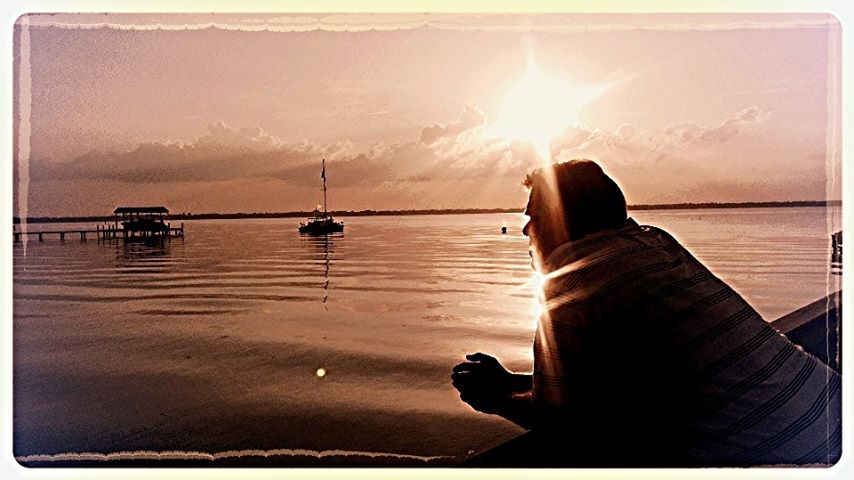
I love the way the sun breaks when it’s rising over the Gulf of Mexico when I’m so far from land that the sea and sky are the world, and there is that perfect orange light born, glittering on the waves, and the hope of a good fish and that day sings in my chest. The best part, knowing that the next day will be just as good, infused with the same hope. For me, those moments have been few,  and I’m blessed to remember them.

It is easy and dangerous to make the things we love God.

A mentor and friend, a brilliant songwriter far beyond me, convinced me that the only way to succeed was to be willing to sacrifice everything at the altar of writing. I listened to him and to my own demons and learned the wrong lessons. My friend would smack me in the back of my head now if we were sitting next to each other at a bar in Nashville. I have tears in my eyes remembering him and the way he made me a better writer, and I wish I could hear him say something sarcastic and kind. 

Writing is not God, though we make it so.

Writers are not destined for pain unless they choose anguish. Joy is the lyric and the page and the melody and truth beneath. God is God.

The Divided States of America

There is much gnashing of the teeth and shrill screaming  about politics these days. Everyone with internet access has an opinion and a voice. Many people are outraged about something. Social media is choked with hate, politicians point fingers, and any sort of reasonable discourse seems to have fled the country.

The things people are screaming about are distractions, while the things they should be paying attention to go largely unnoticed. We, the people, are being played.

Money and politics

Both parties are equally beholden to the almighty dollar. There are no good guys, as far as I can see, and those who actually seem to have a heart for the American people and are willing to buck the system have no chance of actually being able to be a force for positive change because their voices are drowned out by the hatred, the money, and the discord. That seems to be the idea.

Republican Governor John Kaisch of Ohio announced his bid for the 2016 election; he is an example of a moderate who has accomplished great things in his home state, and of course, he has no chance at winning. The Koch Brothers won’t be helping him.

Hillary Clinton portrays herself as the champion of the middle class, yet she is an example of the ivory tower liberals who are not only disconnected from most of America, but who also reap millions in corporate campaign contributions. She is above all else a political animal.

The banking industry, working behind the shadows is one place where true power resides. Energy is another. Power has almost nothing to do with politics, and is essentially the ability inflict one’s will upon another. The United States possesses the strongest military the world has ever seen.

But the real power lies not in the new F-35, the stealth bomber, or the ICBM, but in those who decide when and where these weapons will be used. Where we will go to war and why.

Be angry and mean and certain!

That’s what they want. Whoever the hell they are.

It doesn’t seem to matter who the figureheads are, though I’d love to believe otherwise. We can argue about guns and rebel flags and gay rights, and it appears that there is profit somewhere for someone in that discord. We howl about Obama and lose respect for the office of the President, and that’s just fine with those guys. They’re playing both sides of the fence, and are laughing at us from their private islands.

america divided 1

The insults and name calling between parties has never been worse, and it’s spilled over from Congress to Main Street and even the dinner table.

So what should we be paying attention to?

The way money buys power. Decisions like Citizens united. Corporate welfare.

Climate change. It’s happening. The planet is growing warmer according to 99% of climatologists. Sea levels will rise, weather patterns will shift. Water shortages and droughts will worsen in some areas, while other parts of the world will see floods.

ISIS, China, and Russia.

The Islamic state is spreading like wildfire, and now boasts a well organized and supplied army. The guys behind the guys don’t know what to do about them yet, and the whole Arab spring caught them off guard, along with the power vacuum in Iraq. The middle east is nuke waiting to blow. The aftershock will shake the world.

https://authorcentral.amazon.com/gp/books/book-detail-page?ie=UTF8&bookASIN=B00IK7MH9M&index=default&parentASIN=B00ISZJOSS&tabName=

China is on course to overtake the United States in military power over the next two decades. They have an aircraft carrier, a fleet of submarines, and the desire to project power into the Indian Ocean and South Pacific. They are building islands out of the sea, placing air strips on them. China owns trillions of dollars in U.S. debt and manipulates its currency to the great detriment of the United States. Of course, the multinational corporations don’t care about what is good for the United States. They’re in the business of making money for shareholders, so will continue to ship jobs to China because it’s good for the bottom line.

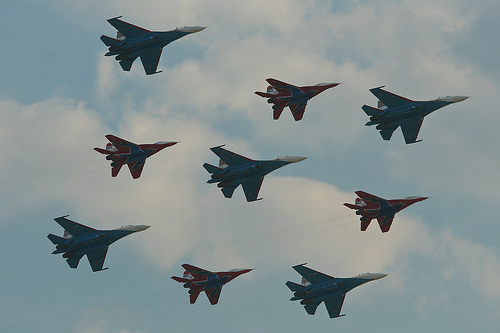
russian fighter jets

Russia is eager to reclaim its stature as a superpower, and Putin, a former KGB officer with an ego the size of his country, is unpredictable, ruthless, and bent upon taking more land and resources. The annexation of Crimea proves this, along with the war in the Ukraine, the relentless incursions into NATO airspace, and threatening posture of flights off the U.S. coast. Bombers within forty miles of California? Yes. That happened this week, again. Russia has simulated nuclear attacks against Sweden, and they are actively militarizing the arctic, building bases to go after oil resources as the ice packs melt.

Ourselves

abraham cover final

More dangerous to this great nation than these other threats is the one we present to ourselves.

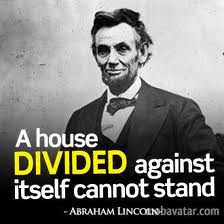
For a house divided cannot stand.

amazon.com/author/seantsmith

So you want to be a writer…

tumblr_lcrbe0epck1qbpjxio1_500

If you want to be a writer, my advice is: don’t want to be a writer.

Seriously.

The overwhelming majority of us are destitute, conflicted, outcast, and inhabit a general state of unhappiness because dreams and reality aren’t the same thing. The idea of being a writer looks nothing like the reality. Only for an anointed few is this not the case.

I’m not going to bore you with sad  number-crunching; suffice it to say that there are about three million people trying to enter gates that will only allow a few hundred to enter at any given time. If you’ve ever been in a big city, then the idea of a traffic jam of these proportions should make you think twice, and then ten more times, about wanting to be a writer. Because we’re all trying to enter the same gate, and there’s not enough room for everyone. There’s bickering and thirst and sometimes murder in the long hot wait.

If you want to be a writer, then write poems and love songs for your partner, write short stories and epic novels that take decades to compose, infused with joy and hope and thousands of hours of research and plotting and honing. Rewrite everything as many times as you can until you have stomped the love out of each line and eroded the originality and voice which made them true in the first place.

Chase trends and listen to talking heads and bow down to the powers that seem to be, attend seminars and workshops while other people who want to be writers, and people who thought they wanted to be authors but who decided that being a critic is a better path, destroy your dream.

That’s the wanting to be a writer part. Don’t do it.

If you are a writer, though, then you have no choice. I applaud your belief and audacity and will cheer you on when things are glorious and your work is praised by the wise and mocked by fools. Writers write because they must; the money is the grand prize, but the reward for a writer comes also in the joy of the writing itself.  Mostly, that’s likely not going to happen, and at some point, writers must come to grips with that. Cold, hard, truth. Many iconic writers died in obscurity and poverty.

If you are a writer, then this truth doesn’t matter; you remain undaunted.  You will put your butt in a chair and crank out stories. You will research and you will write. You will rewrite. And rewrite again and again.. You cut the things that you were certain were brilliant. Slash pages and paragraphs. Of course, you have to write them before you can cut them.

I’m a writer, and I wouldn’t recommend being one. For those who can’t help themselves, take heed. It’s a long, brutal road.

There’s glory though, in being a writer, an artist, and that’s what keeps us writing and painting and playing music, in the face of the odds and in spite of the facts. That sensation of creating something which is true and makes another human being smile or laugh or cry or throw something at the wall… that’s writing. And for writers, that’s a beautiful reward.

That reward may not be what we yearned for, yet it is beautiful in its own right. Writers know that, and people who want to be writers learn by doing.

Where Was God?

1017214_4396616973294_596035942_n

A twisted gunman burst into a church and murdered Christians in an act of hate and cowardice. My heart aches for the fallen, and weeps for my country which seems broken. Where was God when the bullets tore through believers in His house? How is it that darkness appears to be defeating light?

The struggle that I’ve been through the last few years, the problems that I’ve faced, pale in comparison to those of others. I’m not looking at imminent death. Still, it’s been a brutal road for me and my family, with poverty looming, the loss of a job, and emotional battles raging. I have found myself asking, more than I’d care to admit, where was God?

In my novels, this is a central theme, the ongoing erosion of faith in the face of evil and despair. For the Fox family, there are epic battles and catastrophic losses, and still William and Crystal are never truly destroyed. Their faith is stronger than my own has been, the sort of belief I long for and which I see in some of the strong Christians I know. I’m praying, learning, trying to guild myself with the Armor of God.

Often, the hardships we face make us question the beliefs we hold most dear. I believe that God uses times of tragedy, loss, and inexplicable pain to draw us closer to Him, to bring us to a better understanding of His nature. Jesus says in John 16:33, “I have told you these things, so that in me you may have peace. In this world you will have trouble. But take heart! I have overcome the world.”

It’s easy to blame God when terrible things happen. I know, because I’m guilty of this arrogant, human act. The truth is, evil in this world is committed by man. God did not cause that crazed, racist nutcase to enter a church and kill people. That was a decision that kid came to all on his own, one of free will. Our actions have consequences, for good or for bad.

God is alive and at work, and I’ve seen miracles with my own eyes. I’ve witnessed it in my life, and the lives of those that I love. Too often, I forget, for my faith is not as strong as it should be. In a world of seven billion people, there are tragedies every day, and the news will focus on the ten worst things and beat it into our brains, giving the impression that the world itself is bleeding and slipping into madness, that evil and peril lurk around every corner. We hear the bad but not the good, and this creates a pervasive, ongoing illusion, a destructive one, a lens through which we view the world shaded by darkness, one that filters out truth and light.

For the ten stories of accidents, shootings, disasters, and fires (the media is obsessed with fire of all sorts, from bombs to brush fires) there are a hundred stories we never get to hear. Lives saved, random acts of kindness, hope restored, faith found, and illness cured.

Where was God? He never left. He didn’t move, I did. Sometimes I forget.

“For you were once in darkness, but now you are light in the Lord. Live as children of light.” Ephesians: 5:8

Sneek Peek… FATE OF THE FALLEN

scale.php

Chapter Twenty-Two

When faith is the bedrock upon which a life is built, the loss of it, when belief crumbles to dust, reduces a man to bitter, abject desolation. Malak died in the sand, and in the sand he was reborn.

Waves crashing, the sun blinding, and the ocean a pale welcome blue, he plucked a crab from his chest and pulled yellow seaweed from matted hair, pushing himself into a seated position. Coconut palms stretched toward the sea along a pristine white beach. At his back a steep mountain lush with green jungle rose toward the cloudless sky. He’d never been anyplace like this before.

“Is this heaven? My reward? It looks a little lonely,” he muttered.

A seagull landed a few feet away and twittered at him. The crab scuttled along the surf line with one oversized claw, and one tiny, ridiculous one. The big claw raised like a shield.

“What do you want from me?”

The breeze,balmy and sweet, ruffled his long hair.

“Remember our last talk? I quit. I’m not doing this anymore.”

The palms rustled and the waves broke upon the reef line and lapped the shore, a steady rhythm of foam and clear water, more than a whisper, less than a conversation. Peaceful, serene.

Malak was not in the mood. He thought about the family he’d lost, the screams of children still echoing in his heart. The demon he’d faced, a thing which he never known walked the earth until he’d felt its unholy power. To him it was days ago, though he had no idea how much time had elapsed between Baghdad and wherever this was. Whenever he was.
His existence was unfair, he decided. Every life he’d lived felt futile, as did life itself. The friends he’d seen die, the blood he’d spilled with a blade… there seemed to be no sense to any of it, within the context of a loving, living God. Especially given that reality.

While he had experienced great peace, the times of turmoil and war overshadowed this, and he saw that both he and mankind were no closer to figuring things out than they were centuries ago.

The crab skittered toward a hole in the sand, and the bird hopped over to the crab and skewered it.
The crab does not pity itself, even as it dies, any more than the bird gloats over the killing and the meal. Men are different. Perhaps emotions only make living harder. For the crab does not expect to live any more than the bird believes it will eat, and the fact that these desires conflict keeps neither awake at night. If the crab assumed he’d be protected, living the crab-life, surrounded by hungry birds, yet confident in his continued prosperity, he would get angry when that beak pierced his shell.

“What’s the point? Clearly, there isn’t one. When I believe, you destroy. You are God. I can’t deny that you exist. Not after the things I’ve seen. But you are not what you should be. You’re a cheat in the marketplace, full of sunshine promises and whitewashed smiles, who then vanishes when it turns out you sold a lie, a cracked jar. You have no integrity. That you exist does not make me love you.”

He knew that these words were the worst sort of blasphemy, and it his lips burned a bit with the speaking of them and his guts tightened up, his body rebelling against his mind.

He walked along the beach, letting the water slide over bare feet, feeling the sand between his toes and the warm sun on his neck. He walked for perhaps an hour or two, and wound up where he started, circling back to his first footprints. The bird cocked its head at him and laughed in the way that birds sometimes do.

He was on an island.

Malak plopped down in the sand and watched the sun slide below the ocean, streaks of pink and yellow and purple painted upon the vast sky, and the face of the waters shimmering orange against the dancing white of the breakers and the deepening blue of the sea. The day dying, the night born.

He did not move, watching the first stars appear, punching through both light and darkness, becoming a wondrous myriad of diamonds strung melting into the sea. All the while, the waves hushed and frothed, luminescent and soothing.
He decided he would explore the interior in the morning, and that if he wanted to quit living and dying for both God and man, this would be the perfect place to do it.

That is exactly what he did.

He would come to call the island “The Rock,” and although he couldn’t know it then, it would become a place of solitude and wonder and joy. It would be a refuge, the only place he was born again more than once; often as he was dying, he prayed he would wake up there. It didn’t happen often enough for his liking, but when it did, he’d feel the sun on his face and the thirst in his soul and hear the music of the ocean and he would smile.

It took time to figure this out. Malak was hard-headed, and immortality proved no solution to being stubborn.
Water was a problem, and it was only through dumb luck that he figured out that coconuts held life-giving water within their hard shells. During a storm, a green one fell next to him, and he heard the liquid inside. After wasting the precious liquid on the first few attempts, he learned how to remove the outer husk and pierce the shell within, drinking heartily. He also learned to drink from plants after a hard rain, and started collecting his coconut shells to gather water during the rainy season. Despite being stubborn, Malak was smart and tough and adaptable

He ate fish every day, because the flesh contained water. At first he speared them, and as time went on, he learned to dig alcoves reinforced by coral and lava rock, letting the tide bring the fish in, where they would be stranded after it receded. He added nets formed with vines from the jungle to make this more effective. There were abundant fruit trees on the island, as well, and when it did not rain enough, these saved his life more than once. The island provided.

He was gifted and cursed with what would later be known as a didactic memory. He forgot nothing. He could recall the taste of food he’d eaten in the Ludus or Lisdenfrane on any given day at a specific meal, along with the ribald or Godly conversations which ensued. The more alone Malak was, the more he retreated into the past, finding comfort and solace with friends long dead. Hearing their cries, at the end. That was the thing.

As good as his memory was, these conversations were all one-sided, more akin to eavesdropping. He could not speak to his comrades any more than they could talk to him on this deserted island. The moments were what they were, unaltered and done, and even though Malak wished to speak into the past, he could not. What was done was done.
He exhausted these memories, and that soul-shrinking loneliness came back. It was a poverty of the soul.

He needed to get off the island because he was going insane. Also, he was bored. He’d been there for more rainy seasons than he could count. At least twenty years. He had every cause to believe that the easiest way off the island was to die.
At dawn, after a long night of dead conversation, he set out into the ocean.

He swam beyond the breakers, the waves smashing into the coral below, his blood blooming in the clear water, warm in the way that Lisdenfrane was not, wild and teeming with life and death.

The first time, he made it beyond the reef. He swam until he was exhausted, swept by the current out into the open ocean. He choked on salt water and sputtered and stroked. Things stung and nibbled at his extremities. The moon rose high and bright and he was far from land and man. He rolled onto his back while a thunderstorm crashed a few miles away, lightning arcing from horizon to horizon, white and ragged, waves building, his body carried up and down, as alone as any man can ever be.

“Here I am! Kill me! You don’t care, so let’s get it over with!” He gulped a cresting wave, the water stinging his eyes.
The first shark took his right leg above the knee with one bite. It felt like a hard shove, followed by tingling and pain and ironic, gulping laughter. The next shark chomped him in the torso and took him down for a while, a plunge into the dark, where his ears hurt and his lungs burned and his guts were on fire below the sea, and Malak decided that there were better ways to die.

He felt the same sun, heard familiar lazy waves, and saw the same damn bird making angry tracks in the sand when he opened his eyes again.

“Really?”

He experimented with ways to kill himself for a season. Drowning, starvation, fire, and the ever faithful sharks. None of it worked. He wound up back on the beach.

And so began the conversation that mattered. The one he was meant to have.