America Divided: Trump and The Next Civil War

abraham cover final

I hoped the GOP would field a candidate that represented the best in the United States. I would have voted for that person, but it looks like we won’t have that option. Trump will win the nomination and leave the majority of the country and the world shaking their collective heads. How did this happen, and what will the consequences be?

Trump appeals to angry Americans who feel threatened, unheard, and disenfranchised, and to these folks The Donald is a beltway outsider willing to say and do whatever it takes to take America back. He is the candidate of insult and outrage, capitalizing on the mistrust of anyone “not quite American.” He wants to build a wall along the southern border and insists that Mexico pay for it and prevent Muslims from entering the country with some magical Muslim detector he will no doubt install at airports around the world. He is quick to attack the poor, pointing a finger at entitlements and insinuating that our economic problems would be solved by eliminating food stamps and medicaid.

The billionaire is a brilliant politician, somehow resonating with families who live paycheck to paycheck, convincing them that he is on their side. It appears that no matter how outrageous, inflammatory, and false his statements are, his double-digit lead will only continue to widen. He is Frankenstein’s monster, birthed by the FOX News propaganda machine, empowered by the Tea Party, which ostensibly believes in less government. Trump beyond the control of the GOP establishment now, and is bashing his way through the countryside.

The Election

Trump will win the GOP nomination. Either Hillary or Sanders will win the Democratic nomination.

In a general election, poll after poll shows either Hillary or Sanders beating trump soundly. Sanders will be able to steal many swing voters and independents, while Hillary will galvanize her base. This outcome is what scares the hell out of me, along with the GOP establishment.

After a long campaign rife with mud-slinging, veiled hatred, and ever increasing vitriol, what happens when the Democrats win? Where does all the outrage go?

Rumors of War

Texas will not go quietly. Petitions have circulated in the Lone Star state to secede from the Union. Remember Jade Helm? The distrust of the federal government runs deep in the south. When the election is over and the Republicans lose again, many citizens will feel that the outcome is unfair, that they have not been heard. More hate groups will spring up, more militias. At some point, Hillary just might get aggressive about gun control. The next President will not be able to heal a nation that fractured years ago.

Texas could sustain itself as a separate country, with its industrial, economic, and agricultural base. Texas has ports for international trade, and of course, oil. If Texas goes, much of the south will go with it.

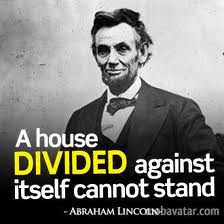
The next President will have a hard decision to make. Abraham Lincoln chose to go to war to preserve the Union; what will Hillary Clinton or Bernie Sanders do?

a

War

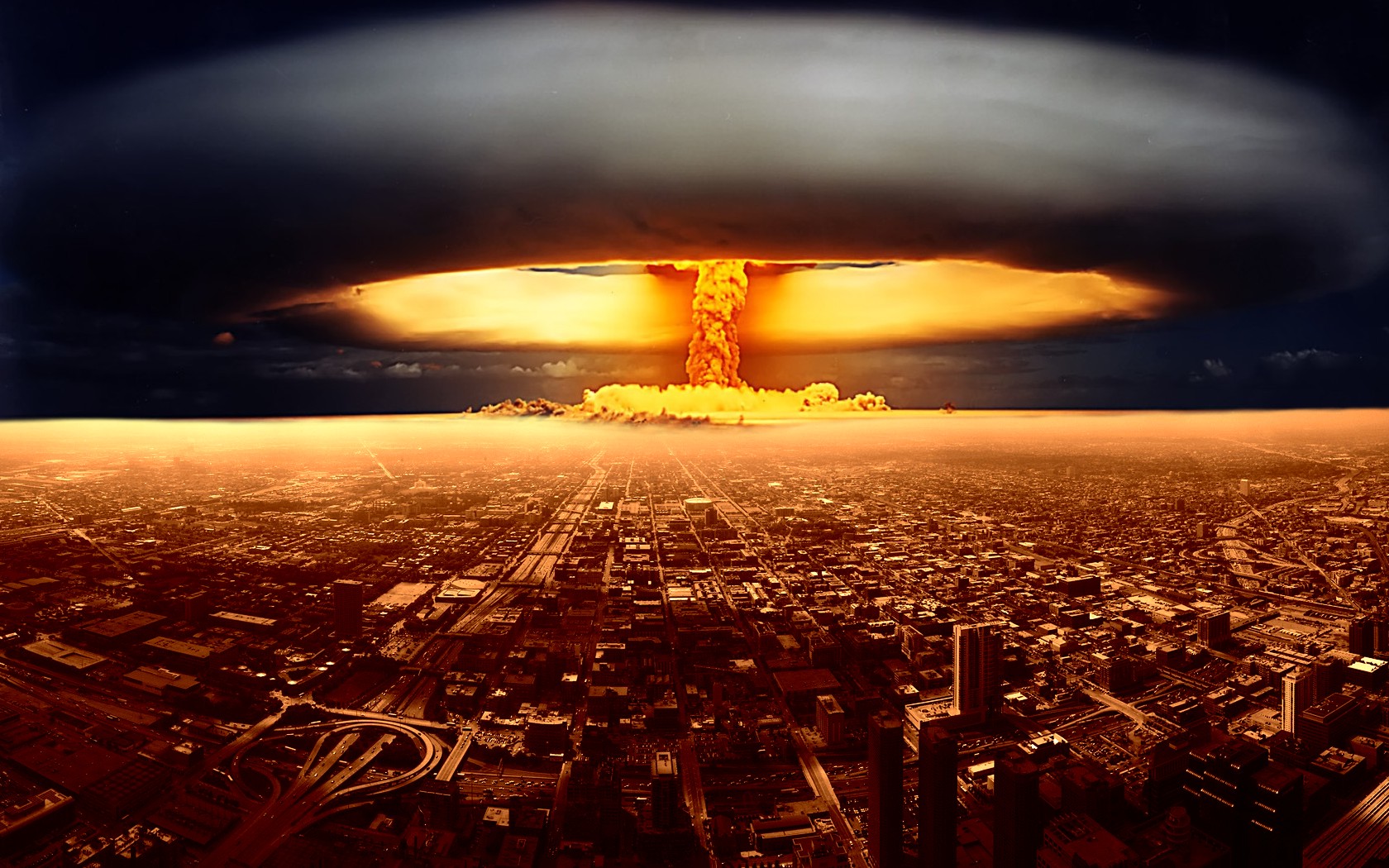
The first Civil War took more than 600,000 American lives. The next war will be worse. We didn’t have nuclear weapons, tanks, fighter jets, or drones in 1862.

Take America Back

We are the nation that invented Rock and Roll, the light bulb, and the internet. America stopped Hitler and put men on the moon. We are innovative, hard working, and decent. The American Dream is more real to the rest of the world than it here within our borders. We are admired for our goodness yet we doubt ourselves and fight one another. The ideals of our founding fathers have been usurped, eroded, and manipulated.

Our great republic is now an oligarchy where elections are bought and sold to the highest bidder. We have been played. We must not succumb to the hate and steady stream of misinformation, but instead fight back with our votes, with acts of kindness, and open conversation with people we disagree with. Rather than howling, we should converse. There is no reason for us to be this polarized.

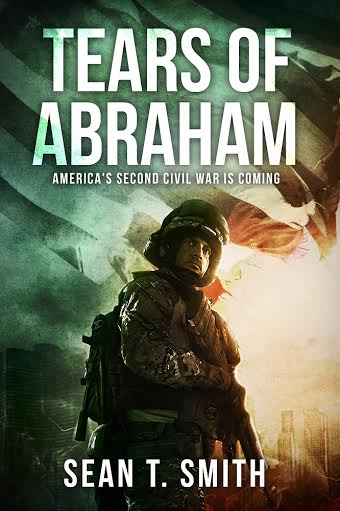
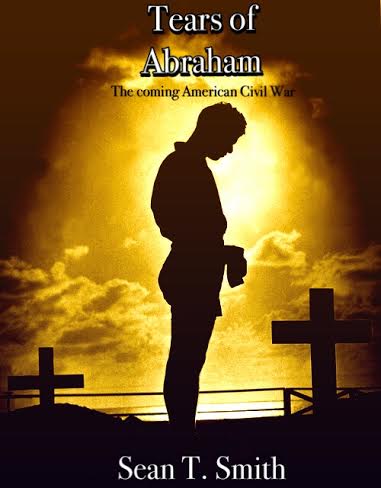
My next novel, Tears of Abraham is about the coming war, seen through the eyes of heroes, innocents, and villains. I believe in the essential goodness of the American people, and I hope that we can drown out the sound of evil.


The Trumping of America

Donald Trump saying "YOUR FIRED" NBC Upfront for 2005-2006 Fall Line up, at Radio City Music Hall, New Tork City. May 16, 2005. John Spellman / Retna Ltd.

Donald Trump saying “YOUR FIRED”
NBC Upfront for 2005-2006 Fall Line up, at Radio City Music Hall, New Tork City. May 16, 2005.
John Spellman / Retna Ltd.

When Trump threw his toupee into the ring back in June, I dismissed him, like most Americans did, as a pretender grandstanding to satisfy his ego. The latest polls have him more than ten points ahead of the closest Republican contender, and giving Hillary Clinton a serious run for her money in the national general election. How is this possible?

Trump the “straight shooter”

Trump seems to have no filter, and this resonates with Americans sick of politicians speaking from both sides of their mouths. Folks are willing to overlook his faux pas and blunt insults because it appears to be honest, and that’s preferable to business as usual from the beltway. I totally get being disgusted with lying, cheating politicians.

What I don’t understand is how Trump supporters can’t see his bullshit for what it is. He is one of the greatest salesmen in the world, and perhaps that’s why when he makes things up, people swallow the hook. He’s lied about his own draft record, claiming he had a high draft number, when actually he had multiple student deferments, and recently insulted John McCain for being a POW.  He lied about his net worth, claiming that it exceeded TEN BILLION DOLLARS (caps from The Donald) when his net worth is actually 2.9 billion, according to a recent Bloomberg investigation.

He has called global warming a hoax, insulted Mexican immigrants, though he is sure that “some of them are good people,” and laughed off sexual assaults within the U.S. military. He claims that he invented his campaign slogan, when he adopted Regan’s.

Trump the tough guy

Trump presents himself as a tough guy. He’s going to take America back from China. He’s going to stand up to Putin, and challenge him to a knife fight in front of the White House, one shirtless ego against another. He’s going to go to war with Iran, because, well, Iran. He will put boots on the ground to stop ISIS, and the tide of radical Islam will flee before his mighty shadow.

Right.

He says these things, and people believe him because he seems to believe it himself, transmuting his own cognitive dissonance to the rest of a nation hungry to believe.

And that is deadly, end-of-the-world stuff. Saying a thing is true doesn’t make it so. We need a president who is level-headed and has a firm grasp upon geopolitics. Someone who speaks softly, and carries a big stick. Trump is the opposite. He shouts, rather than speaks, drowning out anyone who dares to contradict him.

Smashing the field

He has gutted his fellow Republican contenders, relishing in the insults and meanness, pandering to the cameras. The other politicians don’t seem to know how to fight Trump, and they’re getting kicked in the head while he gloats over them like the puffed up school yard bully that he is. The scary thing is that people like this.

Anyone who consistently refers to themselves in the third person is unfit to lead a nation.

Muddy and Vague

His platform on a wide range of important issues, from immigration to the economy is vague. He makes great claims without the means to back them up, which is typical of politicians, but particularly ironic coming from a man running as an anti-politician.

The 2016 election

Don’t underestimate Trump. He might win. What seems more likely, though, is that he will deliver the election to Hillary. That’s probably why Bill Clinton called the Donald on the phone, encouraging him to run.

Trump’s negative ratings among voters remain high. He’s not polling well among women, and has all but lost the crucial Latino vote. In the vital swing states of Florida, Pennsylvania and Ohio, he trails both Clinton in a match up. Since 1960, the road to the Oval Office goes through these states.

Republicans have good reason to worry. So does the rest of the  world.

114c933a8d981a273b7188700ad4a80d

Southern Pride and Rebel Flags: Guest Blog with Kelli Freeman Smith

rednecks

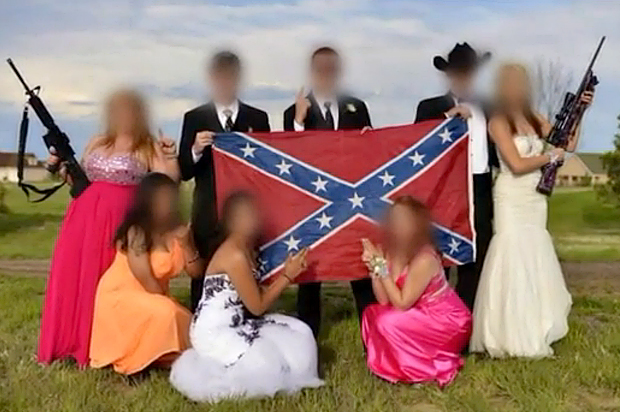
The controversy raging around the display of the Confederate flag breaks my heart. This symbol of southern pride, adopted from a war which pitted brother against brother and  usurped by the KKK, should not be a symbol at all. We southerners have many things to be proud of, and that flag isn’t one. Our heritage is richer than that, runs deeper and truer, and we should not allow ourselves to be defined by the stars and bars.

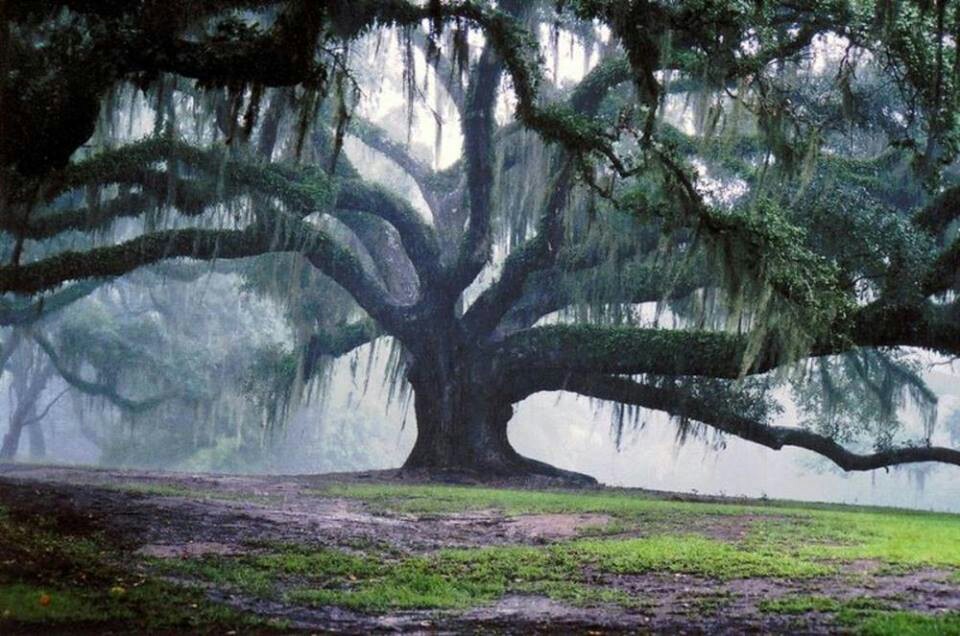
I was born and raised in the deep south, and I’ve lived there all my life. I grew up in a sleepy town on the Florida-Georgia line, where football players were rock stars and Friday nights in the fall were the highlight of the year. A town of Magnolia trees and live oaks draped in Spanish Moss, where pickup-trucks with mud on the tires lined the Baptist Church parking lots every Sunday morning. My southern drawl is sweet as honey-dew or ice-tea on a lazy afternoon in July. I say “ya’ll, bless your heart, and amen.” I love the poetry of Faulkner and Merle Haggard and the opening notes to Sweet Home Alabama.

The land I played on as a child and the woods I scraped my knees in with my cousins were farmed by my Grand Daddy. My mother worked the fields with her 8 brothers and sisters, and in tobacco season her hands were raw and her face was burned by the sun. Most of my family still lives on that land, and our family reunions are feasts of friendship and fresh vegetables and laughter. There is pride in that. In family, a thing which we southerners take very seriously. We take care of our own.

35d72460ac5de2352963a91b6665a9f1

Driving through town, you’ll see American flags flying,whether it’s July 4, Memorial Day, or just a random morning, because patriotism runs deep here in the south. Throughout Americas wars, the South gave many of its sons to the United States. God, Family, and Country. This is much of what it means to be southern. There is also a sense of rugged individualism. My Daddy taught us, like his taught him, to work hard and to think for myself.

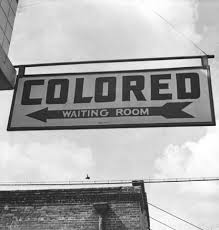
And then there’s the icky part. Slavery, the Civil War, Jim Crow, and lingering racism. Unfortunately the Rebel Flag symbolizes those things, particularly to those who are not from the south, and in a more subtle way, those who are, as well. I wish it was not so.

Abraham sample cover

There is a great dichotomy between patriotism and embracing a symbol of sedition. A contradiction in reading the King James version of the Gospel, and then uttering the N word with the same mouth. A lack of gentility and hospitality in flying a flag which is inherently offensive to others. A celebration of the War of Northern Aggression which was actually a war to preserve slavery, a codified, immoral, abomination couched in terms of states rights. The right the states wanted, though, was the right to own people. That’s not something to be proud of.

My social media news feed is rife with posts with rebel flags, and people, some of them dear family members, who defend the idea of displaying the flag because it is a part of southern pride and heritage. Maybe they’ve forgotten or overlooked what it actually means. The more angry the rest of the country gets, the more entrenched these folks become, rather than questioning what they believe to be true.

colored

Once again, brother is pitted against brother, and this flag is hurting the south again, tearing at families, destructive as Sherman’s march. Only now, we are burning ourselves to the ground. The war is over, the south lost, and it was a foolish war in the first place. Get over it and embrace what it truly means to be southern, not some romantic, idealized notion of a past that was never was. We have much to be proud of. Let’s celebrate that.

Altering the cycle… Love and Hate in America

mk

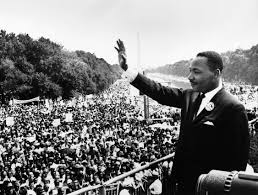
“Darkness cannot drive out darkness; only light can do that. Hate cannot drive out hate; only love can do that.”

   Martin  Luther King, Jr

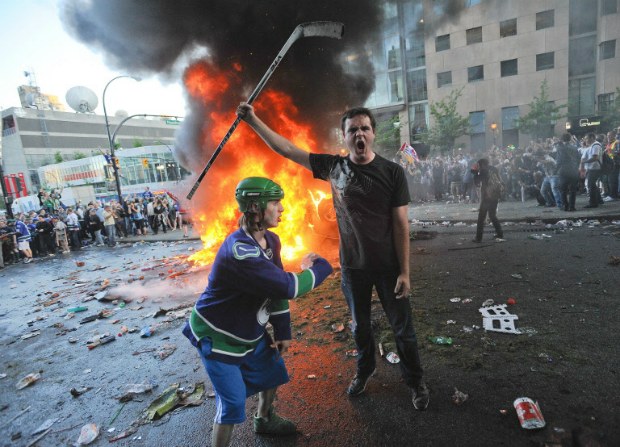
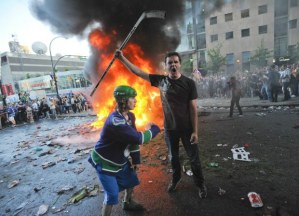
Baltimore burns and the nation cringes. We see the non-stop coverage on CNN, the same inflammatory images repeating on an endless loop. Hate is like that, too. It doesn’t stop until we turn it off; unfortunately many people are turning it up, until rhetoric is a scream which drowns out any sort of hope to solve the underlying problems. The racial problems in this country, from economic disparities and police violence, to political disenfranchisement must be addressed. The nation is hurting and the rage seethes just beneath the surface, spilling out into the streets with increasing ferocity.

I’ve seen a staggering number of internet posts claiming that our current racial tensions are President Obama’s fault. The people who believe that are deluded. When Obama was elected the racists kicked into high gear, really putting their backs into it, finding ways to sow fear and cruelty and divisiveness. Hate-mongers with microphones and laptops have done their best to frame issues in the meanest, most lopsided ways possible, worsening a greater problem.

So the cycle continues something like this: poverty, lack of opportunity, and a toxic environment lead to a feeling of powerless, gut-wrenching anger. When racial profiling and police brutality are not only systemic, but systematically denied by governments, those same people get even angrier. They protest. Most of them are peaceful, but violence erupts, gasoline on the fire. While the news spends 90% of its time playing the inflammatory images of police getting hit by bricks or of stores burning, the media misses the greater story. The country misses the truth, and the truth is not black and white. The greater story, the real one, is more complicated… it’s more than one story. The one where blacks and whites are working together for positive change. The story of children handing out water bottles to police officers, cops risking their lives to save teenagers, grandmothers and fathers marching for justice that has thus far been elusive. The story that black teenagers know all too well, of the conversation their parents had with them when they first got their driver’s license. “If you get pulled over, keep your hands in sight at all time. Say ‘yes, sir,’ and don’t make any sudden moves.”  White kids don’t get that talk.

White people and black people alike are appalled by this violence in Baltimore. It’s counter-productive. It only serves to confirm racist suspicions coiled around the back of many people’s minds, triggering otherwise sane and seemingly decent people to spout bile like Linda Blair in The Exorcist. Rather than stepping back for a moment and asking why these people are so angry, it’s easier to say “what kind of people burn their own city?”

And there it is, couched in what passes for discourse and news coverage. Words like us and them…Those people. There is an “otherness” about the dialogue, rather than a togetherness. Hate, rather than love.

Racism and bigotry are a choice. If this nation is to heal, each of us must do some collective soul-searching. We’ve got to choose love over hate. We must place a priority on our nation’s future, and that means creating more jobs and educational opportunities, putting an end to the bloodbath taking place every day in our inner cities. It means voting for leaders who recognize the severity of the problem and who offer realistic ways to address it, regardless of what party they happen to be affiliated with.

Rather than be outraged at the violence we’re seeing on the news, we should be shocked for the reasons it is happening. We must come together as one people in the spirit of unity and love, for that is the only way to end this cycle of hate.

Jamie Mason’s Guest Blog: Canadian vs. American Post-Apocalyptic Visions

Jamie 1

DEATH OF A NATION Canadian vs. American Post-Apocalyptic Visions

by Jamie Mason

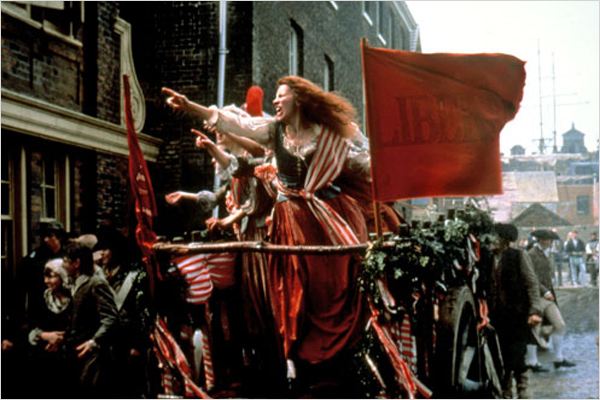
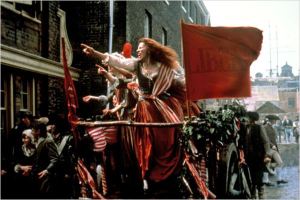
Broken windows stretch to the horizon. A noxious twist of grimy smoke clutches the clouds and a stench of bodies – the piled carnage of the City’s dead, an odor to corkscrew even the heartiest stomachs – lies heavily on the street. A door opens in a darkened shop-front and a man swathed in camouflage steps into view carrying an automatic rifle. The pearl-colored light reflects in his mirrored shades and the red, white and blue of his shoulder patch provides the only flash of color in an afternoon the hue of gun-metal and sorrow. A noise. He spins, bringing the rifle to bear … and is brought up short by the sight of a young, unarmed woman with a backpack slung over one shoulder, a maple leaf sewn into its pocket flap. She grins and flashes a peace sign. 1. The journey inevitably influences the traveller. But it is equally true that the traveler defines the journey. This is never more true than in the post-apocalyptic genre. One of my favorite films is the oft-overlooked 1985 gem REVOLUTION, starring Al Pacino. When Tom Dobb, the illiterate fur trapper Pacino plays, sails into New York Harbor on the eve of the War of Independence, he sums up the chaos unfolding in the streets tersely: “New York, goin’ crazy.”
jamie 2

The opening scene of that film confounds every expectation by painting the launch of the American Revolution with images of unimaginable brutality and human ugliness. Mobs smash British shop-windows, tear down statues of the King and (sadly for Tom) confiscate boats for the cause. Although history has vindicated the wisdom of the American Revolution as a critical step in the advancement of human freedom, I can’t help believing that the film’s portrayal is likely accurate. Strip away the historical bunting, and America was basically a colony that revolted against its landlords. Its birth was midwifed in a blaze of gunfire and death. War is war and, no matter how noble the cause, it’s always certain to unleash a level of apocalyptic violence. Canada’s birth was more ambiguous. We came into existence two short years after the end of the American Civil War, the result of a process that began in direct response to that conflict. By the time the British North America Act was passed, Canada was a sprawl of disconnected communities, ripe for annexation by a vigorous and ambitious neighbor. Invasions had been attempted five times in two previous wars and there was no reason to expect it wouldn’t happen again. (Indeed, a few of Lincoln’s generals lobbied for it.) Independence from a war-weary Britain seemed the most prudent way to secure the national welfare. Negotiations were lengthy and complex, tangled in British legal red-tape and impeded by competing colonial claims. Sir John A. MacDonald, our first Prime Minister, rose to lead a nation that was still very much unexplored and only just beginning to understand itself. Canada very literally emerged, blinking and uncertain, from the mists of the historical wilderness into a deafening silence.
Jamie3

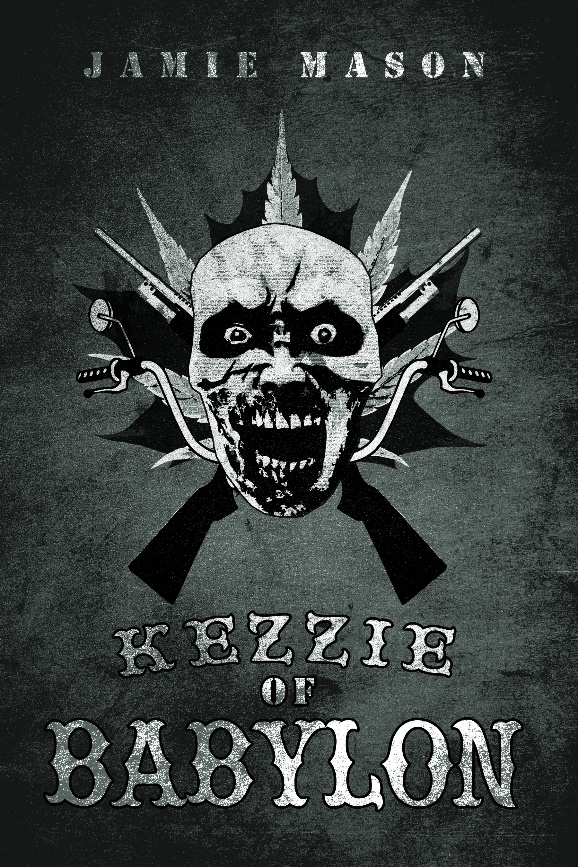
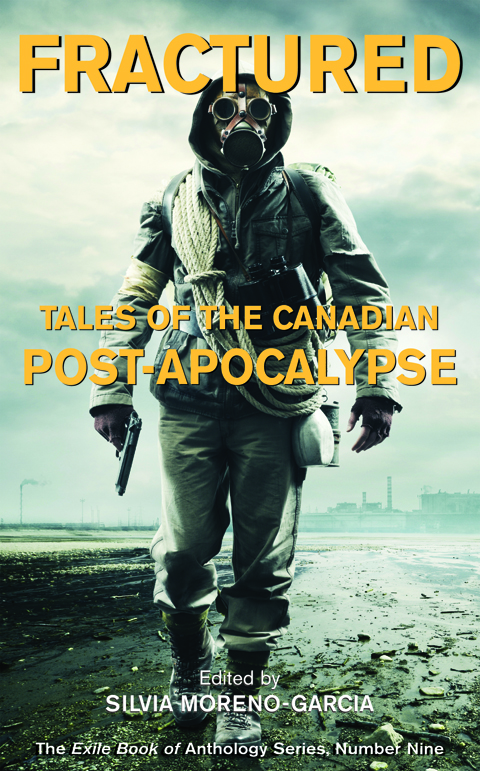
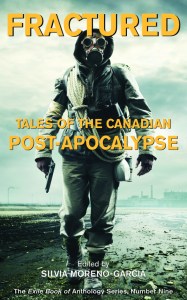
2. In our beginning lies our end. These two emergence narratives have served to shape, fundamentally, the contrasting American and Canadian visions of the post-apocalypse. I would hold that while television shows like THE WALKING DEAD and JERICHO and novels like WORLD WAR Z and THE PERSEID COLLAPSE portray a uniquely American apocalypse, Canadian equivalents such as ORYX & CRAKE, the collected stories of FRACTURED: TALES OF THE CANADIAN POST-APOCALYPSE and my own KEZZIE OF BABYLON (Permuted Press, March 2015) offer an equivalent Canadian vision unique in its own right. While there will always be an appetite for American entertainment north of the border, our American friends might be surprised to learn how our apocalyptic visions differ.

kezzie2

kezzie

3. ENEMIES & ANTAGONISTS Every good post-apocalyptic tale needs an enemy, and in American stories that enemy is usually a group or (in the case of zombies) a faceless horde which must be attacked and defeated militarily. THE WALKING DEAD handles this trope well, providing combat engagements pitting the protagonists against legions of zombies as well as human threats like the Governor and his dystopian serfs. WALKING DEAD s/heroes pack guns and katanas and these tools are always the go-to choice when trouble comes. This is not to dismiss other points of tension in the show (exploration, parlay with bad guys, character arcs), but to highlight the uniquely weaponized nature of the American post-collapse world. In a nation where the right to own firearms is enshrined in law and whose birth occurred in a storm of violence, it is logical that its death-throes would subside to the howl of gunfire. By contrast, the “enemy” faced by the main characters of Morgan M. Page’s poignant “City Noise” (FRACTURED: TALES OF THE CANADIAN POST-APOCALYPSE) is of an entirely different order. In Morgan’s vision, Toronto smoulders in the aftermath of a nebulous event known only as “The Crash” (an end every bit as ambiguous as our nation’s founding). The protagonists, Sarah and Johnny, are both transsexuals caught in the mid-point of transition when The Crash occurs, leaving them to scavenge in a blighted city for the drugs their bodies need in order to continue their biological migration. Instead of hordes of zombies to be vaporized by gunfire, the enemies Johnny and Sarah face are the ticking time-bombs of their own medically-altered biology, caught mid-way through a complex and transformative procedure

INDIVIDUAL VS. GROUP The cult of individualism is strongly rooted in the American consciousness and, for this reason, plays a titular role in any American post-apocalyptic story. The tendency for people to coalesce in a crisis is a historical given. But in American PA tales like OBJECTS OF WRATH (Permuted Press, 2014) the need for individualism sometimes leads to tragic results. One of the most poignant scenes in the novel involves a group of military first-responders flying into a remote encampment to offer aid to some backwoods survivalists. The unit’s doctor is turned away from caring for the group’s terminally-ill children because he is black. Here, hyper-individualism – the determination to survive with or without assistance from others, despite all logic – plays out in the ideology of a group existing in opposition to mainstream values of racial equality. Contrast this with the plot of my own novel, KEZZIE OF BABYLON (Permuted Press, 2015) wherein the Canadian tendency to seek accord and accommodation within groups – however dysfunctional – leads to disaster. A commune of biker outlaws, sheltered in the sanctuary of a remote grow-op in the hinterlands of Vancouver Island has, within its ranks, a deranged psychopath determined to impose her religious vision upon the group. The reluctance of the collective’s leaders to confront and disempower this person leads to murder, imposition of a form of worship that involves zombie crucifixion and (ultimately) destruction of the commune itself. Like those whose appeasement of the Quebecois nationalists resulted in the Meech Lake debacle, the reluctance of Buzz and Deacon to act allows Kezzie to take over and slaughter any who oppose her.

RELATIONSHIP TO NATURE Although environmental devastation often triggers the apocalyptic moment in American PA stories, it is rarely an ongoing threat as the plot progresses (THE DAY AFTER TOMORROW and Cormac McCarthy’s THE ROAD being the only exceptions that spring to mind). By way of final example, I contrast two short stories with the same title, one American, one Canadian. In Eric Del Carlo’s fascinating and brilliantly-rendered tale “The Herd” (OG’s Speculative Fiction, Issue #11), the Earth’s collapsing environment unleashes a series of devastating storms, driving a mass migration of human refugees ahead of them. Because I have spoken with Eric about the story’s origins, I can reveal that “The Herd” is based on his own experiences during Hurricane Katrina. Former residents of New Orleans, Eric’s family joined the stream of refugees clogging the highways just like the characters of “The Herd”. But it is what the storms cause people to do to each other as opposed to the storms themselves that form the real basis of Eric’s story. This in contrast to its Canadian counterpart. “The Herd” written by Tyler Keevil is first up in Exile Edition’s 2013 DEAD NORTH: CANADIAN ZOMBIE FICTION. In this unique twist on the zombie trope, Tyler presents us with a zombie horde migrating across the tundra, shadowed by an Inuit hunter. At play in this crisp, visually-evocative tale are all the elements of the classic Canadian wilderness survival story. It is Man against the elements as much as it is Man against … whatever. “A heaviness is in the air, a change in temperature, the wind, the look of the clouds. I know it is going to snow, and it comes in the early morning, just after the herd has set out. It arrives first, as a brief sprinkle … Then a lull, the air charged with a static crackle … Some of the deadheads stop, confused, and look up at this white confetti raining down …” – “The Herd”, Tyler Keevil, DEAD NORTH (Exile Editions, 2013) 4. And so we can see: the post-apocalyptic visions of both Canadian and American writers are informed by the human experience and social dimensions of the writers’ host countries. But it is in our origins, I think, that we find the defining characteristics of each country’s post-apocalyptic vision. We must remember that America and Canada are both nations engaged in the ongoing process of democratic evolution. Societies in both countries adapt to prevailing circumstances, learning from their mistakes, making mid-course corrections and each working to preserve the ongoing experiment that is any free society. We are unique, yes. But we influence each other enormously and are mutually fascinated by visions of the apocalypse. Americans, robust and individualistic, fight each other over possession of the wasteland while Canadians, willing to pay almost any price to remain within a group – however dysfunctional – seek to survive its ambiguous wilderness. As both nations emerge from history and grow toward self-actualization, we both imagine our own demise only to discover that we die very much the way we were born.

My friend Jamie Mason is a Canadian writer of dark fiction whose stories have appeared in On Spec, Abyss & Apex, White Cat and the Canadian Science Fiction Review. His zombie novel KEZZIE OF BABYLON was published in March of this year by Permuted Press. He lives on Vancouver Island. Learn more at www.jamiescribbles.com