A Few Good Sentences

Readers often ask me about my creative process, so here’s a general snapshot of how I write.

I’m a slow writer compared to most of my peers. I’m not sure I could crank out a book in three months, and if I did that it would be unreadable. I know authors who crank out four good books a year. I’ll never have that sort of output.

It all begins with an idea

I tend to marinate on several ideas at once, before deciding what I’m going to write. I’ll make notes on legal pads, bar napkins, and the back of company notebooks. Once I’ve got a general idea of the topic, then I move onto characters. With Objects of Wrath,
I began with the idea of a family struggling to survive the next world war.

I sketch the main character first, and then surround him with the surrounding cast. Often at this point, I don’t know enough about the story to fill in the details, but I like to have a general idea.

Next comes the broad outline. This is only a few pages long, with enough space in there to add things. I use a legal pad, and I draw a diagram of a suspension bridge. The high points are the big scenes in the middle and the climax, and the lines in between are the rising action, the building tension. Sometimes I’ll actually use one full page for this diagram, and divide the rising action into specific chapter ideas. The point of this diagram is that I want to have a general idea of what I’m writing towards. It sounds simplistic because it is. But it is very helpful to me in terms of pacing.

The next thing I do is write a first chapter, just to get a feel for the characters. So far, a surprisingly big chunk of my first chapters have made it to the final manuscript. I go back later on and move things around, and work especially hard on the first fifty pages, but the bones are there.

Storytelling

I tend to plot out a few chapters ahead of time as I’m writing. For me this is the best part of writing books. I have notebooks crammed with ideas, where I just let things rip. “What if…” and then I’ll try that idea out, often in paragraph form.  One idea leads to another, and I’ll end up with various branching plot lines.

When I’m in this mode, I can write unfettered, and it is where I probably do my best work. It’s here that characters start to misbehave in good ways. A minor character becomes important, while a character that I’d planned on keeping alive has to die. I’ll stumble upon an idea that lights me up, and spend a few hours writing one paragraph working to get it right.

I alternate back and forth when I’m writing a novel, between storytelling mode, and the actual pounding out the words at the keyboard.

Here are a few random examples of paragraphs or sentences I worked very hard on.

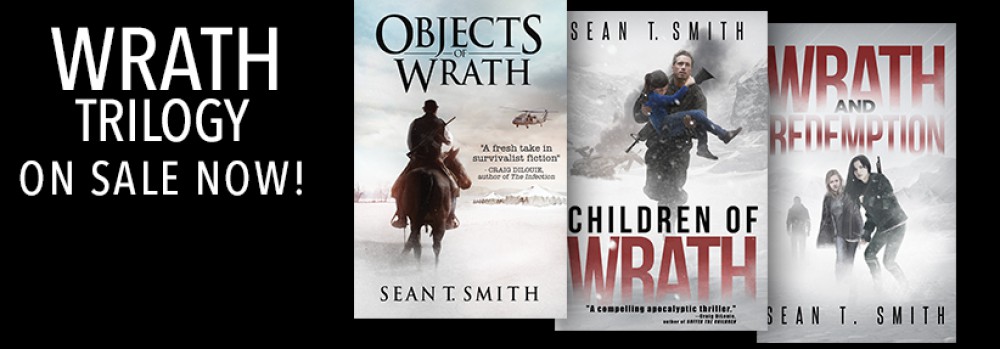
From Objects of Wrath: http://www.amazon.com/Objects-Wrath-Volume-Sean-Smith/dp/1618682245

“I had seen Gunny in action, had been trained by him, and knew how quick and deadly he was, but Chilli was an artist in his prime form, painting death with deft strokes. With perfect economy of motion he dispatched a seemingly unending supply of enemies in an unrivaled masterpiece of destruction. I hacked and shot behind him through the smoke, and despite the chaos, I marveled at Chilli’s artwork. His canvas was the battlefield, and he was the Rembrandt of the knife, painting darkness, not light. He was the Picasso of the blade, leaving twisted corpses in his wake, his hands and feet brushes that flicked out almost delicately, precisely, colorfully”

From Children of Wrath http://www.amazon.com/Children-Wrath-Book-Volume/dp/1618683411/ref=pd_bxgy_14_img_y

“Most of us are blessed with a moment when sunlight is gold dust, warm and glittering, and the air is clean and tastes like hope. Sometimes we pay attention, savor the sweetness and are glad of it. Too often, we realize the rareness of it too late to revel in the glory of it. Looking back, though, we know the moment. That’s the yearning and the hurt later, because the memory is not the time, it is an echo. There is no way to feel exactly that way again, you can only recall the wholeness of it, remember the preciousness. My moment was long and my soul sings with the echoes I hear, but by the time we began our assault on Dugway, my moment had already passed.”

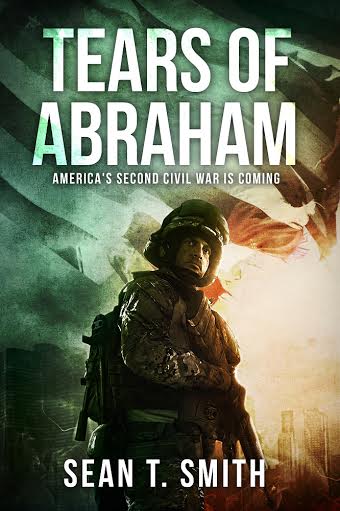
From Tears of Abraham, coming in March 2016
abraham cover final

“Stand up for yourself,” his father had said when Henry walked home with a bloody nose again. Henry’s old man, Tim Wilkins peered down at Henry. A tall, rangy man with a straight back, pale blue eyes, and a face worn out by life, Tim Wilkins was not prone to overt displays of affection or sympathy. But he was the center of Henry’s universe.
In Henry’s eyes then, his father was granite, solid rock, unbreakable, unchangeable, and strong in the way of a proud mountain. The lens of hope and faith filtered out the cracks and fissures, the broken blood vessels on Papa’s wind burned face, and the hurting eyes of a man eroded, but not yet completely worn smooth. Blasted by hard years, bad luck, and the love for the wrong woman, Papa remained undefeated.”

From Fate of the Fallen, my work in progress:

“Religion, Malak reasoned, would be at the heart of it. Money and power led to war between men. Religion could destroy mankind. Sometimes money and power were the religion, the worship of those things, by men who held armies on a leash. The worst of it was when money, power, and religion all combined. At the end of the day, it was always some kind of religion.”

Savoring the process

I love writing, whether it’s a song or a novel. I relish the entire process, and enjoy lingering over a passage, turning the words over, shifting things around to find a cadence and melody to the words. Some readers find this aspect of my writing a hinderence, and I understand that many folks want to read an adrenaline-driven book that’s primarily plot-driven. There’s nothing wrong with that, and I enjoy books like that  sometimes. The older I get, though, the more I want some real substance to the things I read and the things I write. I love Steinbeck, Hemingway, Dickens, McCarthy, Irving and O’brien. I’ve got a long way to go before I can attain that level, but that’s what I shoot for when I sit down to tell a story.

That’s my process, that’s my story, and I’m sticking to it!
Faith and Fiction

This is a story of triumph, so please bear with me because it might not sound that way at first. Happy endings aren’t worth a damn if there weren’t tears along the way.

  
I love writing and God. The love of those two intersect, in spite of my passion for other things. I love my wife and my children. I love to play music and dream melodies and yearn to create something beautiful and true.

I love the way the sun breaks when it’s rising over the Gulf of Mexico when I’m so far from land that the sea and sky are the world, and there is that perfect orange light born, glittering on the waves, and the hope of a good fish and that day sings in my chest. The best part, knowing that the next day will be just as good, infused with the same hope. For me, those moments have been few,  and I’m blessed to remember them.

It is easy and dangerous to make the things we love God.

A mentor and friend, a brilliant songwriter far beyond me, convinced me that the only way to succeed was to be willing to sacrifice everything at the altar of writing. I listened to him and to my own demons and learned the wrong lessons. My friend would smack me in the back of my head now if we were sitting next to each other at a bar in Nashville. I have tears in my eyes remembering him and the way he made me a better writer, and I wish I could hear him say something sarcastic and kind. 

Writing is not God, though we make it so.

Writers are not destined for pain unless they choose anguish. Joy is the lyric and the page and the melody and truth beneath. God is God.

TEARS OF ABRAHAM, cover reveal and signing announcement!

abraham cover final

The first Civil War was the bloodiest conflict in American history. The second war is worse.

While the nation tears itself apart, a soldier with a deadly secret fights his way home to his family.

Freedom is worth dying for, and love is a reason to live…but a house divided cannot stand.

Can Henry, Suzanne and the United States survive? Often the things we love we hurt the most.

Bestselling author Steve Konkoly says:

Tears of Abraham delivers a frightening look at a nation torn apart by a not so distant civil war. In classic Smith style, the conflict unfolds on a deeply personal level, delivering a guy punch of authentic military style action, sleek conspiracy undertones, and gripping family drama. I was hooked from the start by this uniquely dystopian military thriller.”

This is a deeply patriotic novel, my love letter to America. Should our differences lead to open war, the results will be beyond anything we can imagine, yet even now people clamor for secession without understanding what that would mean. While politics forms a backdrop to this book, it is essentially apolitical, a look at a conflict more than a hundred years in the making through the eyes of heroes, villains, and the innocent.

TEARS OF ABRAHAM will be released in March 2016, published by Post Hill Press and distributed by Simon & Schuster.

Jamie Mason’s Guest Blog: Canadian vs. American Post-Apocalyptic Visions

Jamie 1

DEATH OF A NATION Canadian vs. American Post-Apocalyptic Visions

by Jamie Mason

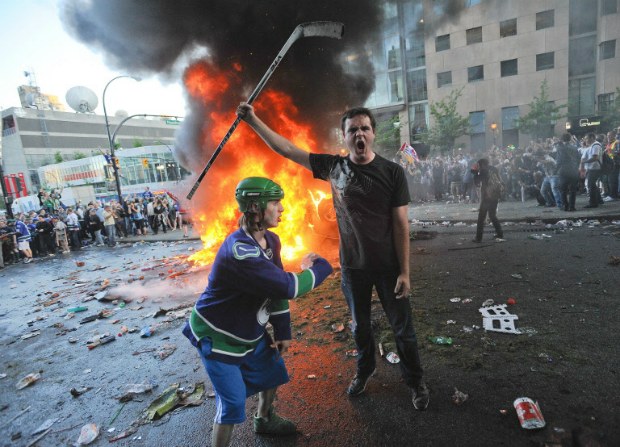
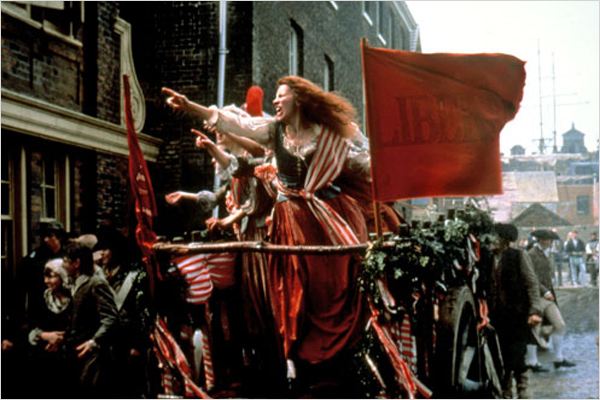
Broken windows stretch to the horizon. A noxious twist of grimy smoke clutches the clouds and a stench of bodies – the piled carnage of the City’s dead, an odor to corkscrew even the heartiest stomachs – lies heavily on the street. A door opens in a darkened shop-front and a man swathed in camouflage steps into view carrying an automatic rifle. The pearl-colored light reflects in his mirrored shades and the red, white and blue of his shoulder patch provides the only flash of color in an afternoon the hue of gun-metal and sorrow. A noise. He spins, bringing the rifle to bear … and is brought up short by the sight of a young, unarmed woman with a backpack slung over one shoulder, a maple leaf sewn into its pocket flap. She grins and flashes a peace sign. 1. The journey inevitably influences the traveller. But it is equally true that the traveler defines the journey. This is never more true than in the post-apocalyptic genre. One of my favorite films is the oft-overlooked 1985 gem REVOLUTION, starring Al Pacino. When Tom Dobb, the illiterate fur trapper Pacino plays, sails into New York Harbor on the eve of the War of Independence, he sums up the chaos unfolding in the streets tersely: “New York, goin’ crazy.”

jamie 2

The opening scene of that film confounds every expectation by painting the launch of the American Revolution with images of unimaginable brutality and human ugliness. Mobs smash British shop-windows, tear down statues of the King and (sadly for Tom) confiscate boats for the cause. Although history has vindicated the wisdom of the American Revolution as a critical step in the advancement of human freedom, I can’t help believing that the film’s portrayal is likely accurate. Strip away the historical bunting, and America was basically a colony that revolted against its landlords. Its birth was midwifed in a blaze of gunfire and death. War is war and, no matter how noble the cause, it’s always certain to unleash a level of apocalyptic violence. Canada’s birth was more ambiguous. We came into existence two short years after the end of the American Civil War, the result of a process that began in direct response to that conflict. By the time the British North America Act was passed, Canada was a sprawl of disconnected communities, ripe for annexation by a vigorous and ambitious neighbor. Invasions had been attempted five times in two previous wars and there was no reason to expect it wouldn’t happen again. (Indeed, a few of Lincoln’s generals lobbied for it.) Independence from a war-weary Britain seemed the most prudent way to secure the national welfare. Negotiations were lengthy and complex, tangled in British legal red-tape and impeded by competing colonial claims. Sir John A. MacDonald, our first Prime Minister, rose to lead a nation that was still very much unexplored and only just beginning to understand itself. Canada very literally emerged, blinking and uncertain, from the mists of the historical wilderness into a deafening silence.

Jamie3

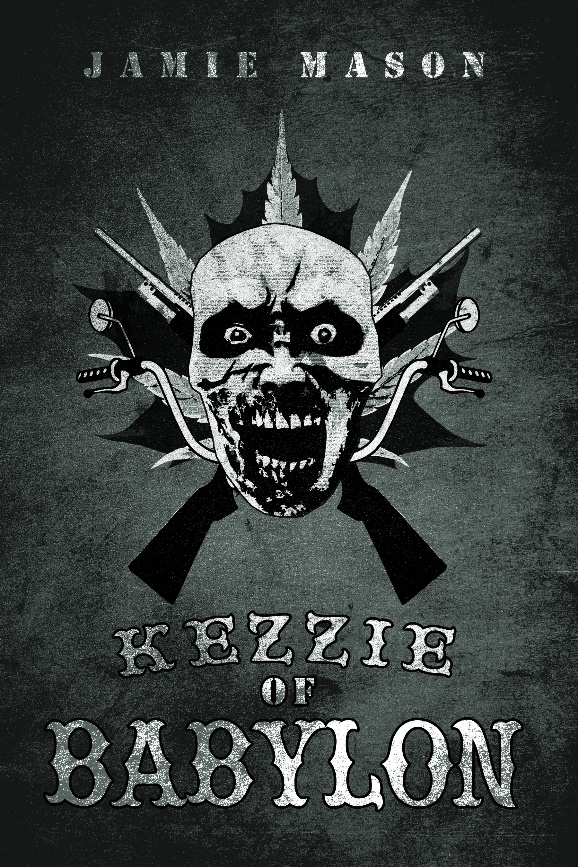
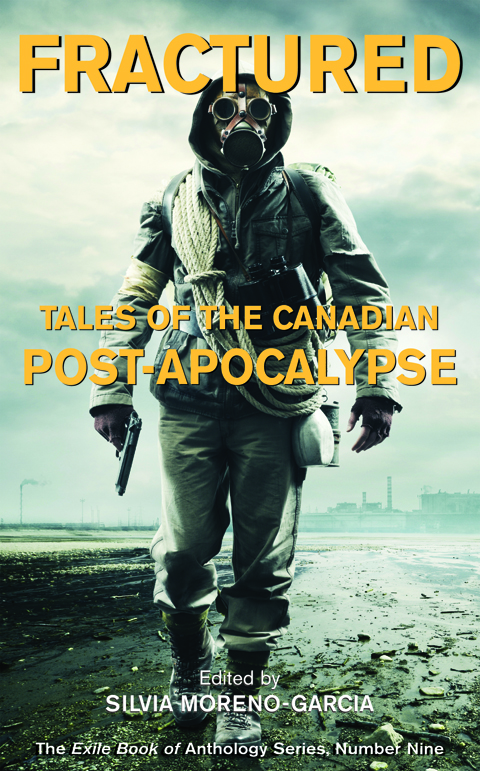
2. In our beginning lies our end. These two emergence narratives have served to shape, fundamentally, the contrasting American and Canadian visions of the post-apocalypse. I would hold that while television shows like THE WALKING DEAD and JERICHO and novels like WORLD WAR Z and THE PERSEID COLLAPSE portray a uniquely American apocalypse, Canadian equivalents such as ORYX & CRAKE, the collected stories of FRACTURED: TALES OF THE CANADIAN POST-APOCALYPSE and my own KEZZIE OF BABYLON (Permuted Press, March 2015) offer an equivalent Canadian vision unique in its own right. While there will always be an appetite for American entertainment north of the border, our American friends might be surprised to learn how our apocalyptic visions differ.

kezzie2

kezzie

3. ENEMIES & ANTAGONISTS Every good post-apocalyptic tale needs an enemy, and in American stories that enemy is usually a group or (in the case of zombies) a faceless horde which must be attacked and defeated militarily. THE WALKING DEAD handles this trope well, providing combat engagements pitting the protagonists against legions of zombies as well as human threats like the Governor and his dystopian serfs. WALKING DEAD s/heroes pack guns and katanas and these tools are always the go-to choice when trouble comes. This is not to dismiss other points of tension in the show (exploration, parlay with bad guys, character arcs), but to highlight the uniquely weaponized nature of the American post-collapse world. In a nation where the right to own firearms is enshrined in law and whose birth occurred in a storm of violence, it is logical that its death-throes would subside to the howl of gunfire. By contrast, the “enemy” faced by the main characters of Morgan M. Page’s poignant “City Noise” (FRACTURED: TALES OF THE CANADIAN POST-APOCALYPSE) is of an entirely different order. In Morgan’s vision, Toronto smoulders in the aftermath of a nebulous event known only as “The Crash” (an end every bit as ambiguous as our nation’s founding). The protagonists, Sarah and Johnny, are both transsexuals caught in the mid-point of transition when The Crash occurs, leaving them to scavenge in a blighted city for the drugs their bodies need in order to continue their biological migration. Instead of hordes of zombies to be vaporized by gunfire, the enemies Johnny and Sarah face are the ticking time-bombs of their own medically-altered biology, caught mid-way through a complex and transformative procedure

INDIVIDUAL VS. GROUP The cult of individualism is strongly rooted in the American consciousness and, for this reason, plays a titular role in any American post-apocalyptic story. The tendency for people to coalesce in a crisis is a historical given. But in American PA tales like OBJECTS OF WRATH (Permuted Press, 2014) the need for individualism sometimes leads to tragic results. One of the most poignant scenes in the novel involves a group of military first-responders flying into a remote encampment to offer aid to some backwoods survivalists. The unit’s doctor is turned away from caring for the group’s terminally-ill children because he is black. Here, hyper-individualism – the determination to survive with or without assistance from others, despite all logic – plays out in the ideology of a group existing in opposition to mainstream values of racial equality. Contrast this with the plot of my own novel, KEZZIE OF BABYLON (Permuted Press, 2015) wherein the Canadian tendency to seek accord and accommodation within groups – however dysfunctional – leads to disaster. A commune of biker outlaws, sheltered in the sanctuary of a remote grow-op in the hinterlands of Vancouver Island has, within its ranks, a deranged psychopath determined to impose her religious vision upon the group. The reluctance of the collective’s leaders to confront and disempower this person leads to murder, imposition of a form of worship that involves zombie crucifixion and (ultimately) destruction of the commune itself. Like those whose appeasement of the Quebecois nationalists resulted in the Meech Lake debacle, the reluctance of Buzz and Deacon to act allows Kezzie to take over and slaughter any who oppose her.

RELATIONSHIP TO NATURE Although environmental devastation often triggers the apocalyptic moment in American PA stories, it is rarely an ongoing threat as the plot progresses (THE DAY AFTER TOMORROW and Cormac McCarthy’s THE ROAD being the only exceptions that spring to mind). By way of final example, I contrast two short stories with the same title, one American, one Canadian. In Eric Del Carlo’s fascinating and brilliantly-rendered tale “The Herd” (OG’s Speculative Fiction, Issue #11), the Earth’s collapsing environment unleashes a series of devastating storms, driving a mass migration of human refugees ahead of them. Because I have spoken with Eric about the story’s origins, I can reveal that “The Herd” is based on his own experiences during Hurricane Katrina. Former residents of New Orleans, Eric’s family joined the stream of refugees clogging the highways just like the characters of “The Herd”. But it is what the storms cause people to do to each other as opposed to the storms themselves that form the real basis of Eric’s story. This in contrast to its Canadian counterpart. “The Herd” written by Tyler Keevil is first up in Exile Edition’s 2013 DEAD NORTH: CANADIAN ZOMBIE FICTION. In this unique twist on the zombie trope, Tyler presents us with a zombie horde migrating across the tundra, shadowed by an Inuit hunter. At play in this crisp, visually-evocative tale are all the elements of the classic Canadian wilderness survival story. It is Man against the elements as much as it is Man against … whatever. “A heaviness is in the air, a change in temperature, the wind, the look of the clouds. I know it is going to snow, and it comes in the early morning, just after the herd has set out. It arrives first, as a brief sprinkle … Then a lull, the air charged with a static crackle … Some of the deadheads stop, confused, and look up at this white confetti raining down …” – “The Herd”, Tyler Keevil, DEAD NORTH (Exile Editions, 2013) 4. And so we can see: the post-apocalyptic visions of both Canadian and American writers are informed by the human experience and social dimensions of the writers’ host countries. But it is in our origins, I think, that we find the defining characteristics of each country’s post-apocalyptic vision. We must remember that America and Canada are both nations engaged in the ongoing process of democratic evolution. Societies in both countries adapt to prevailing circumstances, learning from their mistakes, making mid-course corrections and each working to preserve the ongoing experiment that is any free society. We are unique, yes. But we influence each other enormously and are mutually fascinated by visions of the apocalypse. Americans, robust and individualistic, fight each other over possession of the wasteland while Canadians, willing to pay almost any price to remain within a group – however dysfunctional – seek to survive its ambiguous wilderness. As both nations emerge from history and grow toward self-actualization, we both imagine our own demise only to discover that we die very much the way we were born.

My friend Jamie Mason is a Canadian writer of dark fiction whose stories have appeared in On Spec, Abyss & Apex, White Cat and the Canadian Science Fiction Review. His zombie novel KEZZIE OF BABYLON was published in March of this year by Permuted Press. He lives on Vancouver Island. Learn more at www.jamiescribbles.com

Author or Salesman part II: How to show an author love…

We writers are an odd breed. We drink coffee into the wee hours, hunched over computers in small rooms and carved out spaces, getting up early to work day jobs and burning our candle at both ends. We leave our blood and heart on the page, dreaming characters, plot, and conjuring worlds in our minds. That’s the fun part, the creating, the honing, the story-telling. At some point, we set our work free to roam cyberspace, hoping that someone reads it and feels something true.

After it’s live on Amazon, then comes the anguished part of the process. We log onto our author page and check our sales rank, and we look for reviews. Good reviews make our day, and a bad review can cast a pall over a week. I’ve been told many times not to read bad reviews, but it hasn’t stuck yet. I read them, and I try to learn something from them. The general thinking amongst the author community is that 4 and 5 star reviews are good, and anything less is bad. Potential readers will often read the negative reviews, too, looking for a common thread. Also those 3 stars tend to give a little more credibility to the other reviews on the page. It’s a numbers game; the more reviews an author gets, the more books he or she is going to sell.

Indie authors must promote themselves, which is a nuisance for both the writer and for their friends, who grow weary of chest-thumping and begging and pleading. Writers don’t like doing it and people generally don’t like to hear about it. I understand. I apologize. There is no other way, unfortunately, for a writer to break out among the millions of other voices, attempting to be heard. So we blog, and we tweet, we Facebook, we Google Plus, we join groups on Linkdin and we post on Tumblir and Instagram, doing what the industry people who are far more savvy at marketing call “building your brand,” and equally important, “building your platform.”

An author’s brand is essential. If someone says, “I’m about to read a Tom Clancy book,” I know what they’re talking about. Clancy built a brilliant brand of military techno-thrillers. The brand is the author’s name in association with the books he or she writes.The reader has a certain expectation of the kind of book the novelist has produced, and will decide to buy based upon that prior knowledge.

The platform is just as important, if not more so. An author’s platform is how we are able to reach people. Social Media is the foundation of this platform, but it also includes book signings, radio show appearances, press releases, networking with other writers, and anything else we can dream up to find readers. For new authors, it’s maddeningly difficult to build a platform.

As a relatively new novelist, I’m familiar with these woes. There is the feeling of a tree falling in snowy woods when a book is released. A muffled, quiet sound at best. My publisher is a big believer in “soft releases” which lead to a “long tail.”  I’ve not yet quite figured out exactly what that means. I guess that the hope is word of mouth makes a novel or a series take off, and this takes a long time. In the meantime, authors have to keep writing, keep producing, not relying on one book or three.

Here’s where our friends are so important.

If you’ve got a friend or family member is an author, please buy their books. (Hence the begging!) For less than the price of a Starbucks Latte, you get eight hours of serious entertainment. Less than the price of a movie ticket. And folks, the book is always better than the movie.

After you read the books, please leave honest reviews. (more with the begging.) Reviews matter because they drive sales. The more reviews we receive, the more Amazon does it’s thing promoting our books to a wider audience. We’re more likely to qualify for promotional tools like Bookbub, which can potentially make or break a novel. I know it’s a pain to log back onto Amazon and crank out a review. But it really makes a difference to all of us who are striving to entertain a wider audience, those of us who dream of quitting that day job and sitting down at the computer both during the day and in the middle of the night.

If you enjoyed the book, tell people about it! Share a post every now and then, pass out a business card, or simply mention the book if you’re having a conversation about books. If you’re in a book club, throw it in the ring. People listen to what you have to say, and that word of mouth recommendation is crucial. It means more to us than you know.

No one told me I had to be a writer, no one insisted that being an author was the only right path for me, and that’s how it is for all of us, we crazy writer folk. We chose this path because we felt drawn to words, this need to create, and deep down we believe that we have something worthy to say, and emotion to impart. Whether it’s pure entertainment or something profound, we want to move people.

If we have moved you, please leave us reviews! And you will have succeeded in moving us.

amazon.com/author/seantsmith

understand.

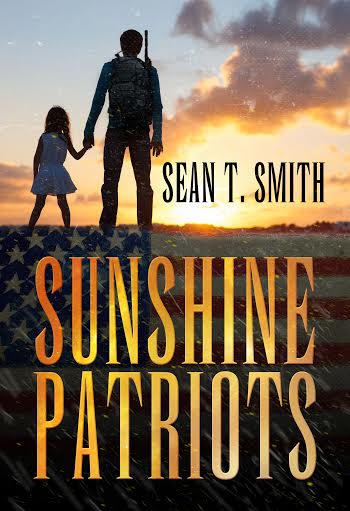
Sunshine Patriots… Cover Reveal

Patriots cover final

Sunshine Patriots is set in Steven Konkoly’s Perseid Collapse Kindle World, launching Feb. 3. I’m honored to be a part of Steve’s project and a stellar team of post-apocalyptic authors.

Retired Army Ranger John Goodwin and his two daughters fight for their lives from sweltering FEMA camps to the mangrove swamps of the Florida Keys. As the massive federal relief effort triggers conflict between freedom and order, a family still reeling from loss finds themselves under attack. Can Alexandria find hope when all hope seems lost? Can John destroy his enemies and save his children without losing himself? After the Event, nothing is certain.

Fans of the Wrath series will recognize my favorite themes in this novella… evil, faith, and family in peril. And of course, plenty of rounds zipping through the air!