Inside the Idea: A Glimpse Into A Crusty Writer’s Mind

A Fascination With History

When I was a kid I was blessed to have parents who encouraged my interest in history. My folks took me to countless forts, battlefields and museums. There is something special about seeing things in person rather than just hearing about them in school. I remember standing on the battlefield at Antietam when I was twelve and trying to imagine what those boys who had died there might have felt as they faced a charge. I recall closing my eyes and seeing the flash of bayonets and there was the smell of gunpowder and the screams of the wounded and dying. Inside the farmhouse there were pictures of dead soldiers sprawled over the very ground where I stood.

I visited many revolutionary war battlefields and was privileged to explore the Smithsonian. History came alive for me. I recall being blown away by the fact that I was looking at George Washington’s sword, the one he had worn into battle. And then seeing the sword that he accepted in surrender from General Cornwallis at Yorktown. The connection between where we had come from as a nation and where we’d ended up seemed to be a tangible thing that mostly made sense to me. It gave me a deep sense of appreciation for those who’d sacrificed everything for America.

During those same years, I was devouring science fiction like a starving man at a Golden Corral, eagerly immersing myself in futuristic worlds and complex narratives. The imaginative universes created by authors like Asimov, Heinlein, and Herbert made a huge impact on me, each story weaving intricate themes of humanity, technology, and moral dilemmas that challenged my perspectives. I found myself pondering the ethical implications of artificial intelligence in Asimov’s tales, the gritty social commentary within Heinlein’s works, and the rich, intricate political landscapes of Herbert’s Dune series. Each book opened a new door to possibilities, fueling my curiosity about the universe and igniting a passion for storytelling that has stayed with me ever since.

I think my books reflect my love of history expressed through the “what if?” lens of science fiction.

A Fresh Twist on Old Themes

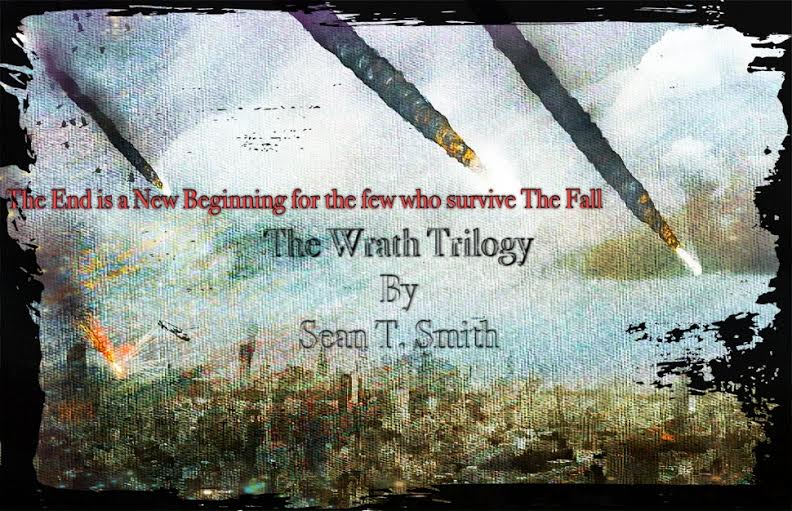
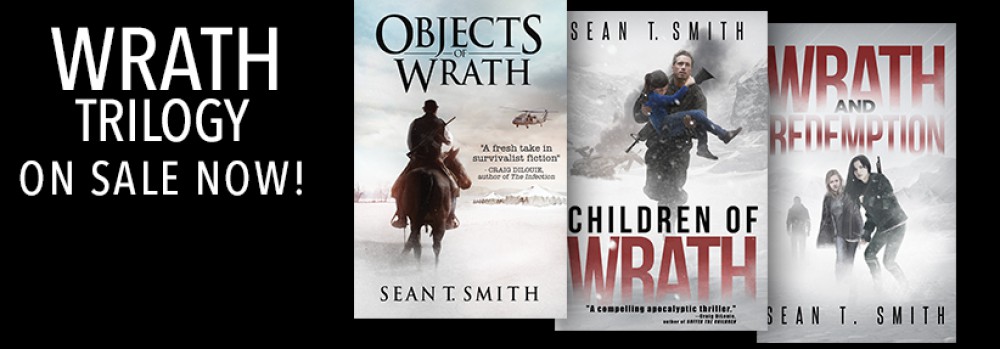
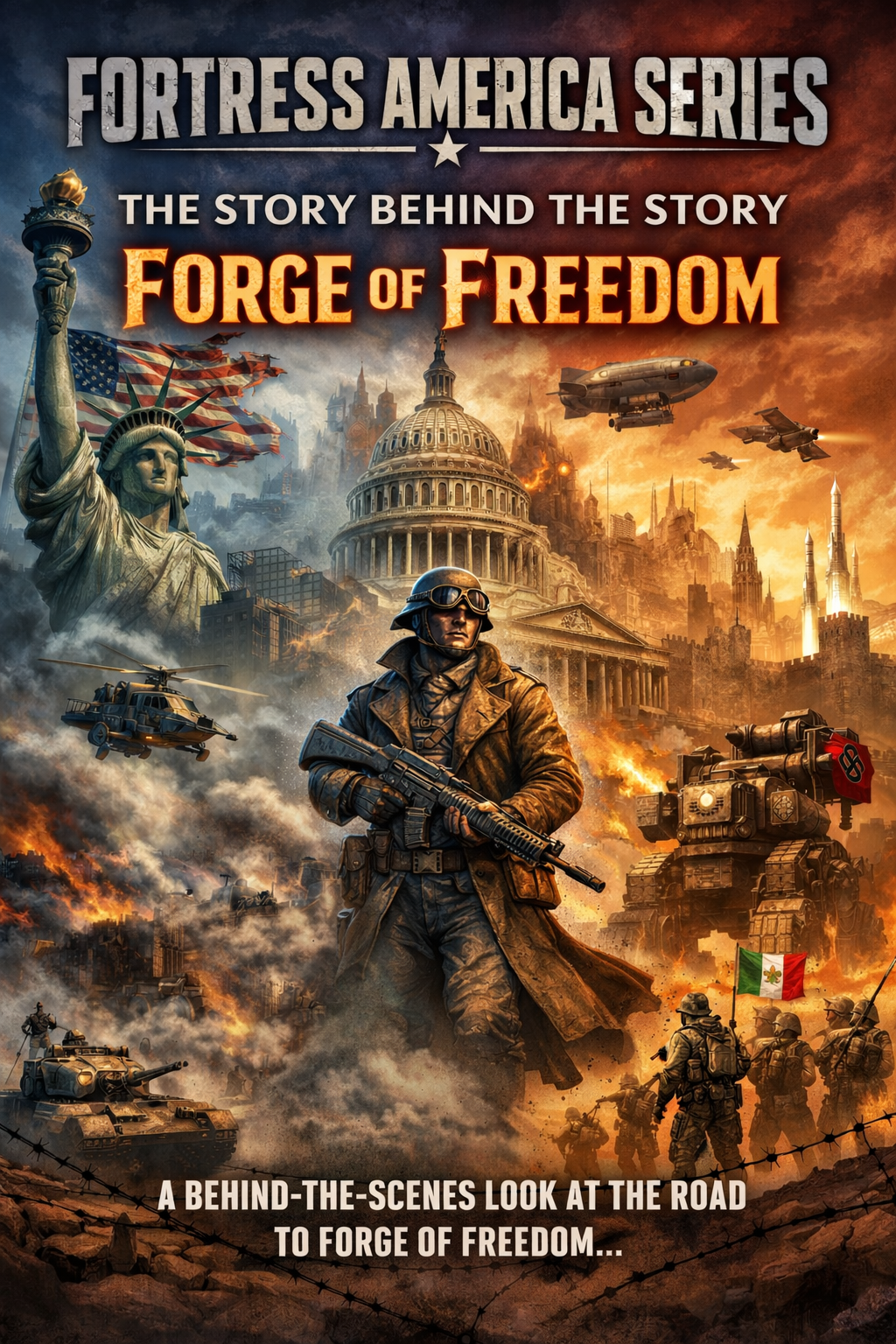
With the Wrath series, I explored what the aftermath of World War Three might look like. In Tears of Abraham I delved into the horrific destruction that a second Civil War would bring to the country. The Fortress America will ultimately combine those two Themes.

I am hard at work on the next novel in the series, Anvil of War. This one is centered around the defense of Taiwan against the Chinese invasion, and it picks up right after the events of Forge of Freedom. The third novel is as yet untitled but will take place probably twenty-five years in the future and will revolve a second American Revolution in the wake of the Bates authoritarian presidency.

Some Tidbits

The title Forge of Freedom was my publishers’ idea. The brothers John and Dean must endure tremendous pressure from their father. The title is meant to evoke that heat and pressure and that hardened resolve.

Fortress America is the name of a military board game I used to play with my old buddy Arthur back in high school. The premise of the game is that the United States has become extremely isolationist and is invaded. As of this writing, the global opinion of the United States has plummeted. 74% of people in Germany and 65% in the UK and Canada have unfavorable opinions of the United States. This, following the Greenland embarrassment, when Germany and France sent troops to Greenland to defend against America. If something does not change, NATO will fall apart.

I had planned and written the assassination plot line a year before Trump ran for office again. After the attempt happened, I was so discouraged by how close it felt to my novel that I quit writing.

Please leave an honest review!

I hope you enjoy my work, and will leave me an honest review on Amazon. Your thoughts and feedback are incredibly valuable not just to me but also to potential readers who are deciding whether or not to explore my writing. Reviews are really hard to come by, and they make a huge difference in helping my work reach a wider audience. A few kind words can inspire others to pick up my books and delve into the stories I’ve crafted. It would mean the world to me if you could take a moment to share your experience!
Sneek Peek… FATE OF THE FALLEN

scale.php

Chapter Twenty-Two

When faith is the bedrock upon which a life is built, the loss of it, when belief crumbles to dust, reduces a man to bitter, abject desolation. Malak died in the sand, and in the sand he was reborn.

Waves crashing, the sun blinding, and the ocean a pale welcome blue, he plucked a crab from his chest and pulled yellow seaweed from matted hair, pushing himself into a seated position. Coconut palms stretched toward the sea along a pristine white beach. At his back a steep mountain lush with green jungle rose toward the cloudless sky. He’d never been anyplace like this before.

“Is this heaven? My reward? It looks a little lonely,” he muttered.

A seagull landed a few feet away and twittered at him. The crab scuttled along the surf line with one oversized claw, and one tiny, ridiculous one. The big claw raised like a shield.

“What do you want from me?”

The breeze,balmy and sweet, ruffled his long hair.

“Remember our last talk? I quit. I’m not doing this anymore.”

The palms rustled and the waves broke upon the reef line and lapped the shore, a steady rhythm of foam and clear water, more than a whisper, less than a conversation. Peaceful, serene.

Malak was not in the mood. He thought about the family he’d lost, the screams of children still echoing in his heart. The demon he’d faced, a thing which he never known walked the earth until he’d felt its unholy power. To him it was days ago, though he had no idea how much time had elapsed between Baghdad and wherever this was. Whenever he was.
His existence was unfair, he decided. Every life he’d lived felt futile, as did life itself. The friends he’d seen die, the blood he’d spilled with a blade… there seemed to be no sense to any of it, within the context of a loving, living God. Especially given that reality.

While he had experienced great peace, the times of turmoil and war overshadowed this, and he saw that both he and mankind were no closer to figuring things out than they were centuries ago.

The crab skittered toward a hole in the sand, and the bird hopped over to the crab and skewered it.
The crab does not pity itself, even as it dies, any more than the bird gloats over the killing and the meal. Men are different. Perhaps emotions only make living harder. For the crab does not expect to live any more than the bird believes it will eat, and the fact that these desires conflict keeps neither awake at night. If the crab assumed he’d be protected, living the crab-life, surrounded by hungry birds, yet confident in his continued prosperity, he would get angry when that beak pierced his shell.

“What’s the point? Clearly, there isn’t one. When I believe, you destroy. You are God. I can’t deny that you exist. Not after the things I’ve seen. But you are not what you should be. You’re a cheat in the marketplace, full of sunshine promises and whitewashed smiles, who then vanishes when it turns out you sold a lie, a cracked jar. You have no integrity. That you exist does not make me love you.”

He knew that these words were the worst sort of blasphemy, and it his lips burned a bit with the speaking of them and his guts tightened up, his body rebelling against his mind.

He walked along the beach, letting the water slide over bare feet, feeling the sand between his toes and the warm sun on his neck. He walked for perhaps an hour or two, and wound up where he started, circling back to his first footprints. The bird cocked its head at him and laughed in the way that birds sometimes do.

He was on an island.

Malak plopped down in the sand and watched the sun slide below the ocean, streaks of pink and yellow and purple painted upon the vast sky, and the face of the waters shimmering orange against the dancing white of the breakers and the deepening blue of the sea. The day dying, the night born.

He did not move, watching the first stars appear, punching through both light and darkness, becoming a wondrous myriad of diamonds strung melting into the sea. All the while, the waves hushed and frothed, luminescent and soothing.
He decided he would explore the interior in the morning, and that if he wanted to quit living and dying for both God and man, this would be the perfect place to do it.

That is exactly what he did.

He would come to call the island “The Rock,” and although he couldn’t know it then, it would become a place of solitude and wonder and joy. It would be a refuge, the only place he was born again more than once; often as he was dying, he prayed he would wake up there. It didn’t happen often enough for his liking, but when it did, he’d feel the sun on his face and the thirst in his soul and hear the music of the ocean and he would smile.

It took time to figure this out. Malak was hard-headed, and immortality proved no solution to being stubborn.
Water was a problem, and it was only through dumb luck that he figured out that coconuts held life-giving water within their hard shells. During a storm, a green one fell next to him, and he heard the liquid inside. After wasting the precious liquid on the first few attempts, he learned how to remove the outer husk and pierce the shell within, drinking heartily. He also learned to drink from plants after a hard rain, and started collecting his coconut shells to gather water during the rainy season. Despite being stubborn, Malak was smart and tough and adaptable

He ate fish every day, because the flesh contained water. At first he speared them, and as time went on, he learned to dig alcoves reinforced by coral and lava rock, letting the tide bring the fish in, where they would be stranded after it receded. He added nets formed with vines from the jungle to make this more effective. There were abundant fruit trees on the island, as well, and when it did not rain enough, these saved his life more than once. The island provided.

He was gifted and cursed with what would later be known as a didactic memory. He forgot nothing. He could recall the taste of food he’d eaten in the Ludus or Lisdenfrane on any given day at a specific meal, along with the ribald or Godly conversations which ensued. The more alone Malak was, the more he retreated into the past, finding comfort and solace with friends long dead. Hearing their cries, at the end. That was the thing.

As good as his memory was, these conversations were all one-sided, more akin to eavesdropping. He could not speak to his comrades any more than they could talk to him on this deserted island. The moments were what they were, unaltered and done, and even though Malak wished to speak into the past, he could not. What was done was done.
He exhausted these memories, and that soul-shrinking loneliness came back. It was a poverty of the soul.

He needed to get off the island because he was going insane. Also, he was bored. He’d been there for more rainy seasons than he could count. At least twenty years. He had every cause to believe that the easiest way off the island was to die.
At dawn, after a long night of dead conversation, he set out into the ocean.

He swam beyond the breakers, the waves smashing into the coral below, his blood blooming in the clear water, warm in the way that Lisdenfrane was not, wild and teeming with life and death.

The first time, he made it beyond the reef. He swam until he was exhausted, swept by the current out into the open ocean. He choked on salt water and sputtered and stroked. Things stung and nibbled at his extremities. The moon rose high and bright and he was far from land and man. He rolled onto his back while a thunderstorm crashed a few miles away, lightning arcing from horizon to horizon, white and ragged, waves building, his body carried up and down, as alone as any man can ever be.

“Here I am! Kill me! You don’t care, so let’s get it over with!” He gulped a cresting wave, the water stinging his eyes.
The first shark took his right leg above the knee with one bite. It felt like a hard shove, followed by tingling and pain and ironic, gulping laughter. The next shark chomped him in the torso and took him down for a while, a plunge into the dark, where his ears hurt and his lungs burned and his guts were on fire below the sea, and Malak decided that there were better ways to die.

He felt the same sun, heard familiar lazy waves, and saw the same damn bird making angry tracks in the sand when he opened his eyes again.

“Really?”

He experimented with ways to kill himself for a season. Drowning, starvation, fire, and the ever faithful sharks. None of it worked. He wound up back on the beach.

And so began the conversation that mattered. The one he was meant to have.

God and Post-Apocalyptic Fiction

 wallpaper_preview_08

When the world is smashed and burning, I believe people will question why God abandoned us, while many who are not religious will turn to religion as a way of coping with the pain and destruction around us. Two of my favorite Post-Apocalyptic novels deal directly with faith: The Stand, by Stephen King, and A Canticle For Leibowitz, written by Walter M. Miller.  These novels both had a direct influence on my writing.

I’ve had a few reviewers attack the religious elements of my work, although the overwhelming majority of readers, both religious and agnostic, are not troubled by the way .the characters respond to the end of the world as we know it. While I wrote these novels from a Christian perspective, the books are by no means intended to be an extended sermon. Man has an innate need to connect to our creator, to find a way to explain our existence. Indeed, the idea of the apocalypse itself appears in Roman and Greek myths. The stories of the Biblical Flood and Armageddon go back thousands of years, and are a part of our collective human psyche.

wrathpic

There is a reluctance now, it seems, for post-apocalyptic fiction to address religion. I wonder why that is? Are authors fearful of alienating readers? (This was certainly very much on my mind when I wrote Objects of Wrath.) Whether it’s zombies, a virus, an asteroid, or a war, the majority of PA novels delve into the questions of faith in a cursory manner. I’m not implying there is anything wrong with this approach, and certainly many survivors would not ask larger questions, being more concerned with finding food or fleeing the approaching hoarde.

When I read a novel or watch a movie, one of the things that keeps me interested are the questions, “what would I do? How would I react? How would that feel?” Whether it’s watching an epic battle from Braveheart and putting myself into the shoes of the men waiting for a thundering charge from heavy cavalry or reading the heart-wrenching scenes in The Road, where the father tells his son how to shoot himself. I contemplate the emotional impact, try to see and feel what the characters would be going through. In Saving Private Ryan, when the soldiers are coming toward the beach, rounds zipping through the water, bombs falling, what would that feel like, to have been one of those men? What would I do?

I’m certain that I’d pray. I’d question my faith, but I’d be simultaneously clinging to it. I think that’s how most people would behave. There are atheists in foxholes, but not many.

One of the  things about post-apocalyptic fiction which appeals to me is that it offers an unflinching examination of the human condition, a window into our essential being. When laws have disappeared and civilization is absent, what sort of people are we? Philosophers like Locke, Rousseau and Hobbs talk about our “state of nature” before the social contract. I love books that take a look at this question. It’s one of the reasons I enjoy The Walking Dead. While some novels offer a very dark outlook on humanity, in which most men are truly evil by nature, others are more hopeful. I think most people are decent and good, although evil is hungry and seductive. Can good defeat evil, even when it looks as though darkness has already won?

Religion can be a force for good or great evil. In my second novel, Children of Wrath, this is the central theme. Faith in and of itself is not always a good thing. There are atrocities being committed around the world even as I write, killing carried out in the name of religion. Whether or not one believes in any sort of God, there is no denying the way that religion has shaped our world. After the world as we know it ceases to be, people will still turn to the heavens, sometimes shaking their fists, other times begging for help.

A Life, Well Written…Heroes, Villians, Lies and Truth. One Draft.

tumblr_lcrbe0epck1qbpjxio1_500

I used to scoff at regrets, probably because they hadn’t yet accumulated enough mass. I was confidant and convinced, in the way young men are, that regrets are for for fools. I believed I could fight my way through life without the deep wounds and scars born of mistakes, and I charged with unswerving abandon and careless faith and speed straight into middle age. The truth hurts when it comes crashing. I’m an author, but I haven’t written my own life the way I should have, the way I would if I were a character in one of my own books.

“Whether I shall turn out to be the hero of my own life, or whether that station will be held by anybody else, these pages must show,”
Charles Dickens opens David Copperfield with that poetry, my favorite first sentence in literature.  Not only would I like to write like that, I’d like to succeed in living that great commission. Heroes fall and fail and triumph in the end because they learn from their mistakes, because they are able to feel the sting of regret and overcome great obstacles and great odds. There is always adversity, the thing is to defeat it.

I write heroes in my books that would despise me if they knew me, because they’re better, these characters and constructs who are more brave and good than I am. I’m just a writer, not a hero.  I’ve been writing and dreaming and lost in words and acting as though I had an editor for my life. Someone to excise the mistakes, cut the fat, correct the regrets. I’ve got just one draft, though, here and now, which is my life here on this earth. No auto correct, no edits, no way to change the character arc or tweak the ending. One draft, all the way through, is what I’ve got, and if it sucks, then it does. It’s a lowsy story.

I think there’s a bit more to it, though, than that. I’m far from figuring it out, and I’ve got my scars and regrets. I’m writing this interactive video game, where the characters make choices that impact the ending, and I think the universe is like that. Sometimes there are no good endings, no matter what, not here in this mean world. Mostly, though there are endings which could be satisfying when we, the actors in the play, the characters in the story of our lives, listen to the wrong things. I know I do.

Paul says in Hebrews 12:2 “Let us fix our eyes on Jesus, the author and perfecter of our faith.”   I’m an author, but I haven’t been the author of my fate, not in the way I’d like to believe I’ve been. I certainly haven’t kept my eyes where they were supposed to be looking. One draft, one chance to get it right, and my choices make a difference, and I’m still hoping that my life will be written well, both by me and THE author.