America needs a Reformation

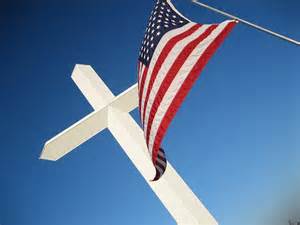
church and flag

Religion and politics have been wrapped around one another for thousands of years. From a purely political standpoint, religion was frequently used as a means to control the populace and consolidate power.This was true of the Egyptians, the Aztecs, the Romans and Jews. As Christianity spread throughout the world, first through the travels of the early Apostles, and later by the growing Catholic Church, the teachings of Christ were often subverted and forgotten. The masses did not understand the simplest tenets of their own beliefs, for services were held in a language they did not understand and read from Bibles they could not read.

When Martin Luther published his famous The Ninety-five theses in 1519, he sparked a reformation, and shook the world to its foundation. With the invention of the printing press, believers had access to translations of the Bible for the first time, and the Catholic Church lost its monopoly on the faithful. In many ways, the reformation was about returning to the past, rediscovering something  true and old, rather than finding something new.

The core of the reformation was the primacy of the cross,  placing faith above works, and Justification by grace, which is not earned, but rather comes from God himself. The reformation focused on the teachings of Jesus rather than the laws of men. This, too was later twisted for political ends, with the rise of nationalism throughout Europe.

after_the_world_by_Lifrasthir.png

Christianity in America needs a reformation

As the 2016 election looms, the Christian vote becomes crucial in determining who the next President of the United States will be. Once again, politics and religion are interwoven, and with consequences which will reverberate around the globe. Christians in the United States are not as homogeneous as the Catholic Church was, but over the last forty years the evangelical movement has morphed into a political beast which equates belief and faith with a clear political agenda. It’s an agenda that is often blatantly contradictory to what Jesus taught.

As the younger generation leave churches across the country in droves and membership dwindles,  prominent church leaders scratch their heads and bemoan the intrusion of humanism and secularism, point fingers at liberals, and grow more conservative. Rather than turning to the cross, they instead turn to politics.

Here are a few important ideas that seem to have vanished from the collective Christian mind in America:

Judge not

You, therefore have no excuse, you who pass judgement upon someone else, for at whatever point you judge the other, you are condemning yourself, because you who pass judgement do the same things.” (Romans 2:1)

With the absurd debate over transgender bathrooms and gay-rights all over the news, Christians seem oddly focused upon codifying their judgements, and howling insults and hate from the pulpit and the rooftop. This is not only contradictory to what the New Testament teaches, but it also serves to drive a wedge between believers. It is a terrible stumbling block for many. Hypocrisy and judgment will kill belief as surely as the plague, and the church in the U.S. is ravished by these things.

Humility

“For everyone who exalts himself will be humbled, and he who humbles himself will be exalted.” (Luke 14:11)

Jesus taught much about humility. Not the kind of humility that we should take pride in and use as a weapon, but actual humility. Somehow, Christians still line up behind leaders, both religious and political, who exalt themselves every day. From the T.V. preachers with fleets of jets to Donald Trump, Christians get behind these clowns in spite of the obvious contradictions between what they profess, what they do, and what they actually believe.

“Woe unto you Pharisees, because you give God a tenth of your mint, rue and all the other kinds of garden herbs, but you neglect justice and the love of God. You should have practiced the latter without leaving the former undone. Woe to you Pharisees, because you love the most important seats in the synagogues and greetings in the marketplaces.” (Luke 11:42-43)

By focusing on law, men turn from the truth. Laws are of man, while God is God. Yet here in America, we have reverted back to the same sort of legalistic thinking which led Jesus to revile the Pharisees. Law becomes subversive to faith, eroding it, undermining it, ultimately destroying it.

Jesus preached charity

“One thing you lack,” he said. “Go, sell everything you have and give to the poor, and you will have treasure in heaven. Then come, follow me.” (Mark 10:21)

“What good will it be for a man if he gains the whole world, yet forfeits his soul? (Matthew 16:26)

In the United States, where success is conflated with goodness, this idea of charity has been engulfed by the religion of capitalism. Prominent church leaders and politicians have made the claim that God invented capitalism, which has nothing to do with Christ. Worse, the poor are paid lip-service on Sunday morning, then demonized throughout the week, called lazy, freeloaders, and nastier things by talking heads on the news. Folks ought to re-read the Sermon on the Mount, and then the rest of the Gospels.
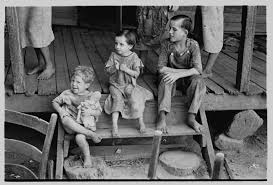
poverty 1

While there is nothing wrong with wanting a limited government, this demonization of the poor has taken on tones that would make Jesus weep, and many Christians speak this sort of hate with their own mouths.

Jesus taught love

At the heart of Christian belief is love. Love is the greatest commandment.

“Love the Lord your God with all your heart and with all your soul and all your mind. This is the first and greatest commandment. And the second is like it: Love your neighbor as yourself. ” (Matthew 22:37)

We have forgotten this, it seems, in America. We routinely see hateful speech coming from those who sit in pews every Sunday, from those who preach at the pulpit, and from leaders who sway voters because they make the claim that they are Christian.

While Jesus spent most of his time with outcasts, criminals, and prostitutes, in churches all across this country there is the spirit of judgement, exclusion and hate, rather than that of acceptance and love.

Conclusion

Since the rise of the “Moral Majority” in 1979, the Christian Right has become a potent political force in the United States, with the majority of Christians identifying with the Republican Party.

Now that Donald Trump is the presumptive GOP nominee, it’s time for Christians to re-examine their faith as it pertains to politics. Because Trump’s entire existence on this planet has been defined by greed, hate, infidelity, arrogance, and lies.

Regardless of the outcome of this Presidential election, the church across America needs to solve the problem at its core. The only way to do that is to turn back to the words of Christ.
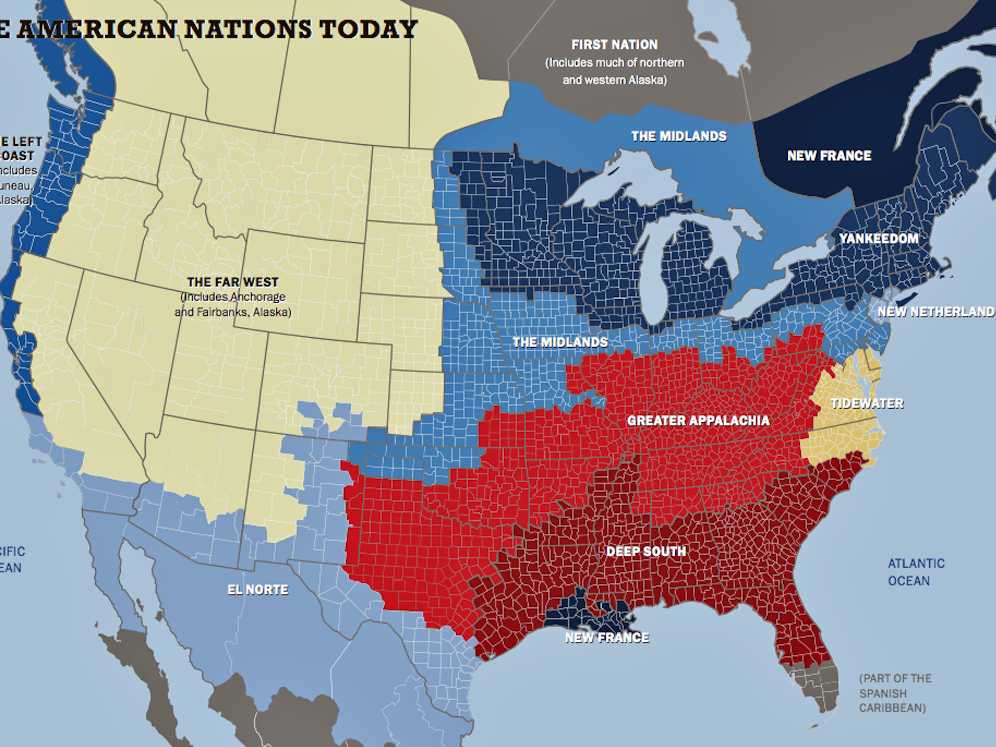



The Divided States of America

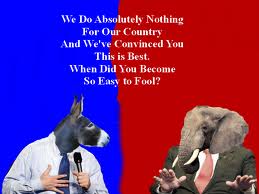
There is much gnashing of the teeth and shrill screaming  about politics these days. Everyone with internet access has an opinion and a voice. Many people are outraged about something. Social media is choked with hate, politicians point fingers, and any sort of reasonable discourse seems to have fled the country.

The things people are screaming about are distractions, while the things they should be paying attention to go largely unnoticed. We, the people, are being played.

Money and politics

Both parties are equally beholden to the almighty dollar. There are no good guys, as far as I can see, and those who actually seem to have a heart for the American people and are willing to buck the system have no chance of actually being able to be a force for positive change because their voices are drowned out by the hatred, the money, and the discord. That seems to be the idea.

Republican Governor John Kaisch of Ohio announced his bid for the 2016 election; he is an example of a moderate who has accomplished great things in his home state, and of course, he has no chance at winning. The Koch Brothers won’t be helping him.

Hillary Clinton portrays herself as the champion of the middle class, yet she is an example of the ivory tower liberals who are not only disconnected from most of America, but who also reap millions in corporate campaign contributions. She is above all else a political animal.

The banking industry, working behind the shadows is one place where true power resides. Energy is another. Power has almost nothing to do with politics, and is essentially the ability inflict one’s will upon another. The United States possesses the strongest military the world has ever seen.

But the real power lies not in the new F-35, the stealth bomber, or the ICBM, but in those who decide when and where these weapons will be used. Where we will go to war and why.

Be angry and mean and certain!

That’s what they want. Whoever the hell they are.

It doesn’t seem to matter who the figureheads are, though I’d love to believe otherwise. We can argue about guns and rebel flags and gay rights, and it appears that there is profit somewhere for someone in that discord. We howl about Obama and lose respect for the office of the President, and that’s just fine with those guys. They’re playing both sides of the fence, and are laughing at us from their private islands.

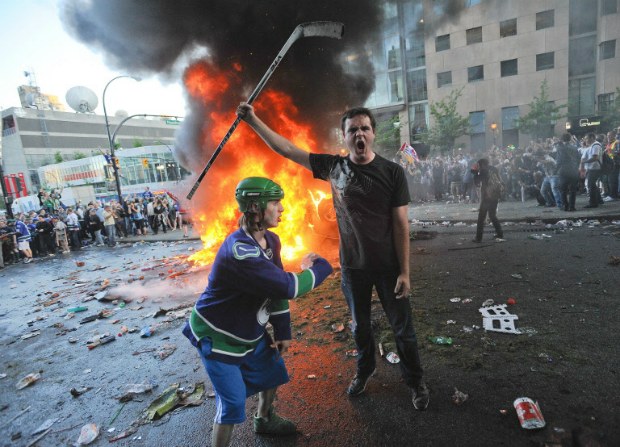
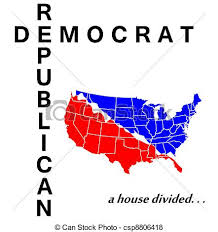
america divided 1

The insults and name calling between parties has never been worse, and it’s spilled over from Congress to Main Street and even the dinner table.

So what should we be paying attention to?

The way money buys power. Decisions like Citizens united. Corporate welfare.

Climate change. It’s happening. The planet is growing warmer according to 99% of climatologists. Sea levels will rise, weather patterns will shift. Water shortages and droughts will worsen in some areas, while other parts of the world will see floods.

ISIS, China, and Russia.

The Islamic state is spreading like wildfire, and now boasts a well organized and supplied army. The guys behind the guys don’t know what to do about them yet, and the whole Arab spring caught them off guard, along with the power vacuum in Iraq. The middle east is nuke waiting to blow. The aftershock will shake the world.

https://authorcentral.amazon.com/gp/books/book-detail-page?ie=UTF8&bookASIN=B00IK7MH9M&index=default&parentASIN=B00ISZJOSS&tabName=

China is on course to overtake the United States in military power over the next two decades. They have an aircraft carrier, a fleet of submarines, and the desire to project power into the Indian Ocean and South Pacific. They are building islands out of the sea, placing air strips on them. China owns trillions of dollars in U.S. debt and manipulates its currency to the great detriment of the United States. Of course, the multinational corporations don’t care about what is good for the United States. They’re in the business of making money for shareholders, so will continue to ship jobs to China because it’s good for the bottom line.

russian fighter jets

Russia is eager to reclaim its stature as a superpower, and Putin, a former KGB officer with an ego the size of his country, is unpredictable, ruthless, and bent upon taking more land and resources. The annexation of Crimea proves this, along with the war in the Ukraine, the relentless incursions into NATO airspace, and threatening posture of flights off the U.S. coast. Bombers within forty miles of California? Yes. That happened this week, again. Russia has simulated nuclear attacks against Sweden, and they are actively militarizing the arctic, building bases to go after oil resources as the ice packs melt.

Ourselves

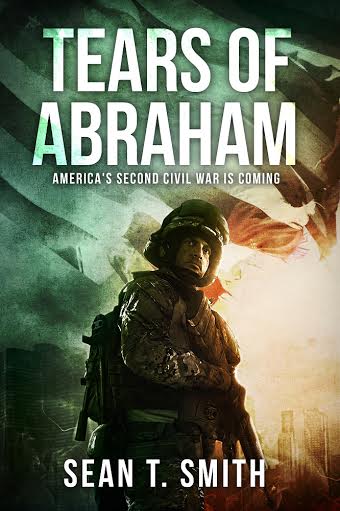
abraham cover final

More dangerous to this great nation than these other threats is the one we present to ourselves.

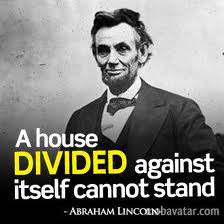
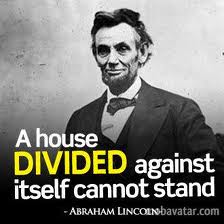
For a house divided cannot stand.

amazon.com/author/seantsmith

Southern Pride and Rebel Flags: Guest Blog with Kelli Freeman Smith

rednecks

The controversy raging around the display of the Confederate flag breaks my heart. This symbol of southern pride, adopted from a war which pitted brother against brother and  usurped by the KKK, should not be a symbol at all. We southerners have many things to be proud of, and that flag isn’t one. Our heritage is richer than that, runs deeper and truer, and we should not allow ourselves to be defined by the stars and bars.

I was born and raised in the deep south, and I’ve lived there all my life. I grew up in a sleepy town on the Florida-Georgia line, where football players were rock stars and Friday nights in the fall were the highlight of the year. A town of Magnolia trees and live oaks draped in Spanish Moss, where pickup-trucks with mud on the tires lined the Baptist Church parking lots every Sunday morning. My southern drawl is sweet as honey-dew or ice-tea on a lazy afternoon in July. I say “ya’ll, bless your heart, and amen.” I love the poetry of Faulkner and Merle Haggard and the opening notes to Sweet Home Alabama.

The land I played on as a child and the woods I scraped my knees in with my cousins were farmed by my Grand Daddy. My mother worked the fields with her 8 brothers and sisters, and in tobacco season her hands were raw and her face was burned by the sun. Most of my family still lives on that land, and our family reunions are feasts of friendship and fresh vegetables and laughter. There is pride in that. In family, a thing which we southerners take very seriously. We take care of our own.

35d72460ac5de2352963a91b6665a9f1

Driving through town, you’ll see American flags flying,whether it’s July 4, Memorial Day, or just a random morning, because patriotism runs deep here in the south. Throughout Americas wars, the South gave many of its sons to the United States. God, Family, and Country. This is much of what it means to be southern. There is also a sense of rugged individualism. My Daddy taught us, like his taught him, to work hard and to think for myself.

And then there’s the icky part. Slavery, the Civil War, Jim Crow, and lingering racism. Unfortunately the Rebel Flag symbolizes those things, particularly to those who are not from the south, and in a more subtle way, those who are, as well. I wish it was not so.

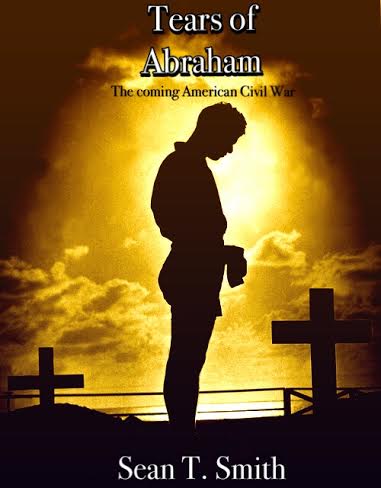
Abraham sample cover

There is a great dichotomy between patriotism and embracing a symbol of sedition. A contradiction in reading the King James version of the Gospel, and then uttering the N word with the same mouth. A lack of gentility and hospitality in flying a flag which is inherently offensive to others. A celebration of the War of Northern Aggression which was actually a war to preserve slavery, a codified, immoral, abomination couched in terms of states rights. The right the states wanted, though, was the right to own people. That’s not something to be proud of.

My social media news feed is rife with posts with rebel flags, and people, some of them dear family members, who defend the idea of displaying the flag because it is a part of southern pride and heritage. Maybe they’ve forgotten or overlooked what it actually means. The more angry the rest of the country gets, the more entrenched these folks become, rather than questioning what they believe to be true.

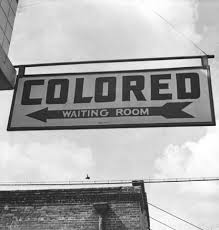
colored

Once again, brother is pitted against brother, and this flag is hurting the south again, tearing at families, destructive as Sherman’s march. Only now, we are burning ourselves to the ground. The war is over, the south lost, and it was a foolish war in the first place. Get over it and embrace what it truly means to be southern, not some romantic, idealized notion of a past that was never was. We have much to be proud of. Let’s celebrate that.

Jamie Mason’s Guest Blog: Canadian vs. American Post-Apocalyptic Visions

Jamie 1

DEATH OF A NATION Canadian vs. American Post-Apocalyptic Visions

by Jamie Mason

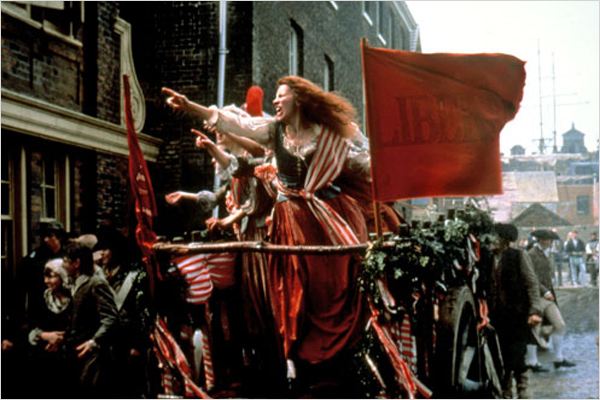
Broken windows stretch to the horizon. A noxious twist of grimy smoke clutches the clouds and a stench of bodies – the piled carnage of the City’s dead, an odor to corkscrew even the heartiest stomachs – lies heavily on the street. A door opens in a darkened shop-front and a man swathed in camouflage steps into view carrying an automatic rifle. The pearl-colored light reflects in his mirrored shades and the red, white and blue of his shoulder patch provides the only flash of color in an afternoon the hue of gun-metal and sorrow. A noise. He spins, bringing the rifle to bear … and is brought up short by the sight of a young, unarmed woman with a backpack slung over one shoulder, a maple leaf sewn into its pocket flap. She grins and flashes a peace sign. 1. The journey inevitably influences the traveller. But it is equally true that the traveler defines the journey. This is never more true than in the post-apocalyptic genre. One of my favorite films is the oft-overlooked 1985 gem REVOLUTION, starring Al Pacino. When Tom Dobb, the illiterate fur trapper Pacino plays, sails into New York Harbor on the eve of the War of Independence, he sums up the chaos unfolding in the streets tersely: “New York, goin’ crazy.”

jamie 2

The opening scene of that film confounds every expectation by painting the launch of the American Revolution with images of unimaginable brutality and human ugliness. Mobs smash British shop-windows, tear down statues of the King and (sadly for Tom) confiscate boats for the cause. Although history has vindicated the wisdom of the American Revolution as a critical step in the advancement of human freedom, I can’t help believing that the film’s portrayal is likely accurate. Strip away the historical bunting, and America was basically a colony that revolted against its landlords. Its birth was midwifed in a blaze of gunfire and death. War is war and, no matter how noble the cause, it’s always certain to unleash a level of apocalyptic violence. Canada’s birth was more ambiguous. We came into existence two short years after the end of the American Civil War, the result of a process that began in direct response to that conflict. By the time the British North America Act was passed, Canada was a sprawl of disconnected communities, ripe for annexation by a vigorous and ambitious neighbor. Invasions had been attempted five times in two previous wars and there was no reason to expect it wouldn’t happen again. (Indeed, a few of Lincoln’s generals lobbied for it.) Independence from a war-weary Britain seemed the most prudent way to secure the national welfare. Negotiations were lengthy and complex, tangled in British legal red-tape and impeded by competing colonial claims. Sir John A. MacDonald, our first Prime Minister, rose to lead a nation that was still very much unexplored and only just beginning to understand itself. Canada very literally emerged, blinking and uncertain, from the mists of the historical wilderness into a deafening silence.

Jamie3

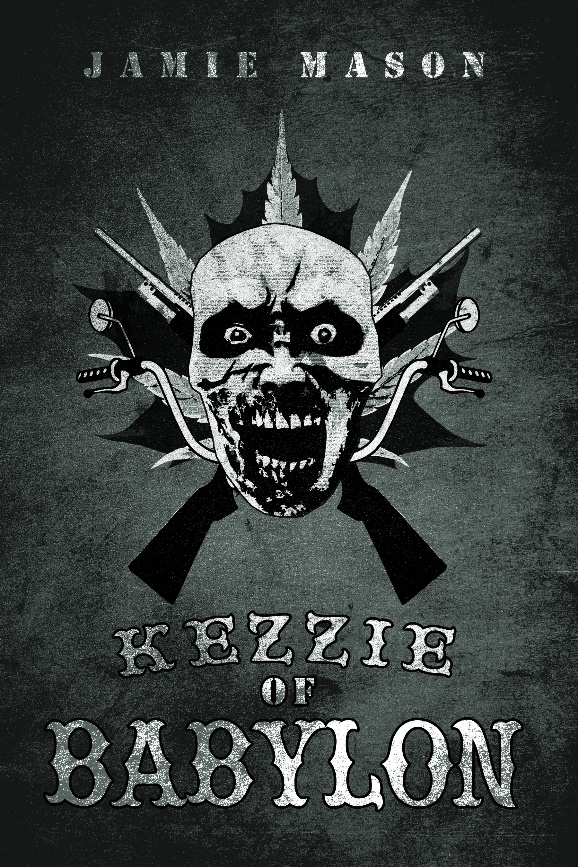
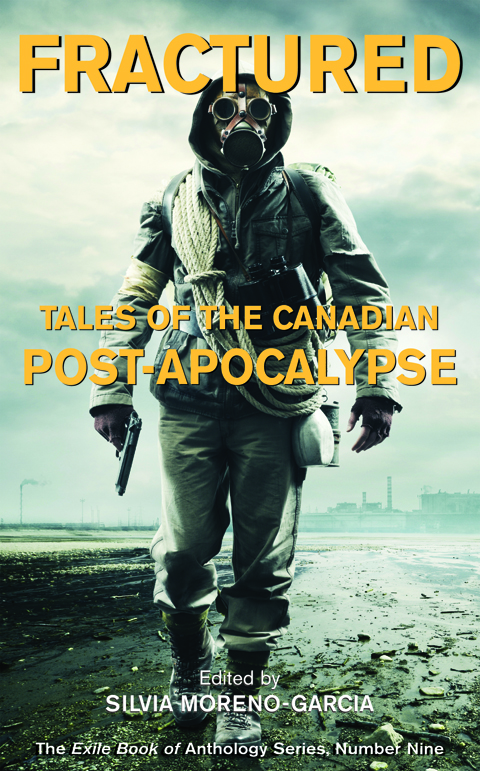
2. In our beginning lies our end. These two emergence narratives have served to shape, fundamentally, the contrasting American and Canadian visions of the post-apocalypse. I would hold that while television shows like THE WALKING DEAD and JERICHO and novels like WORLD WAR Z and THE PERSEID COLLAPSE portray a uniquely American apocalypse, Canadian equivalents such as ORYX & CRAKE, the collected stories of FRACTURED: TALES OF THE CANADIAN POST-APOCALYPSE and my own KEZZIE OF BABYLON (Permuted Press, March 2015) offer an equivalent Canadian vision unique in its own right. While there will always be an appetite for American entertainment north of the border, our American friends might be surprised to learn how our apocalyptic visions differ.

kezzie2

kezzie

3. ENEMIES & ANTAGONISTS Every good post-apocalyptic tale needs an enemy, and in American stories that enemy is usually a group or (in the case of zombies) a faceless horde which must be attacked and defeated militarily. THE WALKING DEAD handles this trope well, providing combat engagements pitting the protagonists against legions of zombies as well as human threats like the Governor and his dystopian serfs. WALKING DEAD s/heroes pack guns and katanas and these tools are always the go-to choice when trouble comes. This is not to dismiss other points of tension in the show (exploration, parlay with bad guys, character arcs), but to highlight the uniquely weaponized nature of the American post-collapse world. In a nation where the right to own firearms is enshrined in law and whose birth occurred in a storm of violence, it is logical that its death-throes would subside to the howl of gunfire. By contrast, the “enemy” faced by the main characters of Morgan M. Page’s poignant “City Noise” (FRACTURED: TALES OF THE CANADIAN POST-APOCALYPSE) is of an entirely different order. In Morgan’s vision, Toronto smoulders in the aftermath of a nebulous event known only as “The Crash” (an end every bit as ambiguous as our nation’s founding). The protagonists, Sarah and Johnny, are both transsexuals caught in the mid-point of transition when The Crash occurs, leaving them to scavenge in a blighted city for the drugs their bodies need in order to continue their biological migration. Instead of hordes of zombies to be vaporized by gunfire, the enemies Johnny and Sarah face are the ticking time-bombs of their own medically-altered biology, caught mid-way through a complex and transformative procedure

INDIVIDUAL VS. GROUP The cult of individualism is strongly rooted in the American consciousness and, for this reason, plays a titular role in any American post-apocalyptic story. The tendency for people to coalesce in a crisis is a historical given. But in American PA tales like OBJECTS OF WRATH (Permuted Press, 2014) the need for individualism sometimes leads to tragic results. One of the most poignant scenes in the novel involves a group of military first-responders flying into a remote encampment to offer aid to some backwoods survivalists. The unit’s doctor is turned away from caring for the group’s terminally-ill children because he is black. Here, hyper-individualism – the determination to survive with or without assistance from others, despite all logic – plays out in the ideology of a group existing in opposition to mainstream values of racial equality. Contrast this with the plot of my own novel, KEZZIE OF BABYLON (Permuted Press, 2015) wherein the Canadian tendency to seek accord and accommodation within groups – however dysfunctional – leads to disaster. A commune of biker outlaws, sheltered in the sanctuary of a remote grow-op in the hinterlands of Vancouver Island has, within its ranks, a deranged psychopath determined to impose her religious vision upon the group. The reluctance of the collective’s leaders to confront and disempower this person leads to murder, imposition of a form of worship that involves zombie crucifixion and (ultimately) destruction of the commune itself. Like those whose appeasement of the Quebecois nationalists resulted in the Meech Lake debacle, the reluctance of Buzz and Deacon to act allows Kezzie to take over and slaughter any who oppose her.

RELATIONSHIP TO NATURE Although environmental devastation often triggers the apocalyptic moment in American PA stories, it is rarely an ongoing threat as the plot progresses (THE DAY AFTER TOMORROW and Cormac McCarthy’s THE ROAD being the only exceptions that spring to mind). By way of final example, I contrast two short stories with the same title, one American, one Canadian. In Eric Del Carlo’s fascinating and brilliantly-rendered tale “The Herd” (OG’s Speculative Fiction, Issue #11), the Earth’s collapsing environment unleashes a series of devastating storms, driving a mass migration of human refugees ahead of them. Because I have spoken with Eric about the story’s origins, I can reveal that “The Herd” is based on his own experiences during Hurricane Katrina. Former residents of New Orleans, Eric’s family joined the stream of refugees clogging the highways just like the characters of “The Herd”. But it is what the storms cause people to do to each other as opposed to the storms themselves that form the real basis of Eric’s story. This in contrast to its Canadian counterpart. “The Herd” written by Tyler Keevil is first up in Exile Edition’s 2013 DEAD NORTH: CANADIAN ZOMBIE FICTION. In this unique twist on the zombie trope, Tyler presents us with a zombie horde migrating across the tundra, shadowed by an Inuit hunter. At play in this crisp, visually-evocative tale are all the elements of the classic Canadian wilderness survival story. It is Man against the elements as much as it is Man against … whatever. “A heaviness is in the air, a change in temperature, the wind, the look of the clouds. I know it is going to snow, and it comes in the early morning, just after the herd has set out. It arrives first, as a brief sprinkle … Then a lull, the air charged with a static crackle … Some of the deadheads stop, confused, and look up at this white confetti raining down …” – “The Herd”, Tyler Keevil, DEAD NORTH (Exile Editions, 2013) 4. And so we can see: the post-apocalyptic visions of both Canadian and American writers are informed by the human experience and social dimensions of the writers’ host countries. But it is in our origins, I think, that we find the defining characteristics of each country’s post-apocalyptic vision. We must remember that America and Canada are both nations engaged in the ongoing process of democratic evolution. Societies in both countries adapt to prevailing circumstances, learning from their mistakes, making mid-course corrections and each working to preserve the ongoing experiment that is any free society. We are unique, yes. But we influence each other enormously and are mutually fascinated by visions of the apocalypse. Americans, robust and individualistic, fight each other over possession of the wasteland while Canadians, willing to pay almost any price to remain within a group – however dysfunctional – seek to survive its ambiguous wilderness. As both nations emerge from history and grow toward self-actualization, we both imagine our own demise only to discover that we die very much the way we were born.

My friend Jamie Mason is a Canadian writer of dark fiction whose stories have appeared in On Spec, Abyss & Apex, White Cat and the Canadian Science Fiction Review. His zombie novel KEZZIE OF BABYLON was published in March of this year by Permuted Press. He lives on Vancouver Island. Learn more at www.jamiescribbles.com

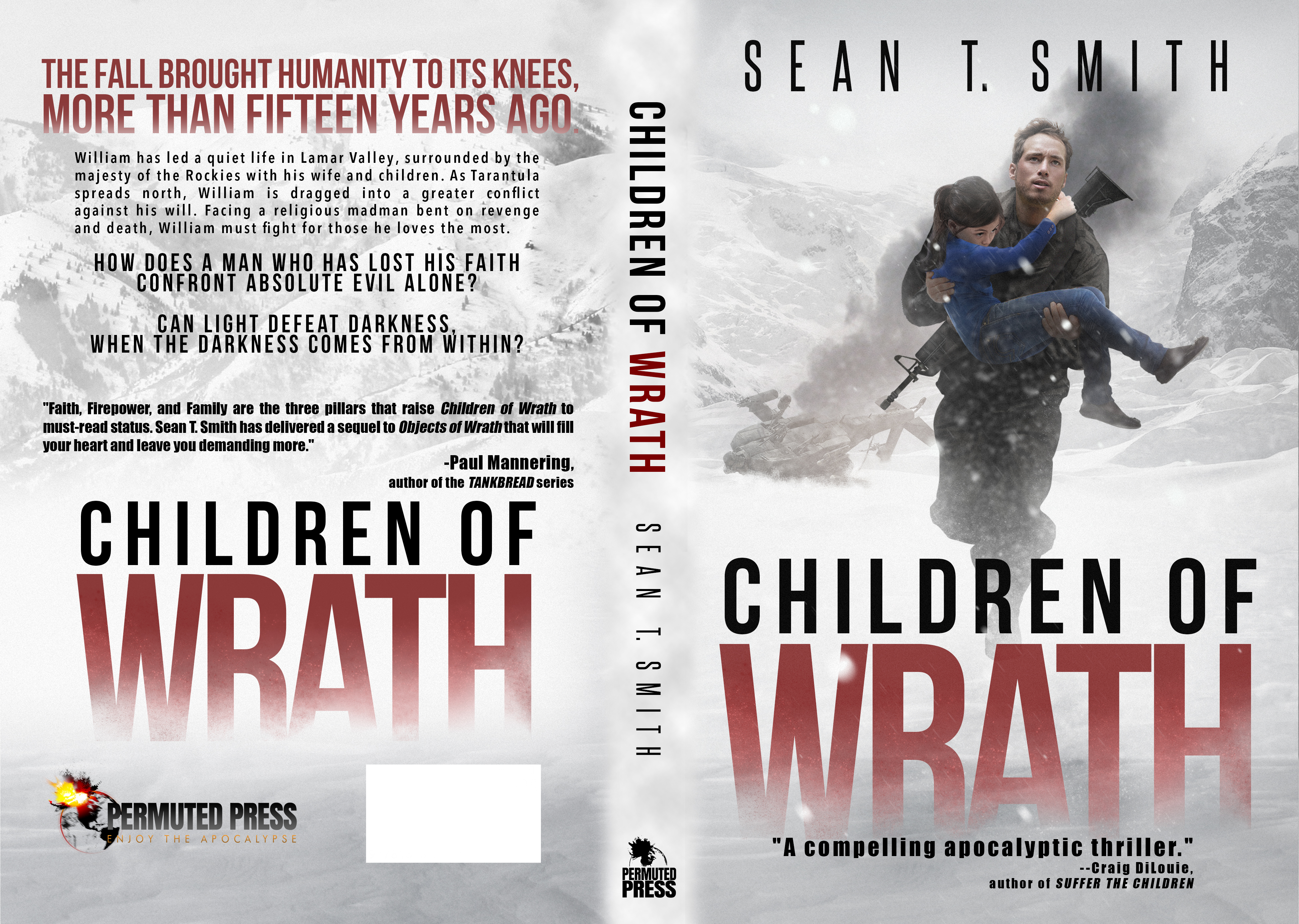
Children of Wrath…Available now on Amazon

Children of Wrath_Wrap_FINAL

A religious war threatens to destroy everything that matters to William. There is no escaping evil and madness…It must be defeated.

There is darkness, but always hope, even when it appears absent. This book is about holding onto faith in the face of evil and loss, and it picks up about ten years after the events of Objects of Wrath.  I hope you all will read this, tell your friends about it, and let me know what you think. I love interacting with readers, and I’m easy to connect with on Facebook, Twitter, and GoodReads.

This book is available on Amazon, Banes and Noble, and through itunes, in e-book format, and in about two weeks, in paperback as well. Objects of Wrath is also on audible.com as an audio book, and if you haven’t read that one, I’d suggest reading it first; the books are able to stand alone, but I don’t spend much time going into events that happened in the first one.

Thanks for all the support, and happy reading!

We The People

america divided 1

I love the United States of America; we are the greatest nation in the history of mankind, yet we are not the country that we were, nor the one we believe ourselves to be. America  lost its light along the way.

America stopped Hitler. America invented rock and roll, the automobile, and the internet, and put men on the moon. We are a nation of innovators, fiercely independent, and hard working. We as a people were admired for standing for freedom and democracy. That is part of our heritage.seantsmithauthor.files.wordpress.com/2014/06/what-do-i-need-to-know.jpg”>Self-Compassion

America defeated the Soviet Union without firing a shot. (Not The Big shot, thank God.)

Those are defining moments as Americans, right? We stopped Stalin, King George, and Saddam Hussein. We helped rebuild Germany and Japan after World War II.

But…America became a nation by killing off the people that were actually Americans first. Whoops.

Along the way, America built a nation upon the backs of people who were enslaved. Slavery happened. People owned people. That’s also part of our heritage.  This country would not exist as we know it without the push west at the expense of the Native Americans and the generations of slave trade and labor which built the agricultural base in the South.

I love America. I love the United States. We are not all one thing, though, either good or evil, nor have we ever been a homogenous society. In fact, our diversity is one of the things that made us great.  We have been a champion of freedom and that which is good, but we have also committed atrocities and grave mistakes.

And now, while the United States consumes itself with bitter fire and ignorance, self righteousness and self- loathing at the same time, what is the truth of it?  As a people, as Americans, can we recognize the difference between a patriot and a fool?

It’s harder than we think, and now a war within looms because we’re that idle and dumb. The patriots, who are not actually patriots but those who undermine the country with lies, ignorance, and hatred, are dangerous because many of them advocate open war, rebellion, and violence. And their numbers are growing.a

The amount of misinformation being blasted over the airways and internet is mind-blowing. The truth seems hard to discern, and many people, it seems , prefer to believe lies, whether the lies we tell ourselves or the lies of others, than to look for the cold, hard truth. The truth, like the America itself, is not just one thing.

The United States strove to be a beacon of hope for the world, a “city on a hill,” and in many respects, the country succeeded in fulfilling the hopes of our founding fathers. It seems to me though, that we the people no longer strive for this ideal.

We watch videos of cuddly cats on the internet rather than try to learn something. We past memes on social media full of ignorance and hate because it is easier to click than it is to actually read. We are convinced we are right and that the other side is wrong, seldom listening to those who disagree with us, remaining in a bubble of ignorance.

The true patriot will listen, learn, and read a history book.

One of the building blocks of our democracy is compromise. Without it, the government cannot function, either at the national or local level.  When politicians and voters become so entrenched in their beliefs that they are unwilling to bend, the whole system breaks down.  The government now is a picture of this dysfunction. Unfortunately, the government reflects the will of the people, and we are divided.

The true patriot will strive for unity over division. The only way this great country will find its light again is if we the people become that light.


America At War… The Enemy is Us.

Image

A ranty, political post…

Thomas Jefferson wrote that “the sheep are happier unto themselves than under the care of the wolves.” America is under attack, and while China is scary, they are not the greatest threat to our way of life, nor are terrorists or Russia. We have become our own worst enemy. Political, economic and racial rifts within the United States are like tectonic plates, storing up pressure and eagerly awaiting an earthquake. Unless the tension is relived, the ensuing chaos could consume us all.

Image

Politics touches on the economic and racial problems. Politics touch a raw nerve, but the solution to the nation’s problems are less about politics than about community, common sense, and communication. I have many friends who are liberal and many who are conservative, and most of them don’t get nasty when it comes to discussing politics because they are able to see beyond the virulent rhetoric spewed in the media and by extremists on both sides. Compromise, not polarization is the solution.

The battle between conservatives and liberals has been waged since before the Constitution was ratified, and is not inherently destructive. There is a natural pendulum which swings back and forth, and our leaders should reflect the will of the people. The problem now is that politicians are so entrenched within party positions and dogma, compromise is almost impossible. We now have the most statistically ineffective Congress in U.S. history, and this is a reflection of the deeper problems within a divided nation.Image

The top 1% has turned the nation against itself with a genius Jedi Mind Trick. They have convinced the middle class that a class war is being waged against them by the lower class, and therefore the middle class should side with the jet set. Meanwhile CEOs write themselves million dollar bonus checks, ship jobs overseas, and manage to pay almost nothing in taxes. Some of the wealthiest international corporations are posting profits of more than a billion dollars, and have zero tax liability. Yet plenty of hard working, middle class people side with the yacht class. Go figure. It’s all a sleight of hand.

To distract us from the real issues, the corporate cabal zeros in on gun rights, abortion, entitlements, and a flagging economy while at the same time counting their money over cigars and Scotch on private jets. Meanwhile, the middle class battles against itself in between episodes of American Idol and Desperate Housewives. If indeed there is class warfare being waged, there is no doubt about who is winning and who is losing.

Reasoned, intelligent debate has been replaced by personal attacks, knee-jerk reactions, and sensationalized news which is designed to manipulate rather than inform.

The wolves are among us, and we need to open our eyes. Otherwise, we will eat ourselves.

Image

The Golden Rule? Not In Politcs!

Image

Now that the government is open for business again, we can all breathe a big sigh of relief, right? We know better.  In politics it seems that the motto is something like “do unto others before they do unto you,” and then lie about it afterwards with smiling faces and mock sincerity for the cameras.  Our Congress shut down the government, and then those same people complained about our parks being closed. They got in front of the cameras and pointed fingers across the isle. They kicked the can down the road a few months, and we’ll have our stomachs in knots right before Christmas. Fantastic.


I happen to lean left, but I am disgusted by the way both Democrats and Republicans behaved, and both sides must agree to resolve future disagreements without harming the entire country. Tyranny, whether by the many or the few, is evil. The drum beat of hatred is loud, drowning out reasonable discourse on Capitol Hill and on Main Street U.S.A. I cringe at what I read on the internet sometimes, and I am astonished by what some people are willing to say. Our leaders, in the rhetoric they use, seem to be a distorted reflection of reality. The shrill cries from both sides do not represent who we are as a people. If the voting public could convey this message to our elected officials, perhaps the nastiness would subside.