Where Was God?

1017214_4396616973294_596035942_n

A twisted gunman burst into a church and murdered Christians in an act of hate and cowardice. My heart aches for the fallen, and weeps for my country which seems broken. Where was God when the bullets tore through believers in His house? How is it that darkness appears to be defeating light?

The struggle that I’ve been through the last few years, the problems that I’ve faced, pale in comparison to those of others. I’m not looking at imminent death. Still, it’s been a brutal road for me and my family, with poverty looming, the loss of a job, and emotional battles raging. I have found myself asking, more than I’d care to admit, where was God?

In my novels, this is a central theme, the ongoing erosion of faith in the face of evil and despair. For the Fox family, there are epic battles and catastrophic losses, and still William and Crystal are never truly destroyed. Their faith is stronger than my own has been, the sort of belief I long for and which I see in some of the strong Christians I know. I’m praying, learning, trying to guild myself with the Armor of God.

Often, the hardships we face make us question the beliefs we hold most dear. I believe that God uses times of tragedy, loss, and inexplicable pain to draw us closer to Him, to bring us to a better understanding of His nature. Jesus says in John 16:33, “I have told you these things, so that in me you may have peace. In this world you will have trouble. But take heart! I have overcome the world.”

It’s easy to blame God when terrible things happen. I know, because I’m guilty of this arrogant, human act. The truth is, evil in this world is committed by man. God did not cause that crazed, racist nutcase to enter a church and kill people. That was a decision that kid came to all on his own, one of free will. Our actions have consequences, for good or for bad.

God is alive and at work, and I’ve seen miracles with my own eyes. I’ve witnessed it in my life, and the lives of those that I love. Too often, I forget, for my faith is not as strong as it should be. In a world of seven billion people, there are tragedies every day, and the news will focus on the ten worst things and beat it into our brains, giving the impression that the world itself is bleeding and slipping into madness, that evil and peril lurk around every corner. We hear the bad but not the good, and this creates a pervasive, ongoing illusion, a destructive one, a lens through which we view the world shaded by darkness, one that filters out truth and light.

For the ten stories of accidents, shootings, disasters, and fires (the media is obsessed with fire of all sorts, from bombs to brush fires) there are a hundred stories we never get to hear. Lives saved, random acts of kindness, hope restored, faith found, and illness cured.

Where was God? He never left. He didn’t move, I did. Sometimes I forget.

“For you were once in darkness, but now you are light in the Lord. Live as children of light.” Ephesians: 5:8

A Christian Writer’s Journey

Journey

I’ve always been a dreamer, something that my father instilled in me from a very young age because he would say things like, “son if you work hard, you can be anything you want to be. Follow your dreams.”  I saw my old man write books, toil as a carpenter, and then go to law school. He practiced what he preached, rising from abject poverty to success through discipline and years of burning the candle at both ends. When I left the University of Florida to pursue a songwriting career, my dreams were vast and my ability limited. I had no idea how hard my road would be.

It occurs to me that I’ve had a lifelong problem managing my expectations, and this character trait has tarnished my relationships, my career, and my soul. When you shoot for the stars, mostly you don’t wind up where you thought you were going. The heart of the matter is pride. Leaning much upon my own understanding rather than upon God. So here’s my story, and perhaps some other folks can avoid some of the mistakes I’ve made, and perhaps with the telling of it, maybe I’ll finally wrap my head around the truth.
steps

I moved to Nashville way back in 1992 with a heart full of dreams and a cheap guitar. Those first years were heady, back when I knew I would  “make it,” and I figured that within a few years, I’d be living the dream. I played the Bluebird, penned hundreds of songs with fellow songwriters,  and wrote every single day. I saw, quickly, that I had much to learn. I’d been in town for about a month when I saw a writers round with Bob DePiro and Mike Reid… they slayed me with their talent. Every song was perfection, their vocals were mind-blowing, and their musical ability was so far beyond me that I saw there was an entire mountain yet to climb. I embraced it, and I learned, worked on my craft, mentored by some great writers. I had songs on hold for major artists, went to number one parties, and rubbed elbows with the movers and shakers of Music Row. Then I started doing a dangerous thing.

I began spending too much time gazing at where I wanted to be rather than what I needed to do to get there, and worse, whether that was where I should go. Enter the bitterness, the, sense of betrayal and the resentment. The great Harlan Howard, whom I had the great pleasure of spending time with, once said to a disgruntled songwriter, “well, nobody called and asked you to move to Nashville.” Right.He didn’t say that to me, but it would have bee spot on. Nobody told me to decide to become a writer..that was my choice. But the desire to succeed was eating my soul, clouding my vision and ultimately hurting my music. Some of my fellow writers nicknamed me “Doctor Doom.”

guitar

I moved back to Florida following a divorce and the feeling of being let down in my songwriting career (or lack thereof,) thinking that I could leave writing in my rear-view mirror. I was wrong, and I started writing fiction, which didn’t require the same sort of schmoozing and glad-handing that songwriting seems to. When I got my first publishing deal, I was ecstatic. I’d signed a contract for a trilogy, and I hadn’t even written two of the books yet. I decided I would be a wildly successful author within perhaps a year or two. I’m hard headed, obviously, though my wife uses more colorful words to describe my frequent and woeful lack of understanding.

It takes years of hard work, multiple books, and networking, and talent to make it as an author. Like any other artistic endeavor, it’s a subjective thing, and people will buy what people buy. I find the writing in Fifty Shades of Grey to be awful, but tens of millions of people strongly disagree; E.L. James reached the stars by connecting with her readers, and more power to her. I could undoubtedly learn a thing or two from her. So, I’m writing, working, knowing it takes time, and trying not to chafe against that knowledge. Trying to enjoy the journey, and not focus on the destination.

During these decades of writing, I burned down one marriage and almost destroyed another. One of the central reasons this happened is because I expect things to go my way, and when they don’t, I get rankled. My essential impatience, my propensity to reach beyond my means to grasp. Marriage is hard work, and when things go south, which they will in any marriage at some point, I’ve had the feeling that things should be right again quickly. Wounds should heal, others should change, I should change…if not overnight, then within a time frame that I deem acceptable. Utter nonsense. It’s destructive. Because, once again, that resentment sets in and things only get worse. You end up feeling like you’re wasting your time, and when a sense of futility becomes pervasive, it’s already almost too late. It takes discipline and hard work to make it back from that.

Against this backdrop, I’ve experienced the same sort of impatience with God. It sounds as dumb as it is, yet when I’m in the midst of it, I can’t see it, missing the forest for the trees. I cry out to God, asking for help with more selfishness than humility: Help me make it as a writer, help my marriage, please send a briefcase full of money from the sky!  When I don’t get the quick results I desire, I feel betrayed. Like no one is really listening. Like the songs on the radio are full of false promises, and that the Word itself has misled me. But I have misled myself by choosing to focus on the wrong things, by hearing what I want to hear instead of the truth.

The truth is, life can be terrible, hard, and mean. And there is no assurance of a good outcome for any of us on this earth simply because we choose to follow God. The whole idea of abundance theory preached in many mega-churches is dangerous drivel.  It’s connected to Calvinism and the idea that success is predestined, a concept which helped to form the Protestant Work Ethic and build a nation, but which in many ways undermines the deeper message of the gospel. This Calvinistic attitude spawns the belief that poor are poor because God has decided it, and conversely that the wealthy are wealthy because they have earned favor in the eyes of the Lord. This belief system is insidious. Ask the Paul, Peter and Timothy about that.

Because the assurance and peace Jesus and the Apostles talk about is the eternal kind, not the earthly kind, and the our peace on this rock is found in knowing this and feeling fulfilled and joyous despite our circumstances. Salvation, peace, and joy are not things we have earned, but which come, ultimately, through the grace of God. Apart from God, I can do nothing. I am worth nothing. And this, perhaps, is the central truth I’ve missed over and over again.

The story isn’t mine. It never was. Paul extolls us in Hebrews 12:2 “Let us fix our eyes on Jesus, the author and perfecter of our fate…”  I’m an author, yet I’m not THE author. I focus on the things which I want, the tangible trappings of success, and I fix my gaze upon that which I cannot obtain alone. I cling to my pride like a talisman and wonder why I become disillusioned. I truly want to reach people, to touch lives and be a force of light, but I’ve been going about it all wrong, putting my own story ahead of the most important story.

It will take hard work and discipline, and faith, but when I look back twenty years from now, I pray I will be able to say that I was living and writing for the right reasons, not the wrong ones, and that I released my foolish pride, my selfish expectations, and human arrogance. By emptying myself, I pray that God will fill me with His spirit and that the kind of peace which matters is the peace I will have found.

I still have a mountain to climb, and my way is unclear. I have much to learn, and am certain I will falter. I am not alone, and in this knowledge I will rest assured, striving to fix my eyes on Jesus, my sole destination.

God and Post-Apocalyptic Fiction

 wallpaper_preview_08

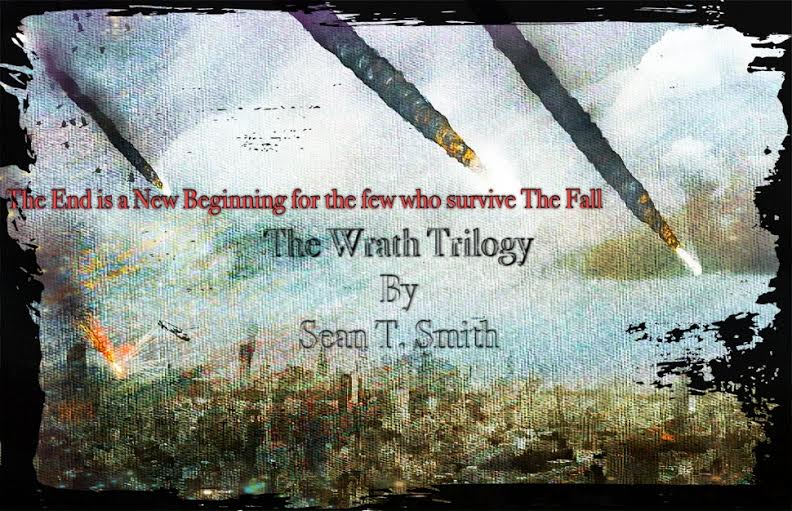
When the world is smashed and burning, I believe people will question why God abandoned us, while many who are not religious will turn to religion as a way of coping with the pain and destruction around us. Two of my favorite Post-Apocalyptic novels deal directly with faith: The Stand, by Stephen King, and A Canticle For Leibowitz, written by Walter M. Miller.  These novels both had a direct influence on my writing.

I’ve had a few reviewers attack the religious elements of my work, although the overwhelming majority of readers, both religious and agnostic, are not troubled by the way .the characters respond to the end of the world as we know it. While I wrote these novels from a Christian perspective, the books are by no means intended to be an extended sermon. Man has an innate need to connect to our creator, to find a way to explain our existence. Indeed, the idea of the apocalypse itself appears in Roman and Greek myths. The stories of the Biblical Flood and Armageddon go back thousands of years, and are a part of our collective human psyche.

wrathpic

There is a reluctance now, it seems, for post-apocalyptic fiction to address religion. I wonder why that is? Are authors fearful of alienating readers? (This was certainly very much on my mind when I wrote Objects of Wrath.) Whether it’s zombies, a virus, an asteroid, or a war, the majority of PA novels delve into the questions of faith in a cursory manner. I’m not implying there is anything wrong with this approach, and certainly many survivors would not ask larger questions, being more concerned with finding food or fleeing the approaching hoarde.

When I read a novel or watch a movie, one of the things that keeps me interested are the questions, “what would I do? How would I react? How would that feel?” Whether it’s watching an epic battle from Braveheart and putting myself into the shoes of the men waiting for a thundering charge from heavy cavalry or reading the heart-wrenching scenes in The Road, where the father tells his son how to shoot himself. I contemplate the emotional impact, try to see and feel what the characters would be going through. In Saving Private Ryan, when the soldiers are coming toward the beach, rounds zipping through the water, bombs falling, what would that feel like, to have been one of those men? What would I do?

I’m certain that I’d pray. I’d question my faith, but I’d be simultaneously clinging to it. I think that’s how most people would behave. There are atheists in foxholes, but not many.

One of the  things about post-apocalyptic fiction which appeals to me is that it offers an unflinching examination of the human condition, a window into our essential being. When laws have disappeared and civilization is absent, what sort of people are we? Philosophers like Locke, Rousseau and Hobbs talk about our “state of nature” before the social contract. I love books that take a look at this question. It’s one of the reasons I enjoy The Walking Dead. While some novels offer a very dark outlook on humanity, in which most men are truly evil by nature, others are more hopeful. I think most people are decent and good, although evil is hungry and seductive. Can good defeat evil, even when it looks as though darkness has already won?

Religion can be a force for good or great evil. In my second novel, Children of Wrath, this is the central theme. Faith in and of itself is not always a good thing. There are atrocities being committed around the world even as I write, killing carried out in the name of religion. Whether or not one believes in any sort of God, there is no denying the way that religion has shaped our world. After the world as we know it ceases to be, people will still turn to the heavens, sometimes shaking their fists, other times begging for help.

The War on Christianity: The Enemy is Also Us

PikiWiki_Israel_13177_Christianity_and_Islam

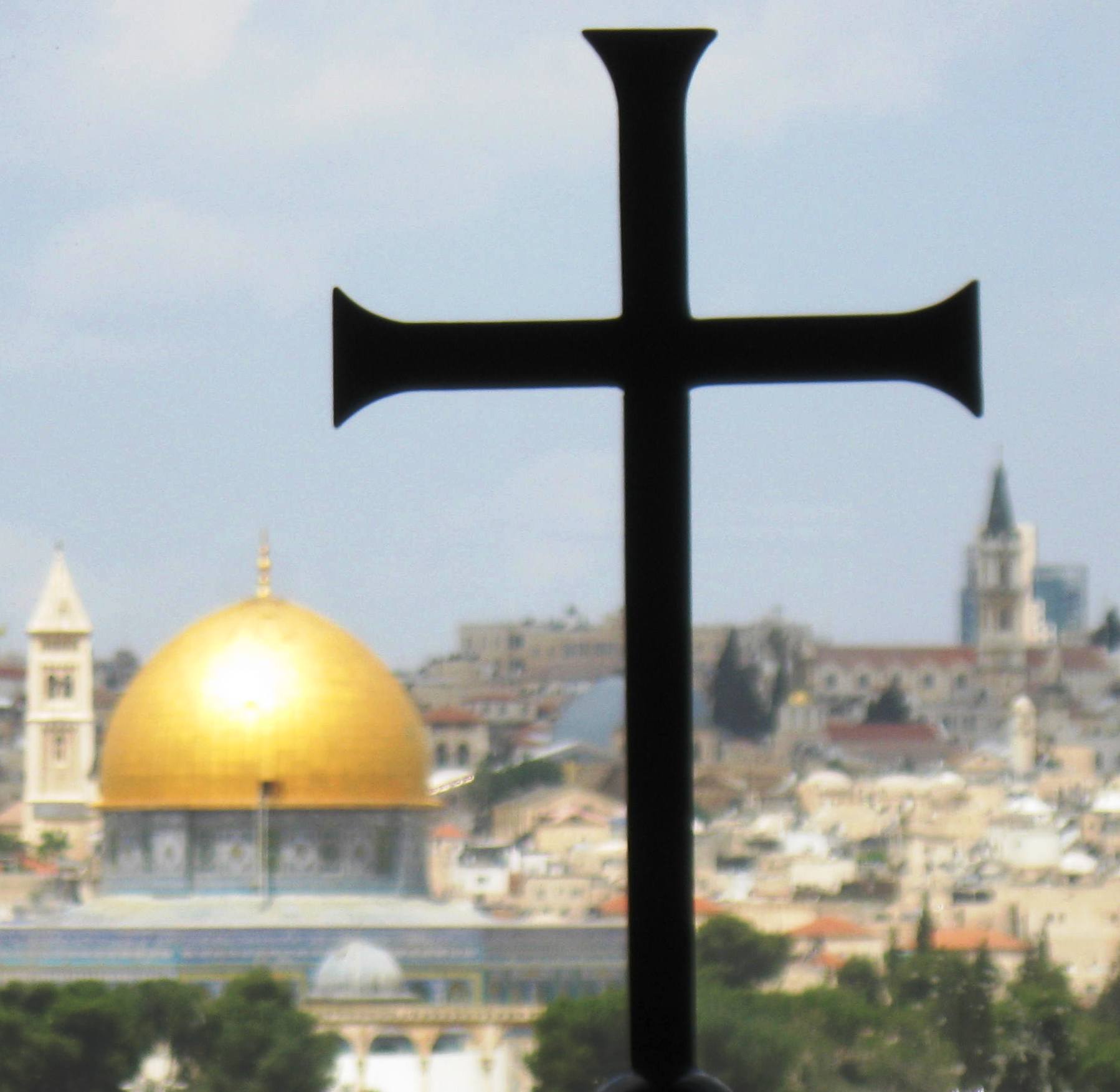
Christians face many dire threats around the world, from the decapitations in the Middle East to genocides in Africa, to the persecution carried out by China and Russia. Here in the United States, we hear much about the war against Christians, but it seems to me that the greatest threat comes from within.

The word “Christian” is first used in the book of Acts, and it means one who follows Christ. In America, this definition has been lost, ursurped by other things. Politics, and economics have nothing to do with following The Lord, and yet it seems that many Christians identify themselves by how they vote and where they shop. There is a shrill meanness to the way many Christians go about it, and it gives the rest of us a bad rap.

Jesus gave Christians a great commission, to spread the gospel to the corners of the earth. In the United States, generations are turning from God, and well meaning Christians with microphones and political signs and spirits full of judgement are a big part of the problem.

What Would Jesus Do?

Remember this catch phrase? It was effective because it asked an excellent question. So what would Jesus do now, in this world of sinners like me? Let’s look at what he actually did.

He offered forgiveness. We celebrated Easter last week. Jesus was nailed to a cross so that our sins would be covered. We know that none of us are perfect, that the wages of sin are death. Christ died so that we would not be condemned, giving us grace we did not deserve.

It seems many Christians have forgotten this.

Jesus spent his time among the outcasts. The prostitutes, the tax-collectors,  criminals and sinners. He admonished men to leave behind their worldly belongings and follow Him. He was welcoming, not shunning, leading by example and truth, offering healing in a hurting world.

Judgement is reserved for God, not man. “Let he who is without sin cast the first stone..

Love Transcends Law…”The Greatest of These is Love”

The Old Testament Levitical laws no longer bind us. Entry into Heaven is given, not earned, and it is through faith not deed that we come to the Father. In James we read that “Faith without deeds is dead,”  but again, it is not for us to decide who has faith and who does not.

Christians seem to be focused on the wrong things. If we should, as Paul says in Hebrews “Fix our eyes on Jesus, the author and perfector of our faith,” we have lost sight of the things that matter, missing the forest for the trees. When I see the new pope washing the feet of a Muslim woman, I think, that’s what Jesus would do!

One of my favorite verses in the New Testament is Ephesians 2:3:

“Like the rest, we were by nature objects of wrath. But because of his great love for us, God who is rich in mercy, made us alive in Christ been when we were dead in transgressions–it is by grace you have been saved.”

A God-Shaped Hole

America is indeed hurting, and there is a God-shaped hole in each of us individually, and the nation entire. What we need is more Jesus, less hate. Greater love, less judgement. Faith which manifests itself by doing what Jesus actually did, bearing fruit that sustains a hurting world. Giving to the poor, helping the sick, spreading the gospel not with a sword but with the Truth.